
Switching to a dairy-free lifestyle can feel daunting at first. If you’ve been powered by cappuccinos, cheddar, and creamy desserts for years, the idea of giving them up might sound… bleak.
The good news? It doesn’t have to be.
With a bit of know-how, some smart swaps, and a plan you actually enjoy, going dairy-free can be simple, satisfying, and seriously tasty.
This beginner’s guide distils practical steps, science-backed explanations, and real-life strategies so you can reduce symptoms, feel better in your body, and keep loving your food.
Whether you’re navigating lactose intolerance, trialling a dairy-free period for skin or digestion, or you’ve got a diagnosed allergy and need to avoid dairy completely—this is your jump-start.
Quick note: nothing here replaces personalised medical advice. If you suspect an allergy or have ongoing symptoms, speak with your GP or a registered dietitian.
Why People Go Dairy-Free (and How to Tell if It’s for You)
Many newcomers start a dairy-free journey because of uncomfortable symptoms after milk, cheese, or yogurt. Typical signs of a dairy intolerance (especially lactose intolerance) include:
- Bloating and abdominal distension
- Flatulence and tummy rumbling
- Cramping or stomach pain
- Nausea
- Diarrhoea
These often appear within a couple of hours of eating dairy and can last until the food passes through your system. Intensity varies with the amount you consume—half a latte might be fine for one person but not another.
It’s crucial to distinguish intolerance from allergy:
- Dairy intolerance is a digestive sensitivity—unpleasant, but not immune-driven.
- Dairy allergy involves the immune system and can cause hives, wheezing, swelling of the lips or throat, and in severe cases, anaphylaxis. If you suspect an allergy, seek medical help urgently and follow professional guidance strictly.
The Science Bit: Lactase, Lactose & Symptoms
Lactose is the natural sugar in milk. Your small intestine makes an enzyme called lactase to break lactose into two simpler sugars—glucose and galactose—that your body can absorb. If lactase levels are low, lactose travels to the large intestine undigested, where gut bacteria ferment it, producing gas and short-chain fatty acids. Hello, bloating and diarrhoea.
Lactase shortfalls can be:
- Primary (genetic): lactase production decreases as you age.
- Secondary (temporary): gut infections, coeliac disease, or intestinal inflammation can lower lactase for a while; it often rebounds as you recover.
- Congenital (rare): babies born with very low or no lactase.
- Developmental (premature babies): improves over time.
Because tolerances vary, your approach should be personalised—more on that shortly.
Step-By-Step: Your Beginner’s Plan to Go Dairy-Free
Step 1: Speak Up Early (and Kindly)
One big fear is being seen as “awkward” at restaurants or friends’ houses. The easiest fix? Proactive communication.
- Restaurants: Call a day ahead and explain your needs. Most teams are happy to help when they’ve time to plan.
- Friends & family: Share what you can eat, not just what you can’t. Offer to bring a dish. You’ll avoid awkwardness and inspire others with delicious alternatives.
- At work or events: Keep a couple of safe snacks handy (nut bars, fruit, dairy-free chocolate) for surprise cake moments.
Step 2: Research Smart, Verify Health Advice
The internet is brilliant for recipes, product finds, and community tips. Follow dairy-free food bloggers, join groups, and browse menus before you go out. But for health questions, trust reputable sources or a registered dietitian. If your symptoms are severe or unusual, get medical input before overhauling your diet.
Step 3: Build a Weekly Meal Plan You’ll Actually Eat
A plan removes decision fatigue and prevents “oops I had a cheesy takeaway” moments.
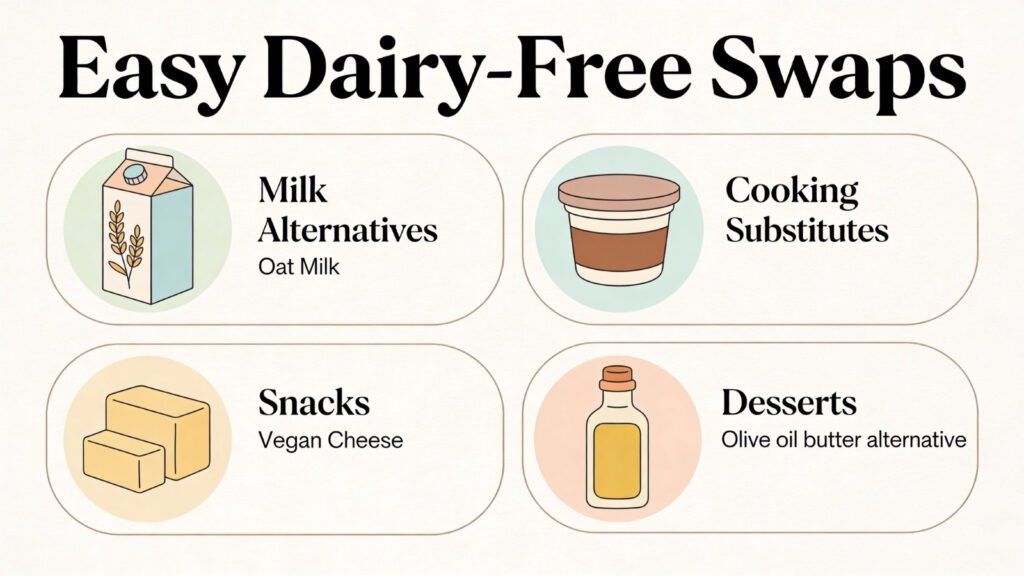
- Start with favourites: swap dairy for alternatives in meals you love (e.g., oat milk latte, coconut yogurt with fruit, dairy-free pesto pasta).
- Aim for variety: include breakfasts, lunches, dinners, plus two snacks you look forward to.
- Shop to the plan: list essentials (plant milks, dairy-free spreads, tofu/beans, whole grains, fruits/veg, nuts/seeds).
- Stay flexible: the plan is a guide, not a rulebook. If a new recipe excites you—go for it.
Step 4: Try New Things (Your Tastebuds Will Adapt)
Your first plant-based cheese might not be “the one.” That’s normal. Different brands and bases (coconut oil, cashew, almond, soy, oat) taste and melt differently. Sample a few and note what works in which context. Same with plant milks: oat and soy work best in coffee, coconut adds richness in cooking, almond is light for cereals. Over time, these alternatives become everyday staples.
Step 5: Know Your Body (and Use a Food Diary)
If you’re intolerant rather than allergic, there may be a level of dairy you tolerate. A food and symptom diary helps you identify it. Track what you ate, symptoms, and severity. Notice patterns—perhaps hard cheese in small portions is fine, but milk in coffee isn’t. Adjust your diet accordingly.
Step 6: Keep Your Mindset Positive
Dairy-free isn’t deprivation. It’s a chance to explore new cuisines and feel better. Celebrate wins—less bloating, more energy, clearer skin—and allow yourself time to adjust. Cravings fade; favourites get replaced. Focus on abundance, not restriction.
Recommendation: Dairy-Free Cookbook for beginners
Hidden Dairy: Where It Sneaks In
Beyond the obvious (milk, cheese, butter, cream), dairy can lurk in chocolate, ready meals, biscuits, salad dressings, and even bread. Learn to spot aliases like whey, casein, lactose, and milk solids on labels. A safe shortcut: choose foods marked “suitable for vegans”—guaranteed dairy-free.
Dining Out Without Drama
Restaurants are more dairy-aware than ever. Still, check menus ahead, call if needed, and ask direct questions like “Does this sauce have cream or butter?” Many global cuisines (Thai, Vietnamese, Middle Eastern, Mediterranean) naturally offer dairy-free dishes.
Stocking a Dairy-Free Kitchen
Essentials include plant milks, coconut cream, nutritional yeast (for cheesy flavour), dairy-free spreads, beans, tofu, lentils, nuts, and seeds. For indulgence, keep a stash of dairy-free chocolate and, yes, dairy free ice cream—it makes the transition far more fun.
Nutrition Check: Don’t Miss the Essentials
Dairy provides calcium, protein, iodine, and vitamin D. Replace them with fortified plant milks, tofu, leafy greens, nuts, beans, fish with bones (if not vegan), iodised salt, and sunlight or supplements as advised. A balanced dairy free cookbook can help you discover easy ways to cover these nutrients.
Recommended Resource: Dairy Free Cookbook For Beginners by Chris Spragg
If you want to make your journey easier (and tastier), I highly recommend the Dairy Free Cookbook For Beginners by Chris Spragg.
This practical dairy free cookbook includes 100 simple, delicious recipes covering everything from soups and mains to desserts and drinks. It’s especially good for beginners because the meals use everyday ingredients and straightforward steps.
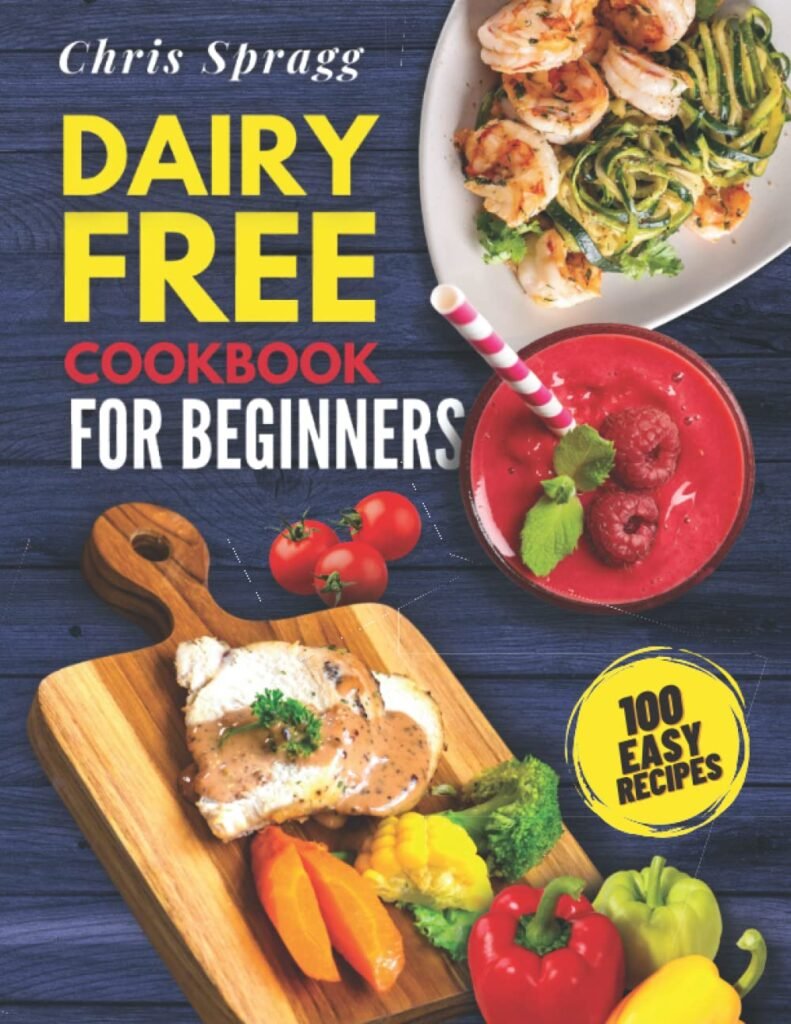
One of the highlights is its creative twists on comfort foods—like ratatouille, chocolate fondant cake, and even dairy free ice cream.
If you thought ice cream was off the table when you cut out dairy, this book will happily prove you wrong. The dairy free ice cream recipes alone make it worth picking up, especially if you’re someone who doesn’t want to miss out on sweet treats.
Unlike other cookbooks that feel complicated or “too gourmet,” this dairy free cookbook is designed for real life—family dinners, quick weekday meals, and snacks you’ll actually want to eat. It proves that going dairy-free isn’t about missing out, it’s about discovering new flavours and enjoying your food again.
If you’re ready to make dairy-free living simple (and delicious), I highly recommend Dairy Free Cookbook For Beginners by Chris Spragg.
It features 100 fast, easy recipes across breakfasts, soups, mains, desserts and drinks—think comforting soups, clever mains like shakshuka-style ratatouille, and even dairy-free ice cream. The instructions are beginner-friendly, with sensible ingredients and practical tips that make weekly meal planning a breeze.
You can purchase the book on Amazon—it’s a great first step if you want reliable recipes, straightforward swaps, and a confidence boost as you transition to a dairy-free lifestyle.
The Bottom Line
Going dairy-free can feel like a big leap, but with the right strategies and resources, it’s far easier than you think. Speak up about your needs, research wisely, plan your meals, explore alternatives, and stay positive.
And if you want a head start in the kitchen, pick up the Dairy Free Cookbook For Beginners—your guide to building a healthy, flavourful, and satisfying dairy-free lifestyle.