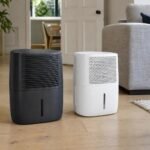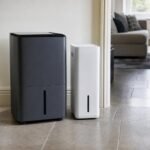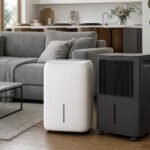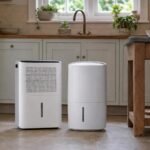

20L or 25L: the quick answer
A 20L dehumidifier is enough for most three- and four-bedroom homes. A 25L earns its place in large houses, very damp properties, renovation drying and households that dry several loads of laundry a day.
- How much more a 25L really removes
- Running costs and noise
- Size and weight
- Who should choose which
The 20L vs 25L dehumidifier choice is mostly about headroom. Both sizes are designed for whole homes, both usually share a similar footprint, and both cost noticeably more than compact 10–12L models. The question is whether the extra extraction of a 25L is worth paying for, and running, in your home.
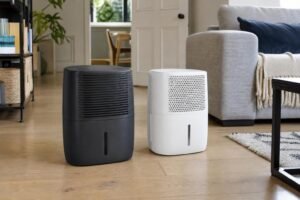
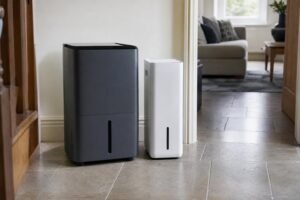
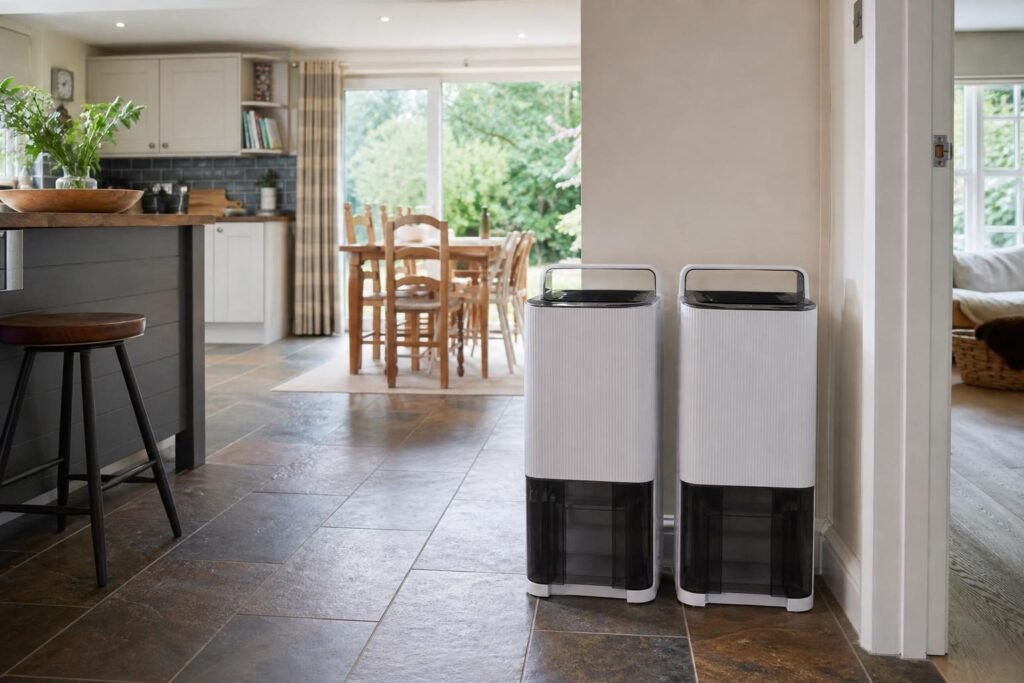
Meaco's Arete One range is a useful example because the 20L and 25L share the same dimensions, and Meaco publishes detailed figures for both. We use those numbers, along with typical figures from other brands, to show what the step up really gives you. For a broader overview, see our guide to the best dehumidifiers.
Key takeaways
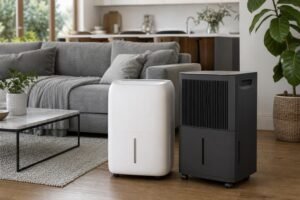
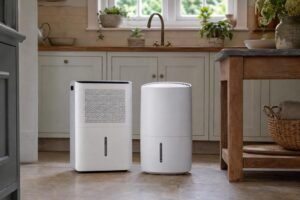
- Same body, more power Many 20L and 25L models share dimensions; the 25L simply extracts more under the same conditions.
- Running costs Meaco quotes about 216W for its 20L vs about 267W for its 25L, roughly 6p vs 7p an hour.
- Noise 25L models are usually a little louder: Meaco rates its 20L at about 38–40dB and its 25L at 40–42dB.
- Choose 25L for large or very damp homes, renovation drying and heavy daily laundry.
20L 20L | 25L 25L | |
|---|---|---|
 |
 | |
| Extraction at 20°C/50% | About 5.8L a day | About 7L a day |
| Power | About 216W | About 267W |
| Noise | About 38–40dB | About 40–42dB |
| Body | Same dimensions | Same dimensions |
| Check price | Check price |
How much more water does a 25L remove?
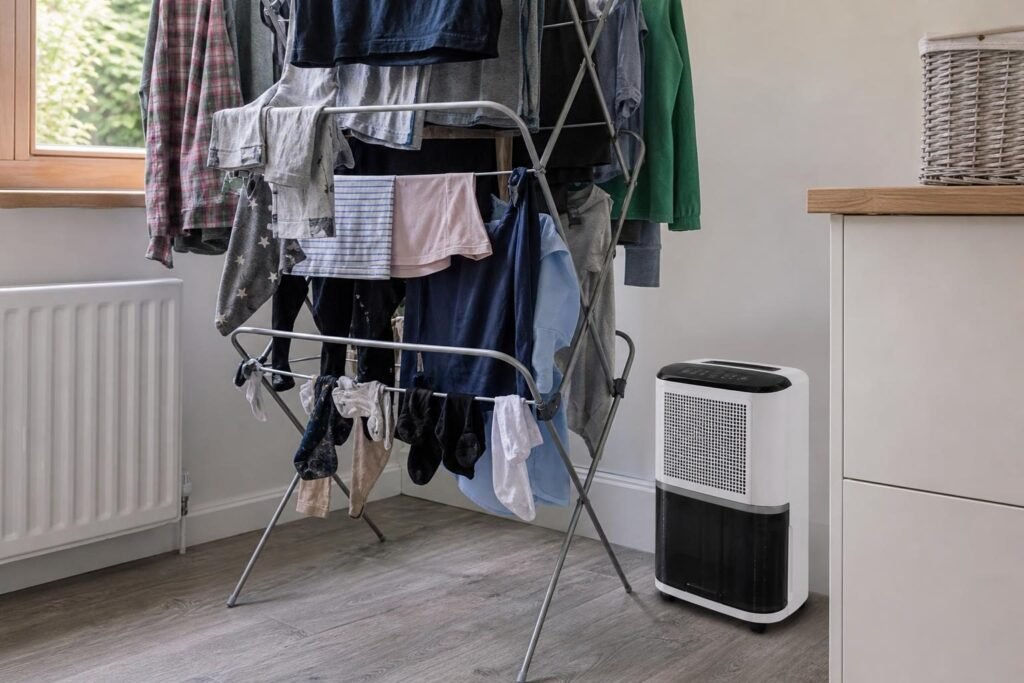
Headline ratings are measured at 30°C and 80% humidity, conditions British homes rarely see. At more realistic conditions, the gap narrows but remains useful. Meaco's published data for the Arete One shows the 25L ahead of the 20L at every test point; at 20°C and 50% humidity, for example, it lists around 5.8 litres a day for the 20L and around 7 litres for the 25L. In very cold conditions, such as 10°C, the difference between the two shrinks to very little, because compressor performance drops for both.
That tells you something important: a 25L dehumidifier's advantage is greatest in warmer, wetter conditions, such as a heated home drying lots of laundry or a renovation with fresh plaster. In a cold garage, neither size will get close to its rating, and a desiccant model would be a better choice.
20L vs 25L dehumidifier: comparison
| Factor | 20L dehumidifier | 25L dehumidifier |
|---|---|---|
| Typical home | 3–4 bedrooms | 4–5 bedrooms or very damp homes |
| Extraction advantage | Baseline | Noticeably more in warm, wet conditions |
| Power (Meaco Arete One example) | About 216W | About 267W |
| Running cost at 26.32p/kWh | About 6p an hour | About 7p an hour |
| Noise (Meaco Arete One example) | About 38–40dB | About 40–42dB |
| Size | Often identical body | Often identical body |
| Typical price | £180–£280 | £230–£300+ |
Running costs
At the current price cap of 26.32p per kWh, from Ofgem, the extra 50W or so of a 25L adds about 1.3p an hour. Meaco's own estimate is roughly 8p an hour for its 25L against 6p for its 20L at older energy prices. Because a 25L reaches your target humidity faster, it may run for fewer hours, so the real difference over a winter is often modest.
Noise
A 25L model works its fan and compressor a little harder, so it is usually slightly louder. On the Meaco Arete One, the 25L is rated about 2dB above the 20L, which is noticeable but not dramatic. For a bedroom, a 20L, or even a 12L, is often the better choice.
Who should choose which?
- Three-bedroom house with normal condensation: 20L. See our dehumidifier for a three bedroom house guide.
- Four-bedroom house: 20L for normal use, 25L if there is damp or heavy laundry.
- Large or older home with persistent damp: 25L, ideally with continuous drainage.
- Renovation drying, flood recovery or new plaster: 25L, or a hired commercial unit. See our dehumidifier for drying plaster guide.
- Cold garages or conservatories: neither; choose a desiccant model.
- Cheaper to buy and run
- Slightly quieter
- Enough for most family homes
- Less headroom in very wet weeks
- Slower on very large laundry loads
- More extraction in warm, wet conditions
- Faster laundry drying
- Ideal for renovations and very damp homes
- Higher upfront price
- Slightly louder and higher power draw
- Little advantage in cold rooms
20L vs 25L dehumidifier: final verdict
In the 20L vs 25L dehumidifier comparison, the 20L is the right choice for most homes: cheaper, a little quieter and more than capable in a typical three- or four-bedroom house. The 25L makes sense for larger or wetter homes, heavy laundry use and renovation drying, where its extra extraction in warm, wet conditions pays off. If you are still deciding between smaller sizes, our 12L vs 20L dehumidifier guide may help, and Meaco's guide to choosing the right dehumidifier is a useful second opinion.
20L vs 25L dehumidifier: what about two smaller units?
Before settling the 20L vs 25L dehumidifier question, consider whether one big machine is the right approach at all. In a large or awkward house, damp is often concentrated in two places, such as a cold extension and an upstairs bathroom. Two smaller dehumidifiers, each placed where the problem is, can outperform a single 25L on the landing.
If your home is open plan or you mainly dry laundry in one room, a single large unit makes more sense. In that case, the 20L vs 25L dehumidifier choice comes down to how wet your home gets. Heavy laundry use, fresh plaster or a history of damp points to the 25L; normal family life points to the 20L.
Frequently asked questions
Is a 25L dehumidifier worth it over a 20L?
Only if you have a large or very damp home, dry a lot of laundry or are drying out a renovation. For most three- and four-bed homes, a 20L is enough.
Does a 25L dehumidifier cost much more to run?
Typically around 1–2p an hour more at 26.32p per kWh, and it may run for fewer hours because it reaches the target humidity faster.
Is a 25L dehumidifier louder than a 20L?
Usually slightly. On the Meaco Arete One, the 25L is rated about 2dB higher than the 20L.
Are 20L and 25L dehumidifiers the same size?
Often, yes. Many ranges, including the Meaco Arete One, use the same body for both.
Which is better in a cold garage, 20L or 25L?
Neither performs well in cold conditions. A desiccant dehumidifier is a better choice for unheated garages.
20L vs 25L dehumidifier: verdict
- Most homes: 20L
- Large, damp or renovation projects: 25L
- Cold outbuildings: desiccant instead
A 20L dehumidifier is the sensible choice for most family homes. Step up to 25L for large or very damp houses, heavy laundry use and renovation drying, where its extra capacity in warm, wet conditions is worth the small increase in cost and noise.