


The best clothes drying tent setups at a glance
A clothes drying tent traps your damp washing in a small pocket of air so a dehumidifier or heated airer can pull the moisture out faster. Used properly, it can cut indoor drying times dramatically and keep condensation off your windows.
- Which tents and covers are worth buying
- How to position the dehumidifier so the tent actually helps
- When a tent can slow drying down
- Running costs and simple DIY alternatives
A clothes drying tent is one of the cheapest upgrades you can make if you dry washing indoors with a dehumidifier. Instead of asking the machine to dry the air in a whole room, you shrink the job down to the space around the laundry, so the air flowing over your clothes is drier, warmer and moving faster.
That sounds simple, but there is a catch that most product listings skip over. A cover that seals the washing in too well can stop the dehumidifier's dry air from reaching it, and drying slows down rather than speeds up. In this guide we look at the best clothes drying tent options available in the UK, explain which set-ups work with which dehumidifiers, and show you how to avoid the mistakes that leave you with damp collars and musty towels. If you have not picked a dehumidifier yet, start with our guide to the best dehumidifiers for UK homes.
Key takeaways
- Best for heated airer owners A made-to-fit Dry:Soon cover traps the airer’s heat and turns it into a mini drying cabinet.
- Best with a dehumidifier Choose a tent or cover with a mesh panel or opening so the dehumidifier’s airflow can pass through the clothes.
- The big mistake Sealing washing in a closed cover with the dehumidifier outside can double drying times.
- Budget option A standard airer, a lightweight cover and a 10–12L dehumidifier in a small closed room works almost as well.
Our top picks at a glance


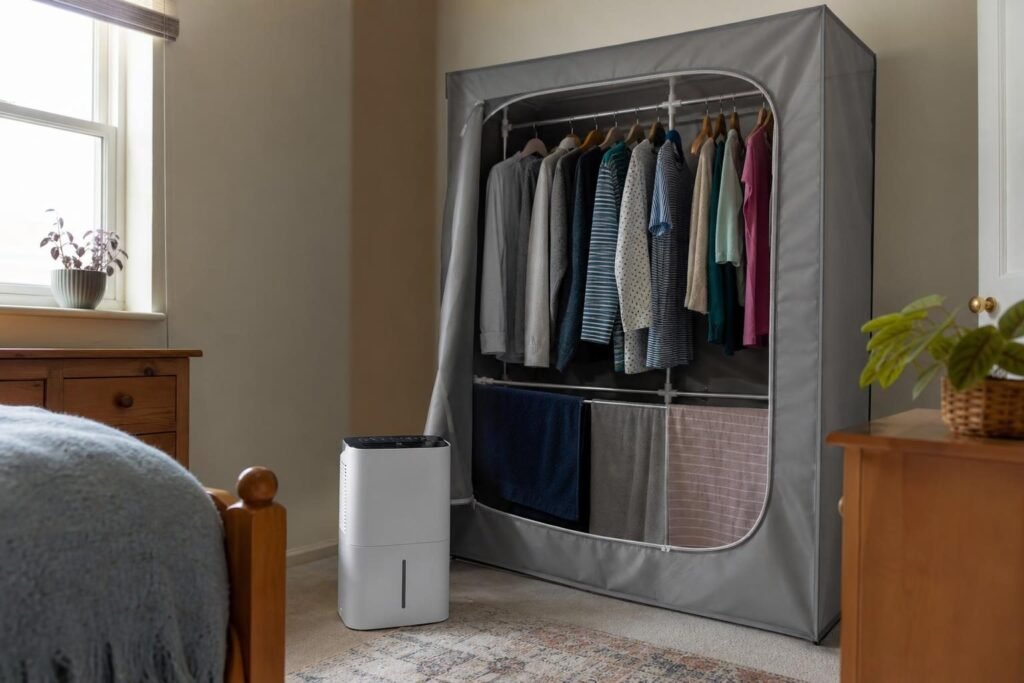
How a clothes drying tent works with a dehumidifier
Wet washing releases a surprising amount of water. A full 7kg load can hold two to three litres even after a fast spin, and all of that has to go somewhere. In an open room it spreads out, raises the humidity and settles on the coldest surfaces, usually your windows and outside walls. A dehumidifier removes it, but it has to process every cubic metre of air in the room to do so.
A clothes drying tent changes the maths. By wrapping the airer, you create a small, concentrated zone where the humidity is very high. A dehumidifier blowing dry air into that zone, or drawing wet air out of it, works much more efficiently because the air it handles is far wetter. Laundry dries when there is a big difference between the moisture in the fabric and the moisture in the air around it, so keeping that surrounding air dry is what really matters.
There are two broad ways to use a clothes drying tent:
- Heat-led drying: the tent goes over a heated airer and traps its warmth. This is how most Dry:Soon covers are designed to work. A dehumidifier in the same room then mops up the moisture that escapes.
- Airflow-led drying: the dehumidifier blows its dry, slightly warm exhaust air into or across the tent. This works best with desiccant models, which blow out air several degrees warmer than the room, or compressor models with a louvre you can aim.
The best clothes drying tent options in the UK
1. Dry:Soon Deluxe 3-Tier Heated Airer Cover
If you already own a Dry:Soon Deluxe 3-Tier heated airer, the matching cover is the obvious choice. Lakeland sells it for around £44.99 at the time of writing, and it is designed to slip over the airer, hold the heat in and double as a storage bag. Owners consistently report that it shortens drying times on the airer alone.
The important caveat is how it behaves alongside a dehumidifier. One owner who ran a large dehumidifier next to their airer found that with the cover on, hems and collars were still damp after two hours, and the load took over four hours to dry, compared with just over two hours uncovered. Their dehumidifier blew air upwards, so the cover simply blocked it. The lesson: if your dehumidifier's airflow can reach the clothes, try with and without the cover before deciding.
- Made to fit the most popular UK heated airer
- Traps heat for faster drying on the airer alone
- Doubles as a storage bag
- Machine washable
- Only fits the matching Dry:Soon model
- Can block a dehumidifier’s airflow if fully closed
- Adds cost on top of the airer
2. Dry:Soon Winged Heated Airer Cover
The cover for the smaller Winged heated airer costs around £19.99 and has two features that make it more dehumidifier-friendly than most: a mesh window that lets air move through, and a zip opening on top so you can reach the clothes without lifting the whole cover off. That mesh panel is exactly what you want if you are pairing a clothes drying tent with a dehumidifier, because it lets dry air in while still keeping much of the heat around the washing.
3. Dry:Soon Mini 3-Tier Heated Airer Cover
For smaller households with the Mini 3-Tier airer, the matching cover sits around £39.99. It works on the same principle as the Deluxe version and earns good owner reviews for cutting drying times. It suits flats and box rooms where you want to dry a small load overnight without the whole room turning humid.
- Mesh window on the Winged cover lets dehumidifier air through
- Top zip for easy access
- Low price for a made-to-fit cover
- Each cover fits only its own airer
- Smaller capacity than the Deluxe 3-Tier
4. Zip-up portable drying wardrobes
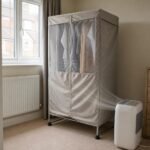
Generic zip-up drying wardrobes, usually a steel frame with a hanging rail, shelves and a fabric or PEVA cover, are widely sold online under many brand names. They are not designed for heated airers, but they make a very effective clothes drying tent for shirts, jumpers and anything you want to hang rather than fold over a rail. Their real advantage is shape: a tall, narrow tent with the front unzipped makes a natural chimney for a dehumidifier placed in front of the opening.
Look for a frame that is sturdy enough to hold wet jeans, a cover with a mesh panel or roll-up front, and a footprint that fits the space in front of your dehumidifier. Avoid anything sold as a heated tent with an unbranded fan heater built in unless it carries clear UK safety markings and an auto shut-off.
5. The DIY clothes drying tent
You do not need to buy anything specialist to get most of the benefit. A standard folding airer in a small room with the door shut is already a big tent. Many people get excellent results by drying in a bathroom, utility room or box room with the door closed, the window shut and a 10–12L dehumidifier running on laundry mode. You get the concentrated humidity of a tent without blocking the airflow.
If you want to go further, drape a lightweight cotton sheet over three sides of the airer and leave the side facing the dehumidifier open. That creates a channel that guides the dry air through the washing rather than around it. Never cover a dehumidifier's air intake or exhaust, and never put fabric over a heated airer that the manufacturer does not approve.
What to look for in a clothes drying tent
The tent must let dry air reach the clothes and wet air escape to the dehumidifier.
Wet washing is heavy and a wobbly frame will tip.
Heat sources and fabric need to be matched carefully.
Bigger loads need more rail space so items do not touch.
Covers pick up lint and can get musty.
How to set up a clothes drying tent for the fastest results
The best clothes drying tent in the world will underperform if the dehumidifier is in the wrong place. Follow these principles:
- Use a small room and shut the door. The smaller the space, the less air the dehumidifier has to treat.
- Aim the airflow through the washing. Place the dehumidifier one to two metres from the open side of the tent with its exhaust pointing at the clothes.
- Hang in a single layer. Leave a finger's width between items so air can move between them.
- Use laundry mode. It runs the dehumidifier continuously at full power rather than stopping at a humidity target.
- Spin hard first. An extra spin cycle removes water far more cheaply than any dehumidifier can.
Desiccant dehumidifiers such as the EcoAir DD1 and Meaco DD8L blow out warmer air, which makes them especially good partners for an airflow-led clothes drying tent in a cold room. Compressor models are more efficient in a heated home and work well with heat-led covers. Our guide to what size dehumidifier you need for drying clothes explains which capacity suits your loads.
Clothes drying tent running costs
At the October to December 2026 price cap of 26.32p per kWh, set by Ofgem, a typical 10–12L compressor dehumidifier drawing around 160–220W costs roughly 4p to 6p an hour. A 300W heated airer adds about 8p an hour. Running both for four hours to dry a load comes to around 50p, which is still far cheaper than most vented tumble dryers. A clothes drying tent that shortens the run by even an hour pays for itself over a winter. For a full worked example, see our heated airer and dehumidifier cost test.
Is a clothes drying tent worth buying?
For most households, yes, but only if you match it to how you dry. If you rely on a heated airer, a made-to-fit cover is a cheap and proven upgrade. If you rely on a dehumidifier, choose a clothes drying tent with an open or mesh side, or simply dry in a small closed room. Either way, drying laundry in a contained space keeps moisture away from the rest of your home, which is one of the easiest ways to prevent mould through the winter.
Frequently asked questions
Does a clothes drying tent work with a dehumidifier?
Yes, as long as the dehumidifier’s airflow can reach the clothes. Use a tent with a mesh panel or an open side facing the dehumidifier. A fully sealed cover with the dehumidifier outside can actually slow drying.
Should the dehumidifier go inside the drying tent?
Only if the tent is large and the manufacturer’s clearance guidance is met. Most people get better results placing the dehumidifier one to two metres from an open side of the tent, aimed at the washing.
Can I put a cover over any heated airer?
Only use covers designed or approved for your specific airer. Improvised covers can trap too much heat or touch heating elements.
How long does washing take to dry in a drying tent?
With a heated airer and cover, or a dehumidifier on laundry mode in a small room, most loads dry in three to six hours depending on fabric, spin speed and room temperature.
Is a desiccant or compressor dehumidifier better for a drying tent?
Desiccant models suit cold rooms because they blow out warmer air. Compressor models are cheaper to run in heated rooms. Both work well if the airflow passes through the clothes.
Our verdict on the best clothes drying tent
- Match the tent to your drying method: heat-led or airflow-led
- Always leave a path for the dehumidifier's air
- Spin hard, hang in a single layer and use laundry mode
For heated airer owners, a made-to-fit Dry:Soon cover is the best clothes drying tent you can buy, with the mesh-panel Winged cover the most dehumidifier-friendly. If you dry with a dehumidifier alone, a zip-up drying wardrobe with an open front, or simply a small closed room, gives you the benefits without blocking airflow.










1 response