

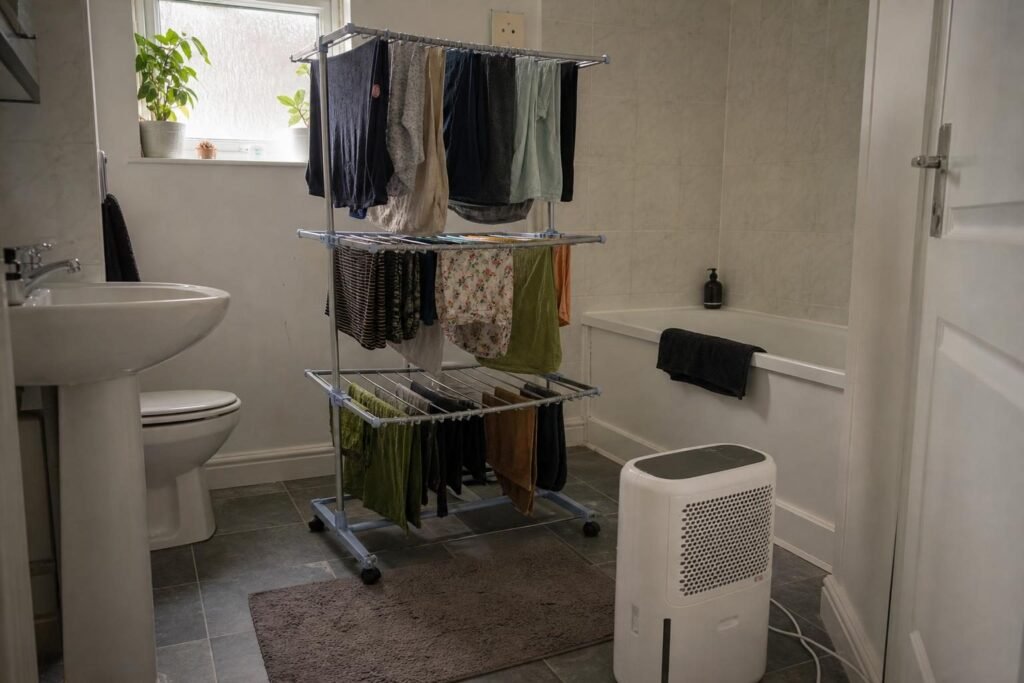
Dehumidifier plus heated airer: the short answer
Running a dehumidifier with a heated airer is the fastest way to dry washing indoors without a tumble dryer. On our cost figures it is not the cheapest per load, but it halves drying times and keeps condensation off your windows.
- How to set the two up together
- A cost test of six drying methods
- When to use one, the other or both
- Mistakes that waste electricity
Using a dehumidifier with a heated airer is the drying combination many UK households swear by in winter, and for good reason. The airer warms the fabric so water evaporates quickly, and the dehumidifier pulls that moisture out of the air before it can settle on your windows and walls. Each makes the other work better.
But is it worth running two appliances at once? To answer that, we worked through a cost test of six common indoor drying methods using typical appliance wattages and realistic drying times for a 6–7kg load, priced at the October to December 2026 price cap of 26.32p per kWh. Below you will find the set-up that dries fastest, the one that is cheapest per load, and how to choose between them. If you have not chosen your dehumidifier yet, start with our guide to the best dehumidifiers.
Key takeaways
- Fastest Dehumidifier with a heated airer: typically three to four hours for a full load.
- Cheapest per load A compressor dehumidifier on its own in a small closed room, around 30p a load.
- Least effective A heated airer on its own in a closed room: slow and it fills the room with moisture.
- Key trick Put both in a small room with the door shut and aim the dehumidifier’s airflow through the washing.
Our top picks at a glance


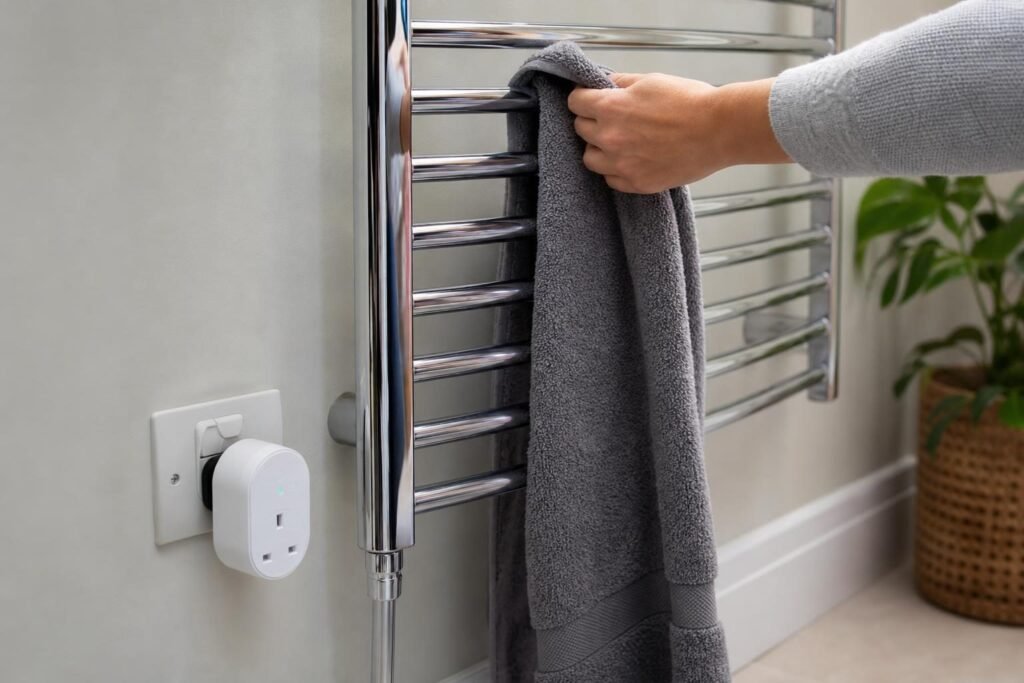
Why a dehumidifier with a heated airer works so well
Clothes dry when water moves from the fabric into the surrounding air. Two things speed that up: warmer fabric, and drier air. A heated airer supplies the first by warming the rails, and a dehumidifier supplies the second by constantly removing moisture from the room.
On its own, a heated airer warms the clothes but soon saturates the air around them, so drying slows and the excess moisture ends up as condensation. On its own, a dehumidifier keeps the air dry but relies on room temperature to drive evaporation. Together, the heated airer pushes water out of the fabric and the dehumidifier carries it away.
How to set up a dehumidifier with a heated airer
- Choose a small room. A bathroom, box room or utility room with the door closed is ideal.
- Spin the load hard. An extra spin at the highest speed the fabric can take removes water for a fraction of the cost of evaporating it.
- Load the airer in a single layer. Leave gaps so air can pass between items. Thick items like towels go on the heated rails.
- Place the dehumidifier one to two metres away with its exhaust or louvre aimed across or through the washing.
- Switch the dehumidifier to laundry mode, which runs it continuously rather than stopping at a humidity target.
- Turn the airer on and check after two hours. Turn lighter items and move dry items off so the rest dry faster.
- Switch off when done. Use the airer's timer if it has one, and do not leave both running for hours after the load is dry.
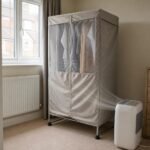
If you use a cover over the airer, make sure the dehumidifier's air can still reach the clothes. A fully sealed cover can block airflow and slow drying, as we explain in our guide to the best clothes drying tent.
The cost test: six ways to dry a load indoors
The figures below are worked estimates, not laboratory measurements. They use typical rated power for each appliance and drying times reported by owners and reviewers for a 6–7kg mixed load in a heated home. Your results will vary with fabric, spin speed and room temperature, but the comparison between methods holds up.
| Drying method | Typical power | Typical drying time | Energy used | Cost per load at 26.32p/kWh |
|---|---|---|---|---|
| Heated airer alone | 300W | 7 hours | 2.1kWh | about 55p |
| Compressor dehumidifier alone | 200W | 6 hours | 1.2kWh | about 32p |
| Dehumidifier with a heated airer | 500W combined | 3.5 hours | 1.75kWh | about 46p |
| Desiccant dehumidifier on laundry mode | 580W | 4 hours | 2.3kWh | about 61p |
| Heat pump tumble dryer | — | 2–3 hours | about 1.5kWh | about 39p |
| Vented or condenser tumble dryer | — | 1.5–2 hours | about 4kWh | about £1.05 |
What the cost test tells us
A dehumidifier alone is the cheapest way to dry indoors if you have time. A modern compressor model drawing about 200W and left running for six hours or so dries most loads for around 30p.
A dehumidifier with a heated airer is the best balance of speed and cost. It costs a little more per load than the dehumidifier alone but typically halves the drying time, which matters when you need school uniform for the morning.
A heated airer alone is the worst of both worlds in a closed room. It is slower, uses more electricity than a dehumidifier and leaves the moisture in your home.
Desiccant dehumidifiers cost more per load in heated homes but come into their own in cold rooms, because they keep extracting well below 10°C and release warm air that helps the clothes dry.
Vented and condenser tumble dryers are still the most expensive option, at roughly double the cost of running a dehumidifier with a heated airer.
Getting the best from a dehumidifier with a heated airer
- Run the pair during off-peak hours if you are on an Economy 7 or time-of-use tariff.
- Keep the room door shut so you are not drying the whole house.
- Clean the dehumidifier filter regularly, because lint from laundry clogs it quickly. See how often to clean a dehumidifier filter.
- Choose the right capacity: a 10–12L dehumidifier is fine for most households, while large families benefit from 20L.
Energy prices change every quarter, so check the latest unit rate on the Ofgem price cap page and scale the figures above. For more ideas to cut running costs across your home, see our guide to reducing energy bills.
Quick setup checklist
- Spin
Use the highest safe spin speed and an extra spin cycle if needed.
- Small room, door shut
Bathrooms and box rooms work best.
- Single layer
Spread the load so no two items overlap.
- Aim the airflow
Point the dehumidifier’s exhaust across the airer from one to two metres away.
- Laundry mode on
Run the dehumidifier continuously until the load is dry.
- Switch off promptly
Use timers so neither appliance runs longer than needed.
Should you use a dehumidifier with a heated airer?
If speed matters, yes. Using a dehumidifier with a heated airer is the fastest non-tumble-dryer way to dry washing at home and still costs less than half as much as a conventional tumble dryer. If you are happy to wait, a dehumidifier on its own is cheaper still. Either way, drying with a dehumidifier running is far better for your home than drying on radiators or a heated airer alone, which simply moves the water from your clothes to your walls.
Frequently asked questions
Is it cheaper to use a dehumidifier or a heated airer?
On our figures a compressor dehumidifier alone is cheaper per load, at around 30p compared with around 55p for a heated airer alone, and it removes the moisture from your home.
Does a dehumidifier with a heated airer dry clothes faster?
Yes. The combination typically dries a full load in three to four hours, roughly half the time of either appliance on its own.
Where should the dehumidifier go next to a heated airer?
One to two metres away, with its exhaust or louvre aimed across or through the washing, in a small room with the door closed.
Can I cover the heated airer when using a dehumidifier?
Only with a cover that lets air through, such as one with a mesh panel or an open side. A fully sealed cover can block the dehumidifier’s airflow.
Is a dehumidifier with a heated airer cheaper than a tumble dryer?
Yes, at around 46p a load on our figures compared with about £1.05 for a vented or condenser tumble dryer. A heat pump tumble dryer is closer, at around 39p.
Cost test verdict
- Fastest: dehumidifier with a heated airer
- Cheapest: compressor dehumidifier alone
- Always dry in a small closed room with airflow through the washing
A dehumidifier with a heated airer is the fastest way to dry washing indoors without a tumble dryer and costs around 46p a load on our figures. A dehumidifier alone is cheapest at around 32p if you can wait, while a heated airer on its own is the least efficient choice.










1 response