As solar energy becomes more popular for home and emergency power use, the role of automatic transfer switches (ATS) is increasingly important.
An automatic transfer switch for a solar generator allows seamless transitions between your main utility power and your solar power backup system.
In this guide, we’ll explain what an automatic transfer switch is, how it works with solar generators, and how it performs during power outages.
What is an Automatic Transfer Switch (ATS)?
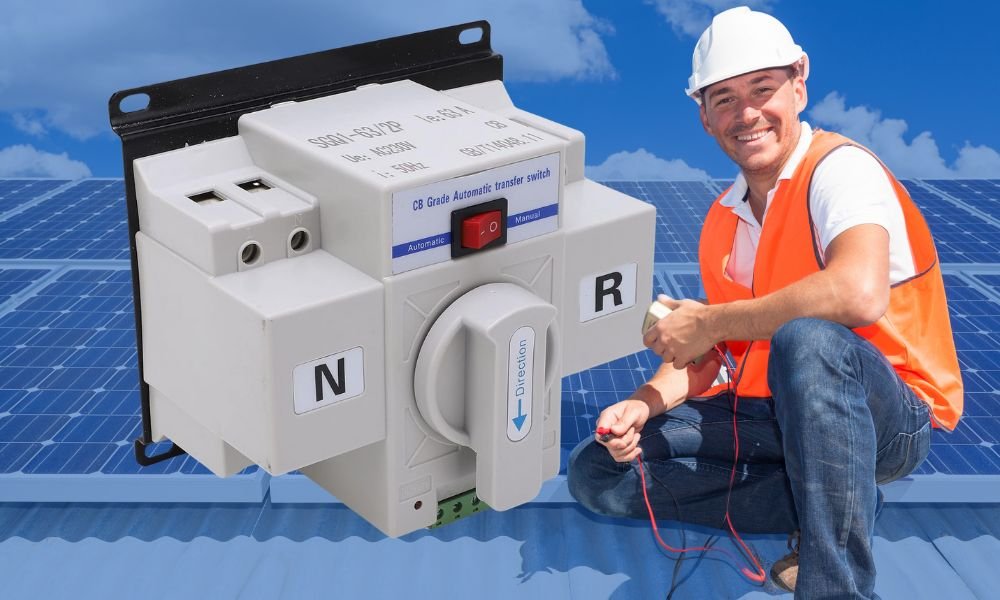
An automatic transfer switch is a device that automatically switches your home’s electrical load from the main power grid to a backup power source, like a solar generator, when it detects a power outage.
Once the utility power is restored, the switch reverts the load back to the grid.
It eliminates the need for manual intervention, making it a vital safety and convenience component in solar power setups.
Key Components of an Automatic Transfer Switch
- Power sensing circuits: Monitor utility and backup power availability.
- Control panel: Determines when to switch sources.
- Switching mechanism: Physically disconnects and reconnects load between power sources.
- Breakers or fuses: Provide safety during switching and overload protection.
Solar Generators and Their Compatibility with ATS
Not all solar generators are compatible with automatic transfer switches. To work properly with an ATS, a solar generator must have:
- Output capacity that matches or exceeds your essential household load.
- A suitable inverter that allows grid-disconnect and transfer functions.
- Battery storage with sufficient depth to supply backup power.
- Automatic start functionality or a connection to an external inverter/controller that can respond to an ATS signal.
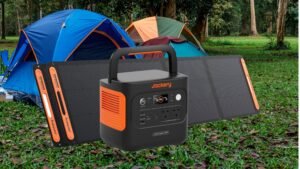
Models like the Jackery Explorer 2000 Plus, Goal Zero Yeti 6000X, and Bluetti EP500Pro are examples of solar power stations with features that support or integrate well with ATS systems.
Read our article: Portable Solar Generators: Smart Power for a Fragile World
How an ATS Functions in a Power Outage with Solar
During a power outage, the ATS acts as the bridge between blackout and backup. Here’s a step-by-step breakdown of its role:
- Detection: The ATS identifies the loss of grid power within milliseconds.
- Signal Transmission: Sends a signal to the solar generator or connected battery inverter.
- Transfer Process: Switches the electrical load to your solar generator as soon as it’s stable.
- Operation: Powers your designated circuits—such as lights, refrigerator, medical devices, or home office equipment.
- Return to Normal: When grid power returns, the ATS waits a short interval to confirm stability, then transfers power back and shuts down solar power delivery.
The entire transition is typically seamless and takes just a few seconds.
Manual vs. Automatic Transfer Switches
| Feature | Manual Transfer Switch | Automatic Transfer Switch |
|---|---|---|
| Switching | Requires manual intervention | Fully automatic switching |
| Cost | Lower initial cost | Higher upfront investment |
| Response Time | Delayed (human-dependent) | Instantaneous (milliseconds) |
| Convenience | Moderate | High |
| Best For | Occasional use | Frequent or critical power needs |
If your priority is convenience, uninterrupted power for sensitive equipment, or you’re away from home often, an automatic transfer switch for solar generator use is the superior choice.
Benefits of Using an Automatic Transfer Switch with a Solar Generator
- Instant Power Transition: Prevents data loss, food spoilage, or medical device failure during blackouts.
- Improved Safety: Reduces risks of backfeeding power into the grid, protecting utility workers.
- Hands-Free Operation: No need to manually plug in appliances or flip circuit breakers.
- Energy Efficiency: Works with modern solar battery systems to optimize energy usage.
- Smart Integration: Some ATS units offer app-based control, energy monitoring, and smart scheduling.
Types of Automatic Transfer Switches
- Whole House ATS: Designed to power the entire home, requiring higher-capacity generators.
- Load-Shedding ATS: Powers only essential circuits, which helps conserve battery life and manage generator load.
- Inverter-Compatible ATS: Specifically designed to work with inverter-based solar systems.
Choosing the right type depends on your power requirements, solar generator specifications, and household priorities.
Installation Considerations
Installing an ATS requires professional help and planning. Here’s what to keep in mind:
- Assessment: Determine your home’s critical loads.
- Compatibility: Match your ATS to your solar generator’s inverter output.
- Wiring & Placement: The ATS must be installed near the main circuit panel.
- Compliance: Installation must meet UK electrical safety regulations.
- Testing: Simulate outages to ensure the system functions correctly.
Many UK electricians familiar with solar installations can integrate ATS systems, especially for hybrid or off-grid homes.
Real-Life Scenario: Using a Solar Generator with ATS During an Outage
Imagine a winter storm knocks out power across your neighbourhood. Within milliseconds, your ATS detects the outage. It immediately signals your Jackery Explorer 2000 Plus or equivalent solar generator to supply stored energy. Your essential devices—heating, lighting, and fridge—stay on. Hours later, the grid power returns. The ATS detects stability and transfers power back to the utility supply without any action from you.
This hands-free experience is the key advantage of using an automatic transfer switch for solar generator applications.
Recommended Solar Generators for ATS Use
- Jackery Explorer 2000 Plus: High-capacity, reliable performance, supports solar recharging.
- Goal Zero Yeti 6000X: Expandable battery, versatile output, and good inverter compatibility.
- Bluetti AC500 + B300S: Modular, high-output inverter, suitable for whole-home backup.
- EcoFlow DELTA Pro: Smart app control, fast charging, and ATS-ready interface.
When evaluating a solar generator for ATS integration, always confirm that the unit supports automatic start or inverter communication protocols.
Final Thoughts
Installing an automatic transfer switch for a solar generator offers peace of mind, safety, and seamless power continuity during unexpected blackouts. It transforms a basic solar backup system into a fully autonomous power solution for your home.
If you’re investing in solar-powered backup, pairing it with a properly installed and compatible ATS is a smart move. It ensures that whether you’re home or away, your critical systems remain online.
For the best results, consult with a certified solar electrician in the UK to design a solution tailored to your home’s energy needs.
Note: This article is intended for informational purposes only. Always consult a qualified professional for electrical installations.