


A familiar-looking bowl can be hard to judge by eye.
A new seat fits onto the hinges, but its front edge hangs past the bowl. Another might leave a strip of porcelain exposed. Both can look right in the store, especially when there is no old seat beside them for comparison.
The bowl’s length gives a more reliable answer. Measure from the center of the mounting holes behind the bowl to the front edge of the porcelain, not to the edge of the old seat. A round bowl is usually about 16½ inches long; an elongated bowl is usually about 18½ inches. Those two inches are easy to miss at a glance and hard to ignore once the seat is installed.
Working out whether a toilet is round or elongated takes less than a minute with a tape measure, and it is the single most important step before buying a new seat. A seat in the wrong shape will either overhang the bowl or leave the rim exposed, so it is worth checking whether yours is round or elongated before you order.
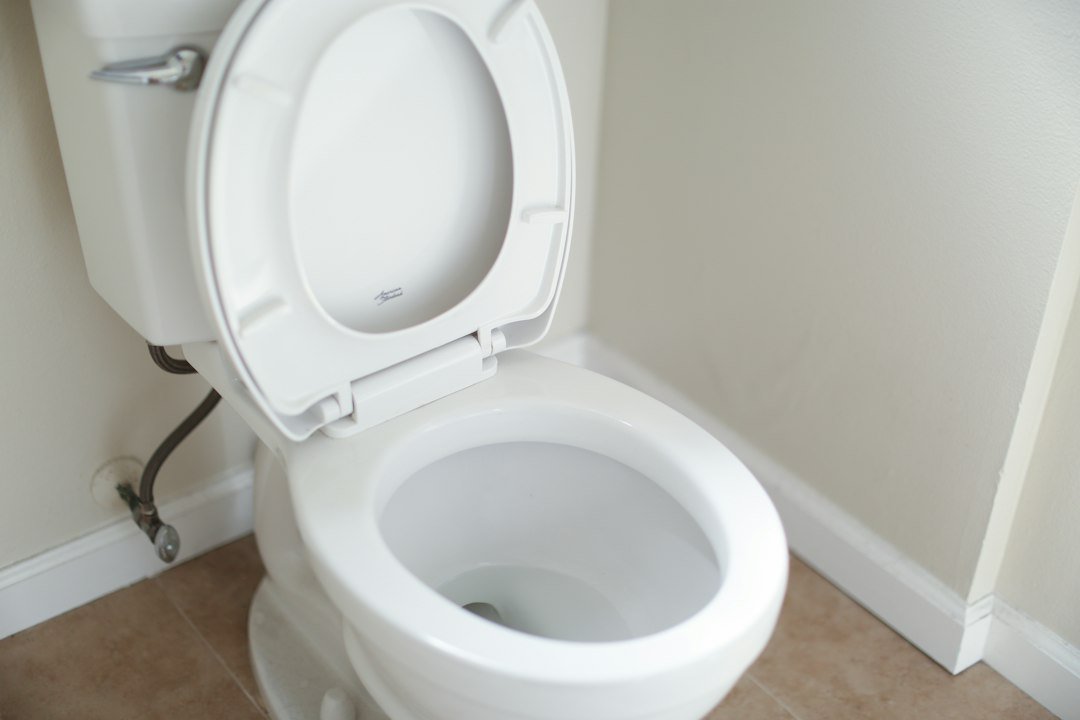
How to tell if a toilet is round or elongated
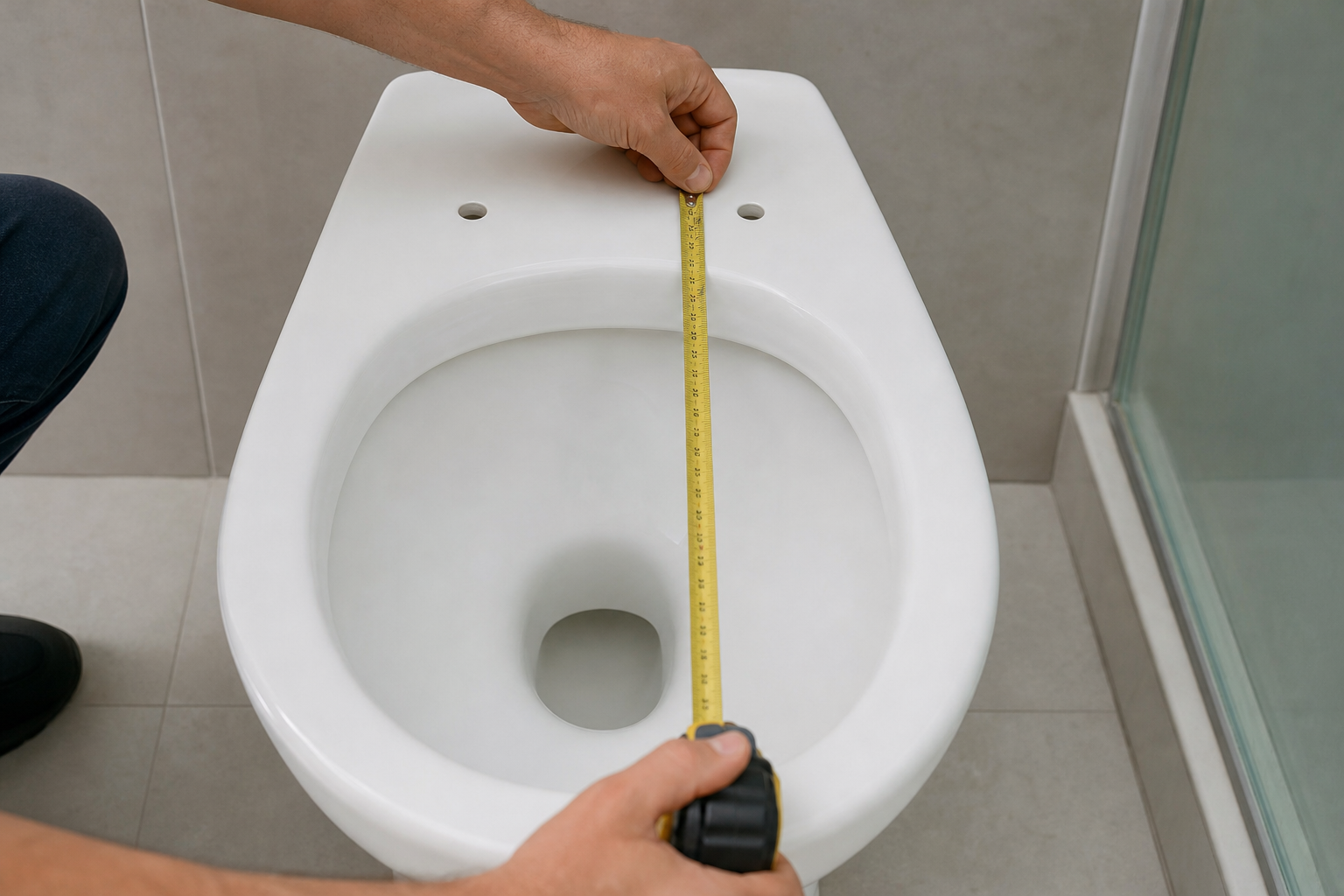
Lift the seat and lid, or remove the old seat entirely, then measure from the centre point between the two seat bolt holes at the back of the bowl to the outside edge of the front rim. If the measurement is about 16.5 inches (around 42 cm), the bowl is round. If it is about 18.5 inches (around 47 cm), it is elongated. Bowls in between are rare, so the reading will usually be clear.
Next, measure the widest point across the outside of the bowl and the distance between the two bolt holes, which is usually about 5.5 inches on standard models. These extra measurements help if you are choosing a seat with a slim or wide profile, or a bidet seat that needs more space around the tank.
Find the two points to measure
- 1. Expose the porcelain rim
Lift the seat and lid so the bowl is visible from the mounting area to the front edge. If the hinges hide the mounting holes, remove the old seat by loosening its fasteners underneath the back of the bowl. The measurement needs to start at the holes in the porcelain, not at a point on the seat.
- 2. Line up the measurement
Find the two holes where the seat attaches and picture a point halfway between their centers. Place the end of a tape measure at that midpoint, then run it straight down the center of the bowl to the frontmost edge of the porcelain rim. Keep the tape level rather than following the curve of the bowl.
An old seat may overhang the rim or stop short of it, so its length can give the wrong answer. Starting at the tank or the back edge of the seat also adds distance that is not part of the bowl measurement. The reliable endpoints are the midpoint between the mounting holes and the front edge of the porcelain.
Measure the bowl and check the fit
- Measure straight to the front rim
Place the tape’s zero mark at the midpoint between the two mounting holes. Run it straight down the center of the bowl and read the length at the front edge of the porcelain rim. Following the bowl’s curve or measuring to the old seat’s edge will give a different number.
- Use the length as a guide
A reading near 16½ inches usually points to a round bowl; one near 18½ inches usually points to an elongated bowl. Those are typical lengths, not exact cutoffs, so a small difference is no cause for concern.
- Recheck a reading in between
If the length falls between those guides, check that the tape starts at the hole midpoint and stays straight to the front rim. If the second reading is still unclear, compare the measurements with the seat maker’s sizing diagram rather than guessing from the bowl’s appearance.
- Record the bowl’s widest width
Measure across the porcelain rim from one outside edge to the other at its widest point. Write down that number alongside the length; it helps check the coverage of a replacement seat.
- Measure between the mounting holes
Measure from the center of one mounting hole to the center of the other, not from edge to edge. Keep this spacing with the length and width so all three can be checked against the seat’s listed dimensions before purchase.
Use the shape as a clue, then confirm the fit
- Compare the front of the bowl
A round bowl usually has a shorter, fuller curve. An elongated bowl extends farther forward and looks more oval. The outline is a useful clue, but the measured length should settle the choice.
- Check unusual shapes against the model
Compact elongated bowls, squared fronts, and lengths that fall between the usual sizes deserve a closer look. Find the toilet’s model number, often marked inside the tank or on the bowl, and compare its specifications with the seat maker’s dimensions. A seat that looks close in a photo may leave porcelain exposed at the front or corners.
- Compare all three measurements
Start with seats made for the bowl’s shape, then check the listed seat length, width, and mounting-hole spacing against the measurements already taken. Check the maker’s diagram to see where each dimension starts and ends. A “universal” label does not replace those numbers.
- Check the hinges and surrounding space
Confirm that the supplied bolts suit the mounting holes and that the hinge can be installed with the access available beneath or behind the bowl. Before ordering, check the clearance in front of the toilet, especially near a cabinet or door. The seat should cover the bowl without projecting into something that needs to open or pass by.
Check the listing against the bowl
- Check the length Measure from the midpoint between the mounting holes to the front edge of the porcelain, then compare that length with the seat listing.
- Check the width Measure the bowl at its widest point and check the listed seat width. A seat should cover the rim without hanging far past it.
- Check the details Compare the center-to-center mounting-hole spacing with the listing. For a squared-off or otherwise unusual front, check the seat’s shape and any model-specific fit notes too.
Round or elongated: which shape is better?
There is no single right answer to whether round or elongated is better, because each shape suits different spaces. A round bowl is shorter from front to back, which makes it a good fit for small bathrooms, cloakrooms and en-suites where every inch of floor space matters. Round bowls are also common in older homes and are often slightly cheaper.
An elongated bowl is around two inches longer, and many adults find it more comfortable to sit on. It is a popular choice for main bathrooms and is often used in accessible bathroom designs. The trade-off is that it sticks further into the room, so measure the clearance in front of the toilet and to the door swing before switching shapes.
Common mistakes when checking round or elongated bowls
The most common mistake is measuring the old seat instead of the bowl. Seats are often slightly longer or shorter than the porcelain, and some cheap seats are sold in a compromise shape that fits neither bowl well. Always measure the bowl itself, from the centre of the bolt holes to the outer front edge of the rim.
Another mistake is guessing from the shape of the tank or the overall look of the toilet. One-piece and wall-hung toilets can make a round bowl look longer than it is, while compact elongated models are designed to save space. If you are unsure whether your toilet is round or elongated after measuring, check the model number printed inside the tank lid or behind the seat hinge and look up the specification from the manufacturer.
Choosing a seat once you know if it is round or elongated
Once you know whether the bowl is round or elongated, buy a seat labelled with the same shape. Check the bolt hole spacing, the hinge style and the fixing type, as some seats fix from above while others need access underneath. Soft-close hinges stop the lid slamming, quick-release hinges make cleaning easier, and moulded wood or thermoset plastic seats tend to resist cracks and stains better than cheap plastic.
If you are planning a wider bathroom refresh, our guide to which bathroom fixtures to keep or replace helps you decide where to spend, and our explainer on how home plumbing works covers shutoffs before you start. If you are replacing the whole toilet, the EPA's guide to WaterSense residential toilets explains how efficient models save water.
A seat that leaves too much rim exposed, overhangs badly, or cannot line up with the mounting holes is likely the wrong fit. If it sits correctly on the bowl but shifts during use, check the installation and mounting hardware before replacing it.




















1 response