
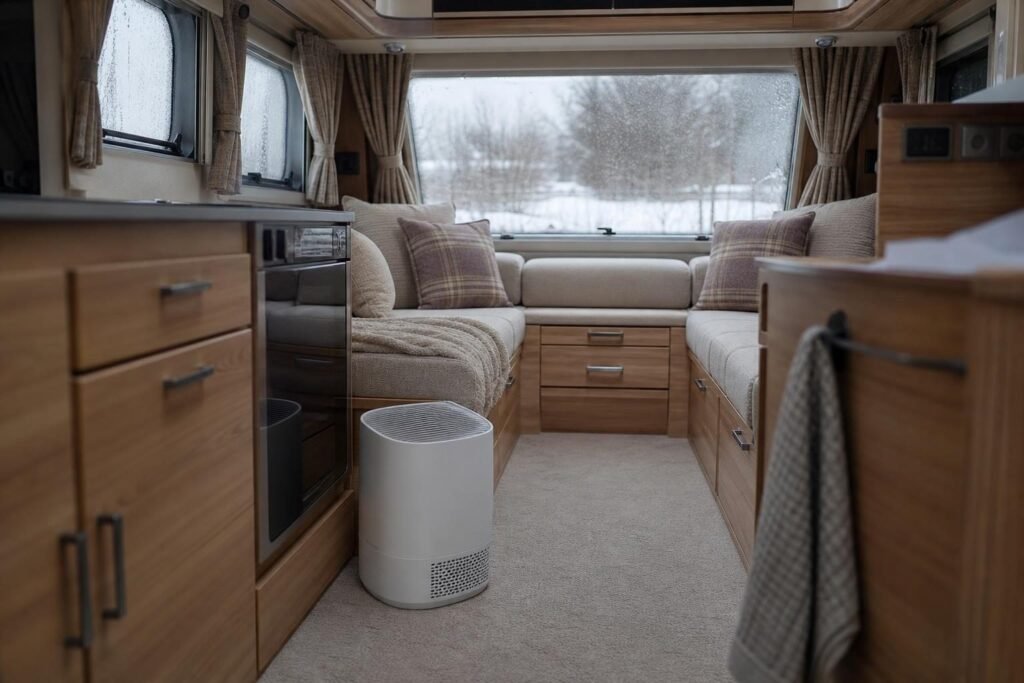
The best dehumidifier for a caravan
Caravans and motorhomes are small, cold and full of condensation-prone surfaces. A compact desiccant dehumidifier on hook-up, or moisture traps when there is no power, is the best way to stop mould and damp over winter.
- Why caravans get so damp
- Desiccant vs compressor for caravans
- Our top picks
- Power, safety and storage tips
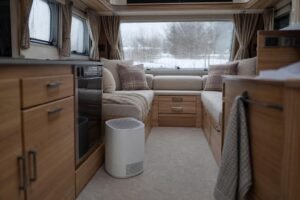
A dehumidifier for caravan use is one of the best investments a tourer or motorhome owner can make. Caravans are small, lightly insulated boxes with lots of cold surfaces: windows, metal frames, wardrobes against outside walls and lockers under the seats. Whether you are using it on a winter site or storing it for months, condensation can soak cushions, mattresses and curtains and lead to mould and musty smells that are hard to remove.
The challenge is that caravans are usually cold, often below 10°C in winter, and power is limited to a hook-up or nothing at all. That shapes which dehumidifier works best. This guide explains the options, recommends the best dehumidifier for caravan use in different situations and covers safety tips for unattended running. For general advice on damp, see our guide to preventing mould.
Key takeaways
- Best type A compact desiccant dehumidifier that works from around 1°C.
- Top pick Meaco DD8L Zambezi or Meaco DD8L Junior: proven with caravan, boat and holiday home owners.
- Lightest option EcoAir DD1 Classic MK6 at 6kg, with a drainage hose included.
- No hook-up? Use moisture traps and absorber tubs, and air the caravan whenever you visit.
Our top picks at a glance


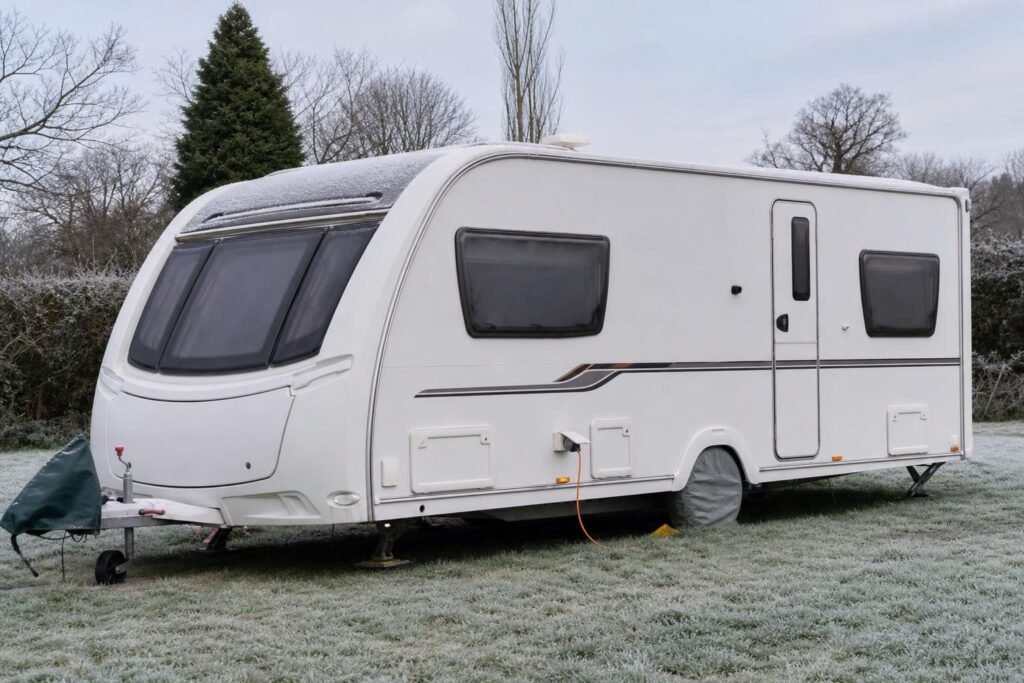
Why caravans get so damp
Moist air from cooking, showering and breathing hits cold windows and walls and condenses. In storage, temperature swings between day and night cause condensation even with nobody inside. Caravans also have many enclosed spaces, such as lockers and wardrobes, where air barely moves. Once fabrics absorb moisture, mould can develop quickly.
Desiccant vs compressor for a caravan
Compressor dehumidifiers lose much of their performance below about 15°C and can ice up in a cold caravan. Desiccant dehumidifiers keep working at low temperatures and gently warm the air, which helps prevent condensation forming. Meaco notes that its DD8L desiccant warms the air by around 10–12°C as it dries it, and its continuous drainage and auto-restart after power cuts are exactly why it is popular with boat, holiday home and caravan owners. For most caravan users, a compact desiccant dehumidifier for caravan use is the right choice.
The trade-off is power. Desiccant models draw roughly 300–660W, so check what your site hook-up supports and avoid running a dehumidifier at the same time as other high-power appliances.
The best dehumidifier for caravan use
1. Meaco DD8L Zambezi – best overall
The Meaco DD8L Zambezi is rated at 7.5 litres a day at 10°C and 60% humidity, a very realistic winter figure. It has a digital display showing temperature and humidity, a 3-litre tank, continuous drainage, auto-restart and a mode that increases fan speed if humidity rises well above your setting, which helps protect a stored caravan through a wet spell.
- Realistic cold-weather extraction
- Temperature and humidity display
- Auto-restart and continuous drainage
- 3L tank
- At 7.8kg and 548mm tall, bulkier than some
- Up to around 660W, so check hook-up limits
2. Meaco DD8L Junior – best value Meaco
The DD8L Junior is Meaco's lightest desiccant, weighing about 6.4kg with a 2-litre tank and continuous drainage. Yachting Monthly lists its power consumption at 330 or 650W depending on setting. It is a simpler, cheaper alternative to the Zambezi.
3. EcoAir DD1 Classic MK6 – best compact
At 6kg, 475mm tall and only 175mm deep, the EcoAir DD1 Classic MK6 is slim enough to sit on a caravan floor or worktop. It works from 1°C, is rated at 7.5 litres a day at 20°C and 60% humidity, includes a drainage hose and has overdry protection. Read our full EcoAir DD1 Classic MK6 review.
4. Mini dehumidifiers – for small spaces on low power
Small Peltier mini dehumidifiers draw very little power and can help in a wardrobe or washroom, but their extraction is tiny and falls further in the cold. They are not a substitute for a desiccant model in winter.
5. Moisture traps and absorbers – best with no power
If your caravan is stored without hook-up, refillable moisture traps and absorber tubs placed in the living area, washroom and lockers are your best defence. Empty and refill them on every visit. Our guide to the best window condensation traps covers options for windows.
Choosing a dehumidifier for caravan use
Caravans are often below 10°C in winter.
Space and payload are limited.
Hook-ups have limited amps.
Unattended storage needs it.
Site power can trip.
Caravan dehumidifier safety tips
- Follow your site's rules on leaving appliances running unattended.
- Use a proper hook-up and caravan-rated cable, not a domestic extension lead.
- Keep vents clear on both the caravan and the dehumidifier.
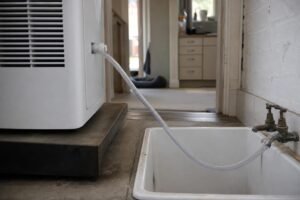
- Run the drainage hose out through a suitable opening or into a large container that cannot overflow.
- Check your insurance covers appliances left running in storage.
Running costs on hook-up
At home rates of 26.32p per kWh under the current Ofgem price cap, a desiccant model at 330–660W costs about 9p to 17p an hour at full power. Site electricity rates vary, so check your site's tariff. With a humidistat set around 55–60%, most caravans need only a few hours of running a day once dry.
Our verdict on the best dehumidifier for caravan use
The Meaco DD8L Zambezi is the best dehumidifier for caravan storage on hook-up, thanks to realistic cold-weather extraction, auto-restart and drainage. The DD8L Junior is a cheaper alternative, and the EcoAir DD1 Classic MK6 is the slimmest and lightest. Without power, rely on moisture traps and regular airing. Full Zambezi specifications are listed by retailers such as Robert Dyas.
Frequently asked questions
What is the best dehumidifier for a caravan?
A compact desiccant dehumidifier, such as the Meaco DD8L Zambezi, DD8L Junior or EcoAir DD1 Classic MK6, because they keep working in cold conditions.
Can I leave a dehumidifier running in my caravan?
Many owners do on hook-up, but check your storage site’s rules and insurance, use proper caravan cabling and set up drainage.
Will a compressor dehumidifier work in a caravan?
In a heated caravan in mild weather, yes, but in cold winter storage it will remove far less water and may ice up.
How do I stop damp in a caravan without power?
Use moisture traps and absorber tubs, open lockers and wardrobes, prop up cushions and air the caravan whenever you visit.
How much power does a caravan dehumidifier use?
Desiccant models typically draw around 300–660W depending on setting.
Best dehumidifier for caravan use: verdict
- Desiccant for cold caravans
- Drainage and auto-restart for storage
- Follow site and insurance rules
For caravans and motorhomes on hook-up, choose a compact desiccant dehumidifier. The Meaco DD8L Zambezi is our top pick, with the DD8L Junior and EcoAir DD1 Classic MK6 strong alternatives. Without power, use moisture traps and air the van regularly.