
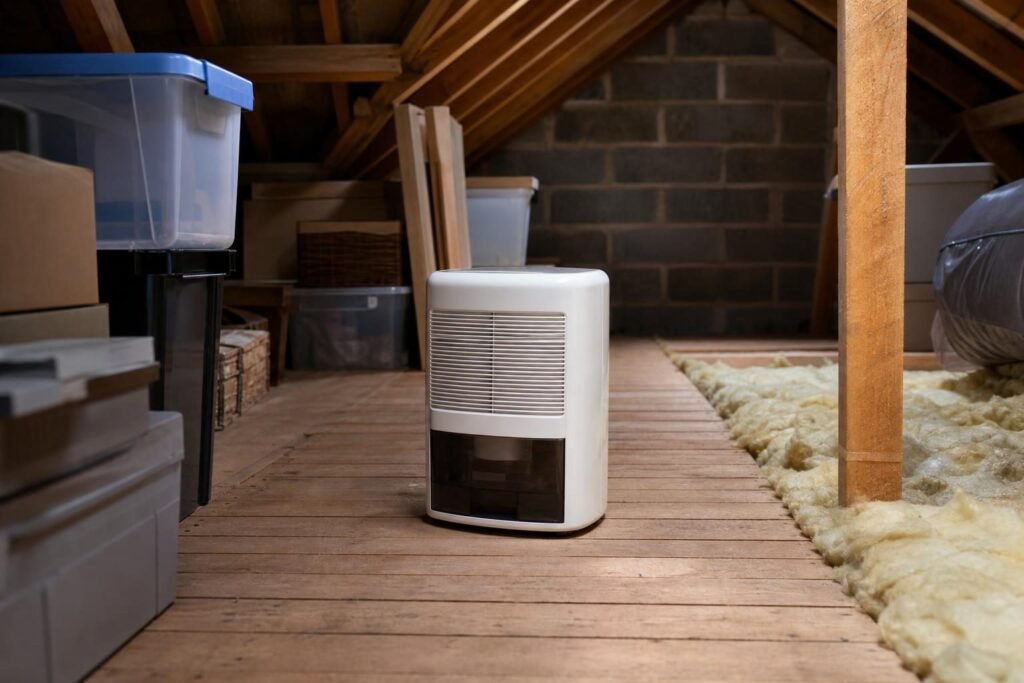
Do you need a dehumidifier for your loft?
Loft condensation is common in UK homes, especially after insulation has been topped up. A dehumidifier can help in a boarded or converted loft, but in a cold, ventilated roof void the real fix is usually airflow.
- What causes loft condensation
- When a dehumidifier helps and when it does not
- The best models for loft spaces
- Ventilation fixes to try first
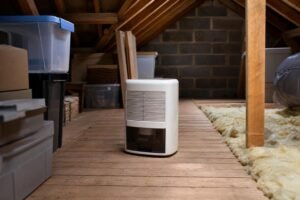
A dehumidifier for loft use sounds like the obvious answer when you find wet timbers, damp boxes or black spots on the underside of the roof. Sometimes it is. A boarded loft used for storage, or a loft conversion with a damp problem, can benefit enormously from a small dehumidifier running on a humidistat.
But a traditional cold roof void is a different space. It is designed to be ventilated, and if it is wet, the cause is almost always warm, moist air leaking up from the house and meeting a cold roof. Running a dehumidifier in a space that is meant to be open to outside air can cost a lot and achieve little. This guide explains how to tell the difference, which dehumidifiers actually work in a cold loft, and what else you should fix at the same time. For a broader look at damp in the home, see our guide to fixing damp problems.
Key takeaways
- Cold, ventilated roof void Fix the source first: seal loft hatches, check bathroom fans vent outside and clear eaves vents.
- Boarded storage loft or conversion A dehumidifier for loft use is worthwhile, ideally a desiccant model.
- Best type Desiccant dehumidifiers keep working when lofts drop to single figures in winter.
- Top pick EcoAir DD1 Classic MK6 or Meaco DD8L, set to 55–60% with continuous drainage if possible.
Our top picks at a glance


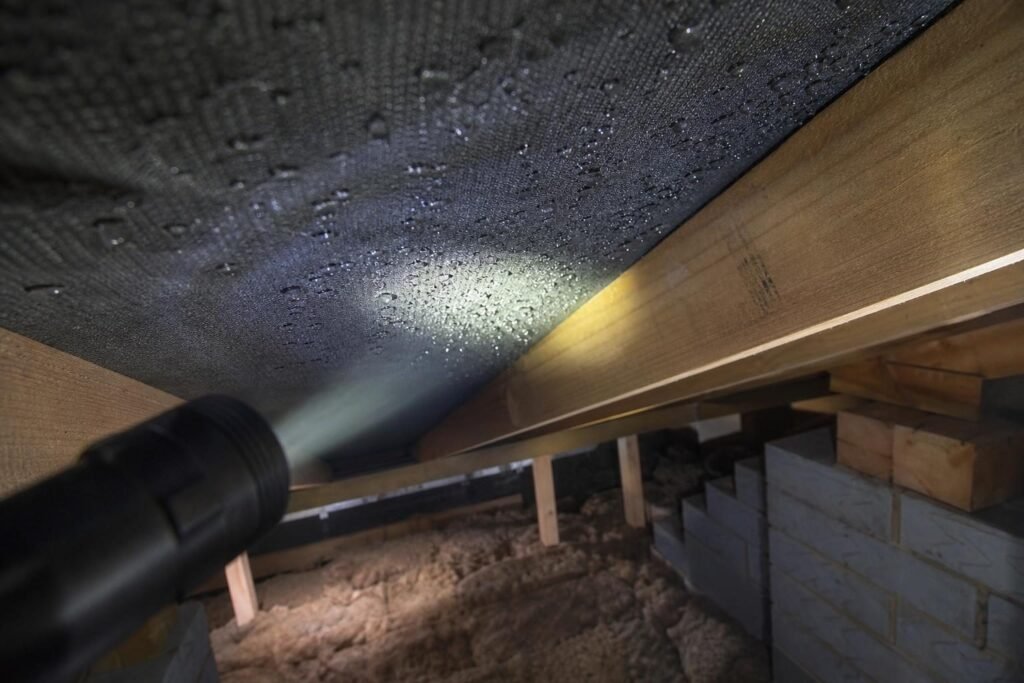
What causes condensation in a loft?
Loft condensation happens when warm, moist air from the rooms below gets into the roof space and meets surfaces below its dew point, usually the underside of the felt or membrane, the roof timbers and any metal fixings. The usual culprits are:
- An unsealed loft hatch. Warm air rises straight through the gaps.
- Bathroom or kitchen extractors that vent into the loft instead of through the roof or wall.
- Gaps around downlights, pipes and cables that pierce the ceiling.
- Blocked eaves vents after new insulation was pushed right into the edges.
- Non-breathable roofing felt in older roofs, which traps moisture rather than letting it escape.
- Drying washing indoors without ventilation, which raises humidity throughout the house.
If you can fix these, the loft often dries out on its own. Topping up insulation is good for bills, as our guide to cheap insulation upgrades explains, but it makes the loft colder, so ventilation matters even more afterwards.
When a dehumidifier for loft use makes sense
A dehumidifier is the right tool when the loft is treated as a room rather than a ventilated void:
- Boarded lofts used for storage where you want to protect clothes, papers and furniture.
- Loft conversions with poor ventilation, where condensation forms on cold corners or skylights.
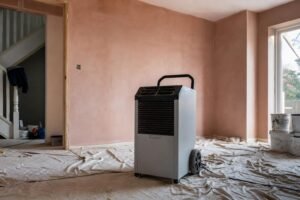
- Short-term drying after a roof leak has been repaired.
It is the wrong tool when the loft is open to outside air through eaves and ridge vents. In that case the dehumidifier is trying to dry the weather.
The best dehumidifier for loft spaces
1. EcoAir DD1 Classic MK6 – best for cold storage lofts
Lofts in winter often sit at 3–8°C, which is desiccant territory. The EcoAir DD1 Classic MK6 is rated at 7.5 litres a day, operates from 1°C, weighs just 6kg and has a carry handle, which matters when you are lifting it through a loft hatch. It includes a continuous drainage hose and has overdry protection, so it will not waste power once the space is dry.
- Works from 1°C, ideal for cold lofts
- Light enough to lift through a hatch
- Drainage hose included
- Smart power-saving mode
- Draws more power than a compressor model
- 2L tank needs a hose for unattended running
2. Meaco DD8L Zambezi – best for long unattended use
The Meaco DD8L Zambezi has a 3-litre tank, continuous drainage, auto-restart and a display showing temperature and humidity, which makes it easy to check on loft conditions occasionally. Its 7.5 litres a day rating is quoted at 10°C, close to real loft conditions.
3. Meaco Arete One 10L or 12L – best for warm loft conversions
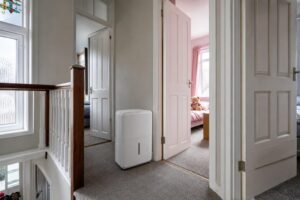
If your loft is a heated bedroom or office, a compressor model is more efficient. The Meaco Arete One range is very quiet at around 35dB for the 10L and 12L models, which matters in a bedroom, and the 10L draws about 163W. It suits spaces up to around 42m². Compare the two sizes in our Meaco Arete 10L vs 12L guide.
4. Small moisture absorbers – for light, occasional damp
For a small storage loft with only mild musty smells, refillable moisture absorber tubs are a low-cost stopgap. They will not deal with real condensation, but they help in enclosed cupboards and storage boxes.
Before buying a dehumidifier for loft condensation, try these fixes
- Seal the loft hatch
Fit a draught-proofing strip and an insulated hatch cover so warm air cannot rise through the gaps.
- Check extractor fan ducts
Make sure bathroom and kitchen fans are ducted all the way outside, not ending in the loft.
- Clear the eaves
Insulation should stop short of the eaves so air can flow in. Fit eaves trays if needed.
- Seal ceiling penetrations
Fill gaps around pipes, cables and downlights with suitable sealant or fire-rated covers.
- Add roof vents if needed
A roofer can fit tile or ridge vents if the loft has poor cross-ventilation.
- Reduce moisture at source
Dry laundry with a dehumidifier downstairs and use extractor fans when cooking and showering.
Getting the most from a dehumidifier for loft use
- Set the humidity target to 55–60%. Lofts do not need living-room dryness.
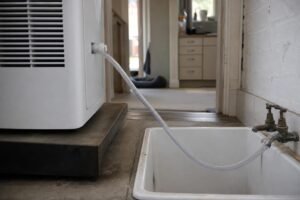
- Use continuous drainage where you can run a hose to a gutter outlet or a container, so it can run for weeks.
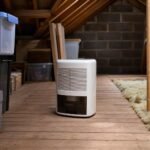
- Keep it off the insulation on a board or platform with space around the air inlet and outlet.
- Close the hatch so the dehumidifier is not drying the whole house through it.
- Check the wiring. Use a properly installed socket, not a long extension lead trailed through the hatch.
Running costs
At 26.32p per kWh under the current Ofgem price cap, a desiccant model drawing 300–580W costs roughly 8p to 15p an hour while running. With a humidistat, a boarded loft typically needs a few hours a day, so expect a few pounds a week in the worst of winter and very little in summer.
Our verdict on the best dehumidifier for loft spaces
The best dehumidifier for loft storage is a compact desiccant such as the EcoAir DD1 Classic MK6, because lofts get cold and you need something light enough to carry up a ladder. Choose a quiet compressor such as the Meaco Arete One for a heated loft room. But before you buy any dehumidifier for loft condensation, seal the hatch and check your fans: in most homes that is the real cure.
Frequently asked questions
Does a dehumidifier for loft condensation actually work?
In a boarded or enclosed loft, yes. In a ventilated roof void, the dehumidifier is fighting outside air and the better fix is stopping warm air leaking up from the house.
Is it normal to have some condensation in the loft?
A little on the coldest mornings can happen, but regular dripping, wet timbers or mould mean too much warm, moist air is getting in or ventilation is blocked.
Should I use a desiccant or compressor dehumidifier in the loft?
Desiccant for unheated lofts, because they keep working near freezing. Compressor for heated loft conversions, because they are cheaper to run at room temperature.
Can loft condensation damage my roof?
Over time, yes. Persistent moisture can rot timbers, rust nails and fixings, and damage stored items and insulation.
Where should I put a dehumidifier in the loft?
On a board in the middle of the space, away from insulation and stored boxes, with continuous drainage if possible.
The short version
- Find the moisture source before buying
- Desiccant for cold lofts, compressor for heated conversions
- Set 55–60% and use continuous drainage
A dehumidifier for loft use is worth buying for boarded storage lofts and loft conversions, and a desiccant model like the EcoAir DD1 is the best fit for cold roof spaces. For a ventilated loft void, fix the hatch, fans and eaves first.