

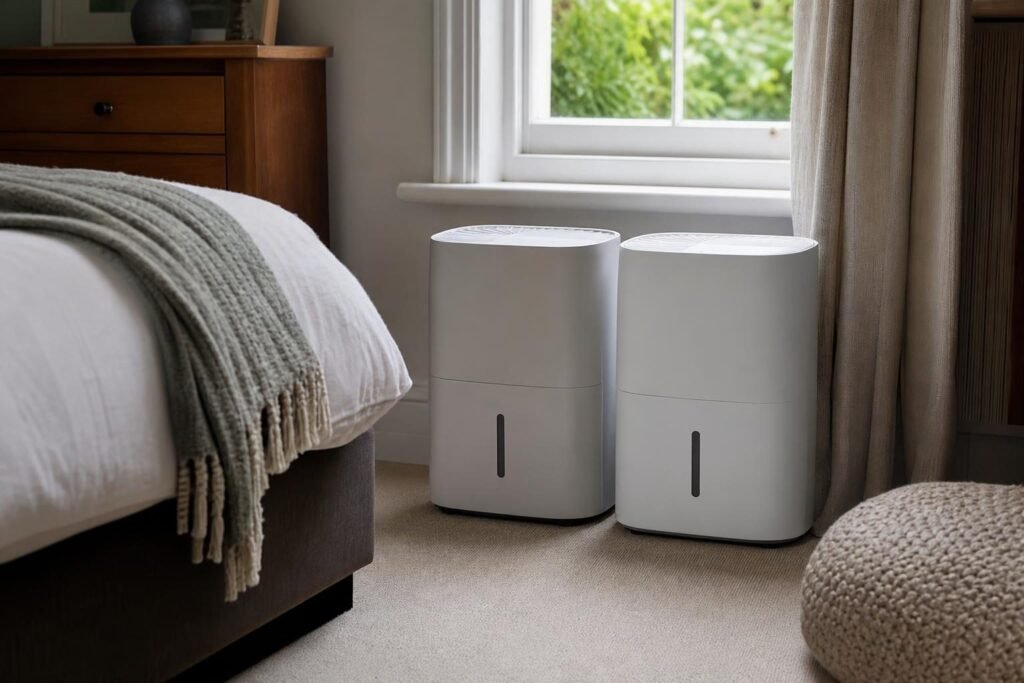
10L or 12L: the quick answer
For most UK bedrooms, studio flats and one- to two-bed homes, the difference between a 10L and 12L dehumidifier is small. Choose 12L if you dry laundry often or your home is damp; choose 10L if you want the cheapest, quietest option for light condensation.
- What 10L and 12L really mean
- How much extra water a 12L removes
- Noise and running costs
- Which size for which home
The 10L vs 12L dehumidifier decision feels bigger than it is. Both sizes sit in the compact category that suits bedrooms, small flats and one- or two-bedroom homes. They are similar in size, often share the same body and cost within £20 to £40 of each other. Yet a 12L machine is consistently the more popular choice, and there are good reasons for that.
In this guide we explain what the litre ratings actually mean, how much difference two extra litres make in a typical British home, and when it is worth paying for the larger model. For a wider look at sizes, our guide to the best dehumidifiers covers 20L and desiccant models too.
Key takeaways
- The ratings are optimistic Litres per day are usually measured at 30°C and 80% humidity, far wetter and warmer than a UK home.
- Real-world gap Expect a 12L to remove roughly 10–20% more water than a 10L in normal conditions.
- Choose 12L if you dry laundry indoors, live in an older or damp home, or have more than one room to cover.
- Choose 10L if you only have light window condensation in a single room and want the lowest cost.
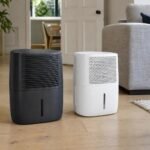
10L 10L | 12L 12L | |
|---|---|---|
 |
 | |
| Rated extraction | 10L a day | 12L a day |
| Noise | About 35dB | About 35dB |
| Body | Shared compact body | Shared compact body |
| Best for | Light, single-room use | Laundry and damper homes |
| Check price | Check price |
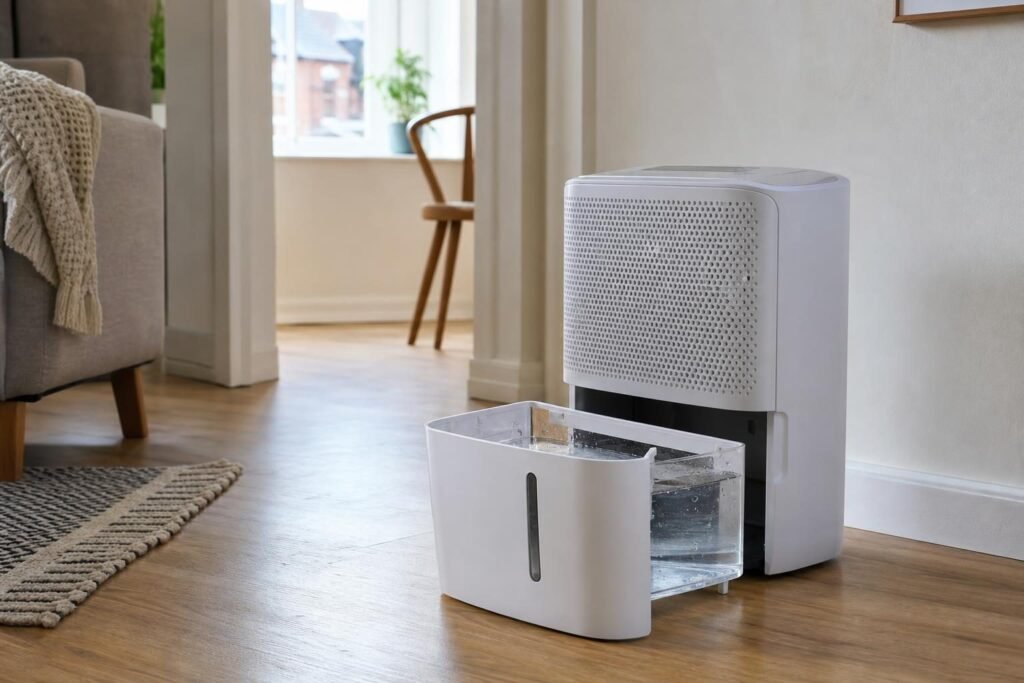
What does 10L or 12L actually mean?
The number on the box is the maximum water a dehumidifier can extract in 24 hours under test conditions, almost always 30°C and 80% relative humidity. British homes in winter are typically 17–21°C and 55–70% humidity, so real-world extraction is much lower.
Meaco is one of the few brands that publishes figures at more realistic conditions. Its Arete One 10L, for example, is rated at 6 litres a day at 27°C and 60% humidity, versus 10 litres a day at 30°C and 80%. At 20°C and 60%, its 12L Arete removes a little over 5 litres a day. These numbers show why you should never expect a dehumidifier to hit its headline figure in a typical home.
10L vs 12L dehumidifier: side-by-side
| Factor | 10L dehumidifier | 12L dehumidifier |
|---|---|---|
| Typical room size | Single rooms up to about 40m² | Small flats and 1–2 bed homes |
| Real-world extraction | Lower | Roughly 10–20% higher |
| Laundry drying | Fine for occasional loads | Better for regular loads |
| Noise | Often slightly quieter | Similar, sometimes slightly louder |
| Power use | Slightly lower | Slightly higher |
| Price difference | Baseline | Usually £20–£40 more |
Laundry drying
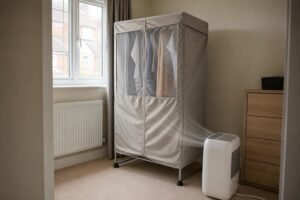
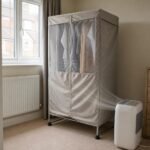
This is where the 10L vs 12L dehumidifier choice matters most. A full wash load can release two to three litres of water as it dries. A 12L machine removes that moisture a little faster, so washing dries sooner and less moisture escapes into the rest of your home. If you dry clothes indoors more than a couple of times a week, the 12L is worth it. Our guide to what size dehumidifier you need for drying clothes goes into more depth.
Noise
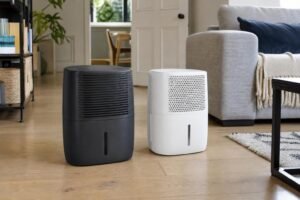
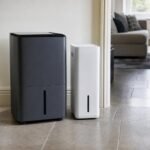
Many 10L and 12L models share the same chassis and fan, so noise levels are often almost identical. Meaco rates both its Arete One 10L and 12L at about 35dB. The bigger difference in noise comes from the brand and model rather than the litre rating.
Running costs
The power difference between a 10L and 12L compressor dehumidifier is usually small, perhaps 10–30W. At the current price cap of 26.32p per kWh, as published by Ofgem, that is well under a penny an hour. Because the 12L removes water faster, it may also reach your target humidity sooner and switch off earlier, which narrows the gap further.
Room size and home type
- Single bedroom or home office with mild condensation: 10L is enough.
- Studio flat or one-bed flat: 10L or 12L; choose 12L if you dry laundry there.
- Two-bed flat or small house: 12L.
- Three-bed house or very damp home: consider 20L instead. See our 12L vs 20L dehumidifier guide.
How to choose between a 10L and 12L dehumidifier
Drying washing is the biggest source of indoor moisture for many homes.
Older homes and ground-floor flats need more capacity.
Compressor models lose performance in cold rooms.
The price gap is usually small.
Matters in bedrooms.
10L vs 12L dehumidifier: our recommendation
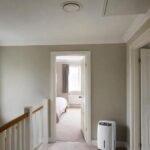
For most people the 12L is the better buy. It costs only a little more, takes up no more space, removes a bit more water and handles laundry better. The 10L makes sense if you only need to control light condensation in one room, you want the cheapest option, or you find a 10L on a particularly good deal.
If you are looking at a specific model range, our Meaco Arete 10L vs 12L comparison shows the difference on one of the most popular compact dehumidifiers. And whichever size you choose, using it alongside simple habits such as extractor fans and lids on pans is one of the best ways of preventing mould in UK homes.
10L vs 12L dehumidifier: common mistakes to avoid
The most common mistake in the 10L vs 12L dehumidifier decision is assuming the bigger number will always be louder or more expensive to run. In most ranges the two sizes share the same body and fan, so noise and running costs are almost identical. The second mistake is choosing on litre rating alone for a cold room. In an unheated conservatory or garage, neither size of compressor dehumidifier will perform well, and a desiccant model is the better choice.
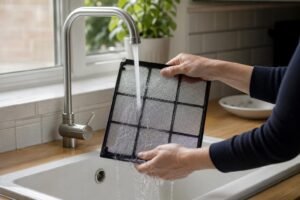
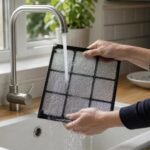
Finally, do not forget placement. A well-placed 10L in a small, closed room will often outperform a 12L tucked into a corner with the door open. Whichever side of the 10L vs 12L dehumidifier question you land on, keep the filter clean, leave space around the vents and set a humidity target of around 50–55%.
Frequently asked questions
Is there much difference between a 10L and 12L dehumidifier?
Not a huge one. In real UK conditions, a 12L typically removes roughly 10–20% more water than a 10L, and it handles laundry a little better.
Is a 10L dehumidifier big enough for a flat?
For a studio or one-bed flat with mild condensation, yes. If you dry washing indoors or the flat is damp, a 12L is a better choice.
Does a 12L dehumidifier cost more to run than a 10L?
Usually only slightly, often under a penny an hour more, and it may switch off sooner because it reaches the target humidity faster.
Will a 10L dehumidifier dry clothes?
Yes, but more slowly than a 12L or 20L. It is fine for occasional loads in a small room.
Why do dehumidifiers never reach their litre rating?
Ratings are measured at 30°C and 80% humidity. UK homes are cooler and drier, so real extraction is much lower.
10L vs 12L dehumidifier: verdict
- 12L for laundry and damp homes
- 10L for light, single-room condensation
- Desiccant for cold rooms, whatever the size
Choose a 12L dehumidifier for most homes, especially if you dry laundry indoors or have damp problems. A 10L is fine for light condensation in a single room or a small, well-ventilated flat.





1 response