


How often to clean a dehumidifier filter
Clean a dehumidifier filter every two to four weeks in normal use, and weekly if you dry laundry, have pets or run it in a dusty room. A clean filter keeps extraction high, running costs low and helps prevent icing and smells.
- A simple cleaning schedule
- Step-by-step cleaning
- Washable vs replaceable filters
- Other parts to clean
Knowing how often to clean a dehumidifier filter is one of the easiest ways to keep your machine working well. The filter sits in front of the coils or desiccant wheel and catches dust, pet hair and laundry lint before they reach the inside of the machine. Over a few weeks it slowly clogs, and as it does, less air flows through the dehumidifier. That means less water extracted, higher running costs and, in compressor models, a greater chance of the coils icing up.
The good news is that most dehumidifier filters take a couple of minutes to clean. This guide gives you a practical schedule, a step-by-step method, and advice on replaceable filters and other parts that need occasional attention. If your dehumidifier is icing up, see our guide on why a dehumidifier freezes up.
Key takeaways
- Normal use Clean a dehumidifier filter every two to four weeks.
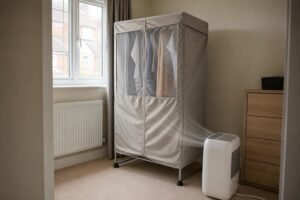
- Laundry drying or pets Check weekly; laundry lint clogs filters quickly.
- Dusty spaces In garages, workshops and renovations, clean every few days.
- Replaceable filters Carbon, HEPA-type and allergen filters often need replacing, not washing; follow the manual.

How often should you clean a dehumidifier filter?
| Situation | How often to check and clean |
|---|---|
| Bedroom or living room, normal use | Every 2–4 weeks |
| Drying laundry several times a week | Weekly |
| Homes with pets | Weekly to fortnightly |
| Garage, workshop or loft | Every 1–2 weeks |
| Renovation or plaster drying | Every few days |
| Seasonal storage | Clean before storing and again before use |
If you can see a grey film of dust or lint on the filter, it is time to clean it, whatever the calendar says.
Why you need to clean a dehumidifier filter
- Better extraction: more airflow means more water removed per hour.
- Lower running costs: a clean machine reaches your target humidity sooner and switches off. At 26.32p per kWh under the current Ofgem price cap, every hour saved matters.
- Less icing: restricted airflow makes compressor coils colder and more likely to freeze.
- Fresher air: a dirty filter can harbour mould and smells.
- Longer life: the fan and compressor do not have to work as hard.
How to clean a dehumidifier filter
- Switch off and unplug
Always unplug the dehumidifier before removing any panels or filters.
- Remove the filter
Most filters slide out from the back or side, or sit behind the tank. Check your manual if you are unsure.
- Vacuum loose dust
Use a vacuum cleaner’s brush attachment to remove lint and dust from the filter.
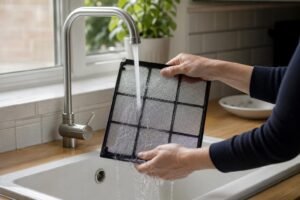
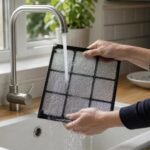
- Wash if it is washable
Rinse a mesh or washable filter under lukewarm water, with a drop of mild washing-up liquid if needed. Do not use hot water, bleach or a dishwasher.
- Dry it completely
Leave it to air dry fully, away from direct heat. Never refit a damp filter.
- Refit and restart
Slide the filter back in, check it sits correctly and plug the dehumidifier back in.
Washable vs replaceable filters
Most dehumidifiers have a washable mesh dust filter that you clean as above. Many also have an additional filter:
- Carbon filters reduce odours and usually need replacing every few months to a year.
- HEPA-type or fine air purifying filters, such as those on the Meaco Arete range, are typically vacuumed gently or replaced rather than washed. Check Meaco's guidance for your model.
- Allergen filters, such as on the DeLonghi Tasciugo AriaDry Multi, may need replacing periodically; Real Homes notes De'Longhi recommends about every two years, at around £10.75.
- Antibacterial or silver-ion filters, as on EcoAir's DD1 and DD3, have their own care instructions and replacement intervals.
Always follow the manual: washing a filter that is meant to be replaced can ruin it.
Other parts to clean
- Water tank: rinse it weekly and wipe it out with diluted white vinegar monthly to prevent slime and smells.
- Drainage hose: if you use continuous drainage, flush it with warm water every few months. See our guide to a dehumidifier with continuous drainage.
- Grilles: vacuum the air inlet and outlet grilles when you clean the filter.
- Exterior: wipe with a damp cloth; never spray water into the machine.
When to clean a dehumidifier filter: final tips
The simplest habit is to clean a dehumidifier filter every time you notice dust on it, and to set a recurring reminder every two to four weeks in normal use. Weekly checks are worthwhile if you dry laundry or have pets. A clean filter is the cheapest way to keep your dehumidifier efficient, quiet and effective against damp. For more ways to keep your home dry, see our guide to preventing mould in UK homes.
Frequently asked questions
How often should I clean my dehumidifier filter?
Every two to four weeks in normal use, and weekly if you dry laundry, have pets or run it in a dusty space.
Can I wash a dehumidifier filter?
Mesh dust filters can usually be rinsed in lukewarm water. Carbon and HEPA-type filters are often replaced rather than washed; check your manual.
What happens if you do not clean a dehumidifier filter?
Airflow drops, the machine removes less water, costs more to run and compressor models may ice up.
How do I know if my dehumidifier filter needs cleaning?
If you can see dust or lint on it, or the dehumidifier seems to collect less water than usual, it needs cleaning.
Should I clean the dehumidifier tank too?
Yes. Rinse it weekly and clean it with diluted white vinegar monthly to prevent smells and slime.
How often to clean a dehumidifier filter: summary
- 2–4 weeks for normal use
- Weekly for laundry and pets
- Follow the manual for carbon and HEPA-type filters
Clean a dehumidifier filter every two to four weeks in normal use and weekly for laundry, pets or dusty rooms. It takes minutes and keeps extraction high, running costs low and icing at bay.









1 response