
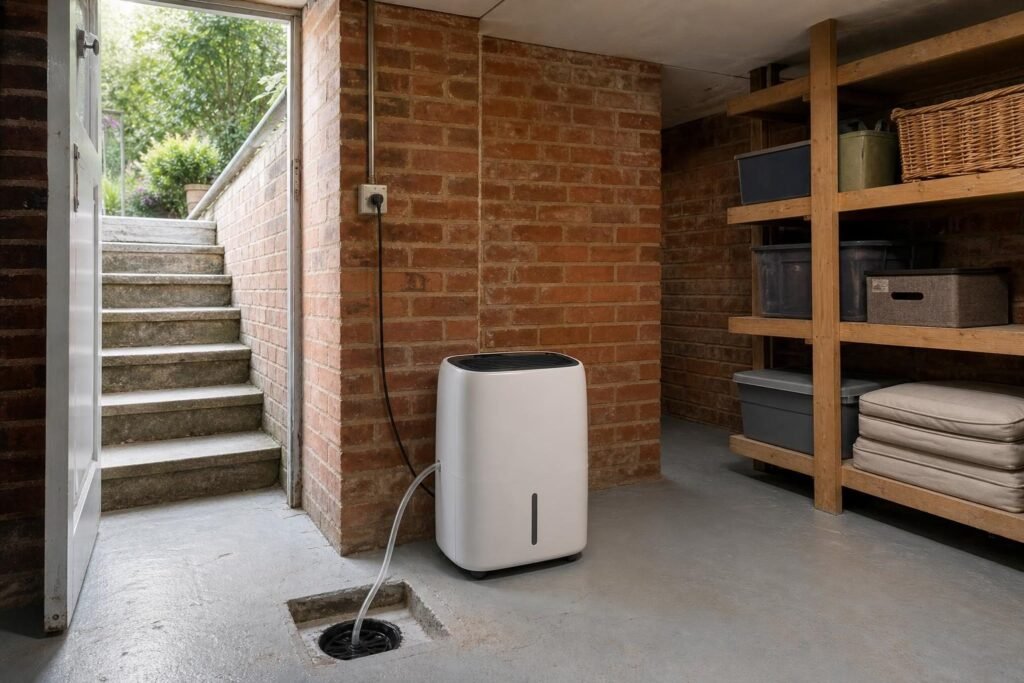
The best dehumidifier for cellars and basements
UK cellars are cool, still and often damp, so you need a dehumidifier that copes with low temperatures, runs unattended and drains continuously. First, though, rule out water getting in through the walls or floor.
- Cellar damp: condensation vs penetrating water
- Desiccant or compressor below ground
- Our top picks
- Drainage, placement and running costs
Choosing a dehumidifier for cellars is different from choosing one for upstairs rooms. British cellars and basements typically sit at 8–15°C all year, with very little air movement and walls in direct contact with damp ground. Moisture can come from condensation, from water vapour passing through the masonry, or from liquid water seeping in. A dehumidifier deals well with the first two, but cannot fix the third on its own.
The right machine for a cellar needs to work in cool conditions, run for weeks without attention and empty itself through a drainage hose or condensate pump. This guide explains how to diagnose your cellar damp, which type of dehumidifier to choose, and our recommended models. If you suspect water is coming through the walls, read our guide to fixing damp problems before you buy anything.
Key takeaways
- Best for cool cellars A desiccant dehumidifier such as the EcoAir DD3 Classic MK3 or Meaco DD8L Zambezi.
- Best for heated or converted basements A compressor model with intelligent defrost, such as the Ebac 3850e.
- Must-haves Continuous drainage, auto-restart and a humidistat.
- First check Look for tide marks, puddles or efflorescence that suggest water ingress needing tanking or drainage.
Our top picks at a glance


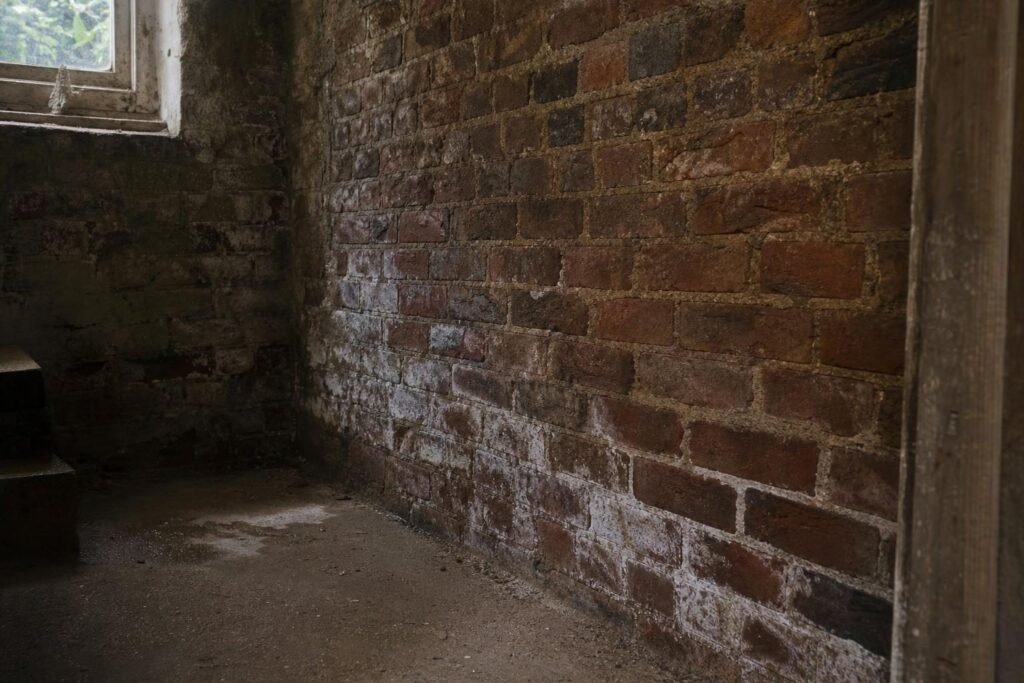
Diagnose your cellar damp first
- Condensation: wet patches on the coldest surfaces, especially in summer when warm, humid air enters. A dehumidifier for cellars fixes this well.
- Vapour through walls and floor: a constant damp smell, high humidity and mould on stored items, but no running water. A dehumidifier helps significantly.
- Water ingress: puddles, tide marks, flaking salts (efflorescence) or water after heavy rain. This needs a structural fix such as drainage, a cavity drain membrane or tanking. A dehumidifier only manages the symptoms.
A simple test: tape a square of kitchen foil to the wall overnight. Moisture on the room side points to condensation; moisture under the foil points to damp coming through the wall.
Desiccant or compressor for a cellar?
Compressor dehumidifiers lose much of their performance below 15°C and can ice up below 5–10°C. Many cellars sit right in that range. Desiccant dehumidifiers keep extracting at low temperatures and blow out slightly warmer air, which helps a cold cellar feel less clammy. They do use more power.
If your basement is heated or converted into a living space and stays above about 15°C, a compressor model will be cheaper to run.
The best dehumidifier for cellars and basements
1. EcoAir DD3 Classic MK3 – best overall for cellars
EcoAir's DD3 Classic MK3 is a large desiccant dehumidifier rated at 11 litres a day, suitable for areas up to 90m². It has a 4.2-litre tank, a drainage hose, a digital hygrometer and auto-restart after power cuts, which makes it well suited to a cellar you check only occasionally. See our full EcoAir DD3 Classic review.
- Strong desiccant extraction in cool conditions
- Auto-restart and drainage hose
- Digital hygrometer
- Covers large basements
- Higher running cost than a compressor
- Draws up to 735W at full power
2. Meaco DD8L Zambezi – best for monitoring
The Meaco DD8L Zambezi is rated at 7.5 litres a day at 10°C and 60% humidity, a realistic cellar condition. It shows temperature and humidity on its display, has a 3-litre tank, continuous drainage and auto-restart, and can increase its fan speed if humidity rises well above your setting.
3. EcoAir DD1 Classic MK6 – best for small cellars
For a small cellar or coal store, the compact DD1 Classic MK6 removes 7.5 litres a day, works from 1°C and comes with a drainage hose.
4. Ebac 3850e – best for heated basements
For a basement that is heated or used as a room, Ebac's British-made 3850e uses Smart Control and an intelligent defrost system that keeps it running down to about 3°C. It is cheap to run at a stated 160W where conditions suit it.
5. Hired or commercial units – best for flood recovery
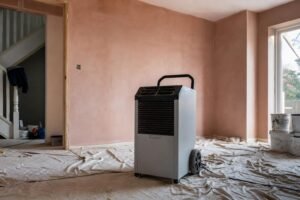
After a flood or leak, hire a commercial dehumidifier designed for continuous duty. Domestic units are fine for ongoing control but not for drying out a soaked cellar quickly.
What to look for in a dehumidifier for cellars
Cellars are usually 8–15°C.
Nobody wants to empty a tank in the cellar every day.
Power cuts happen, and cellars are not checked daily.
Keeps running costs under control.
Cellars are dusty.
Drainage options in a cellar
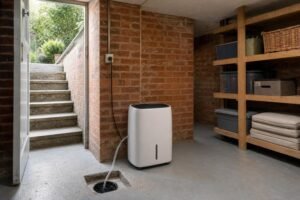
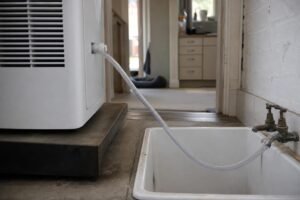
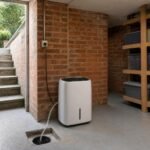
If your cellar has a floor drain or sump, run the dehumidifier's hose straight into it. If not, you have two choices: a large container you empty weekly, or a small condensate pump that lifts the water up to a drain or outside. Make sure any hose falls continuously downhill if it relies on gravity.
Running costs
At the current price cap of 26.32p per kWh from Ofgem, a desiccant model at 300–700W costs about 8p to 18p an hour at full power. With a humidistat set to 55–60%, a typical cellar needs the dehumidifier running for only part of each day once it has dried out, so expect £10 to £25 a month in the wettest periods and less in winter, when outside air is drier.
Our pick for the best dehumidifier for cellars
For most UK cellars and basements, the best dehumidifier for cellars is a desiccant model, and the EcoAir DD3 Classic MK3 is our top pick thanks to its capacity, drainage and auto-restart. Choose the Meaco DD8L Zambezi if you want temperature and humidity on the display, and the Ebac 3850e for heated, converted basements. Above all, rule out water ingress first; if water is coming in, see our guide to fixing rising damp.
Where to place a dehumidifier for cellars
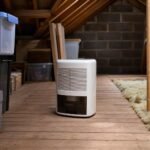
Placement makes a big difference to how well a dehumidifier for cellars performs. Put it in the middle of the space rather than in a corner, raised slightly off the floor on a sturdy platform so it is clear of any surface water and dust. Leave at least 30cm around the air inlet and outlet, and keep stored boxes away from the walls so air can circulate behind them.
If your cellar is split into several small rooms, prop the doors open or consider two smaller machines. And keep the cellar door to the house closed: a dehumidifier for cellars should treat the cellar air, not pull warm, moist air down from the rooms above.
Frequently asked questions
What type of dehumidifier is best for a cellar?
For cool cellars, a desiccant dehumidifier is usually best, because it keeps working at 8–15°C. For heated basements, a compressor model is cheaper to run.
Will a dehumidifier fix a damp cellar?
It will control condensation and moisture vapour, but it cannot stop liquid water coming through walls or floors, which needs a structural fix.
What humidity should a cellar be?
Around 50–60% is a sensible target for storage. Below 50% wastes electricity in most cellars.
Can I leave a dehumidifier running in the cellar?
Yes, if it has a humidistat, continuous drainage and auto-restart. Check it and clean the filter every few weeks.
How do I drain a dehumidifier in a basement with no drain?
Use a condensate pump to lift water to a sink, drain or outside, or empty a large container regularly.
Best dehumidifier for cellars: verdict
- Cool cellars: desiccant
- Heated basements: compressor
- Use continuous drainage and auto-restart
A desiccant dehumidifier is the best choice for most cool UK cellars, with the EcoAir DD3 Classic MK3 our top pick. Choose a compressor such as the Ebac 3850e for heated basements, and always fix water ingress first.