

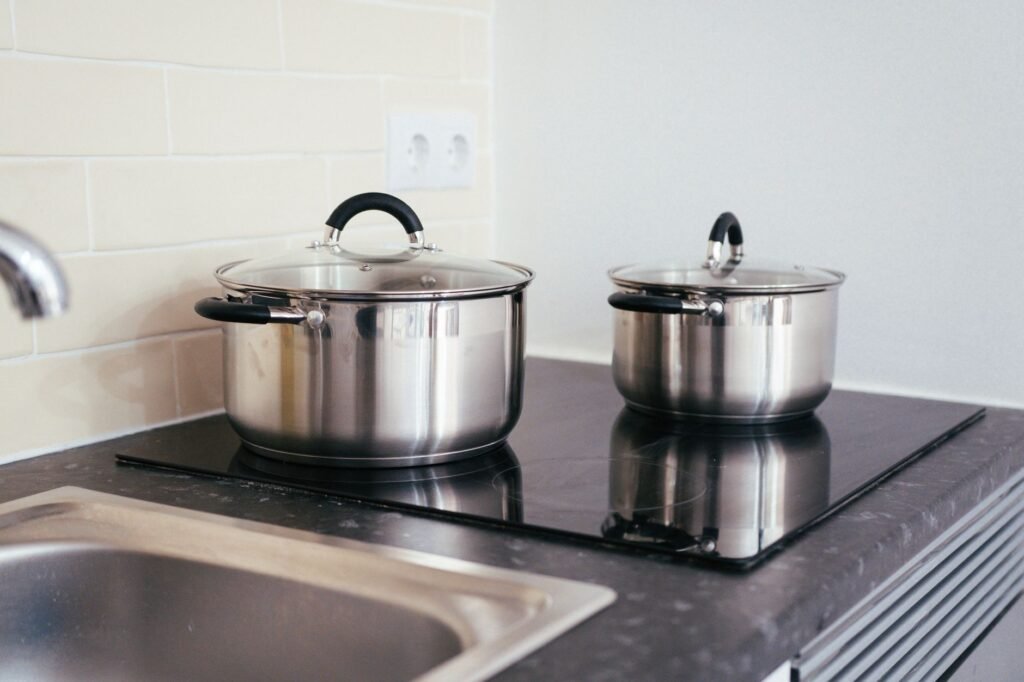


An induction stove only heats pans it can detect, so a flashing zone or a pan symbol usually means a compatibility or positioning problem rather than a fault. Below we walk through the checks that solve most induction stove detection issues, starting with the quickest.
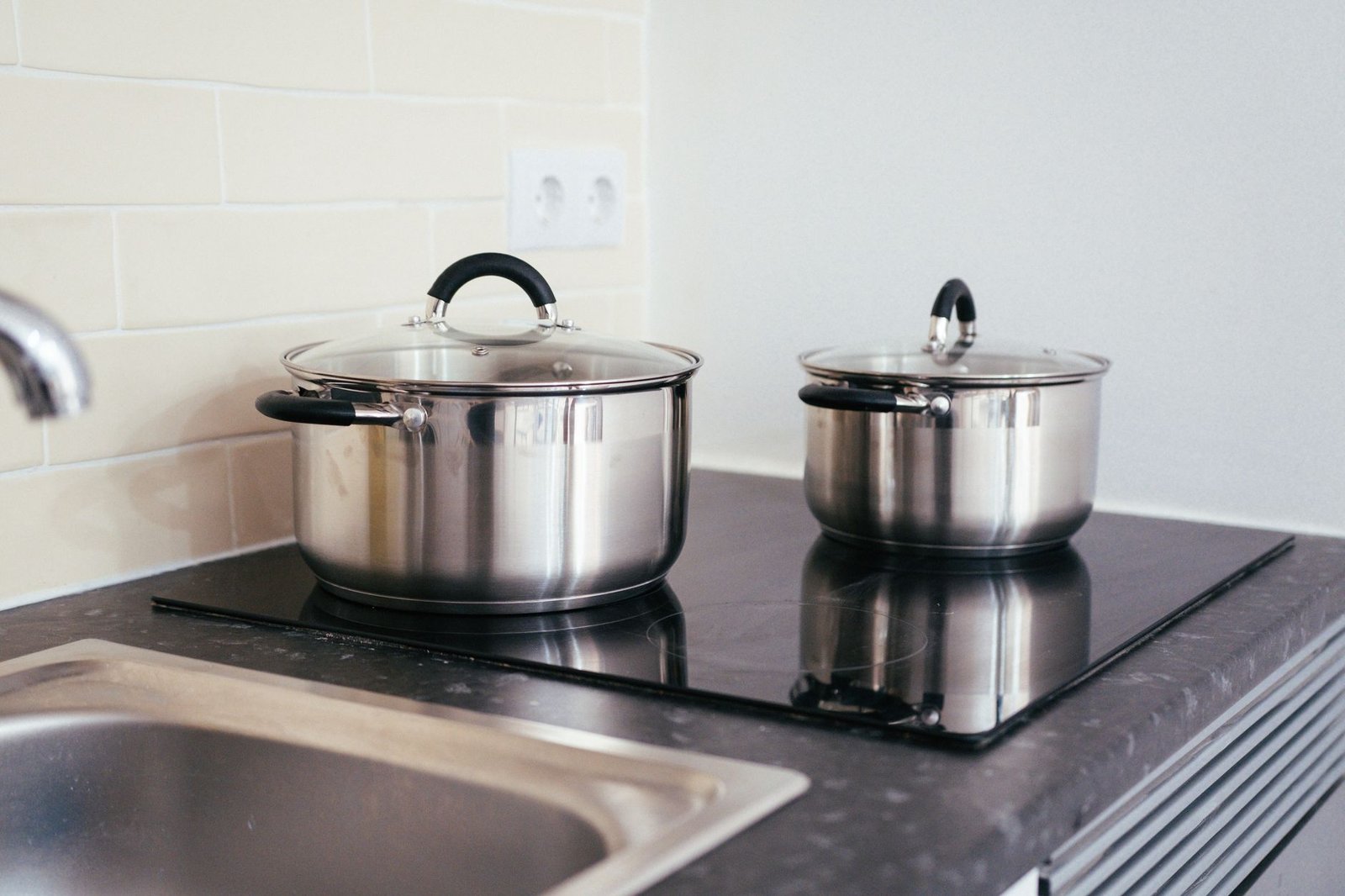
A lit cooktop can still be waiting for the right pan.
The display glows, the skillet sits on the cooking zone, and dinner stays cold. A flashing pan symbol or a burner that stops heating after a few seconds usually means the cooktop has power but hasn’t recognized usable cookware. The pan is the simplest thing to check first.
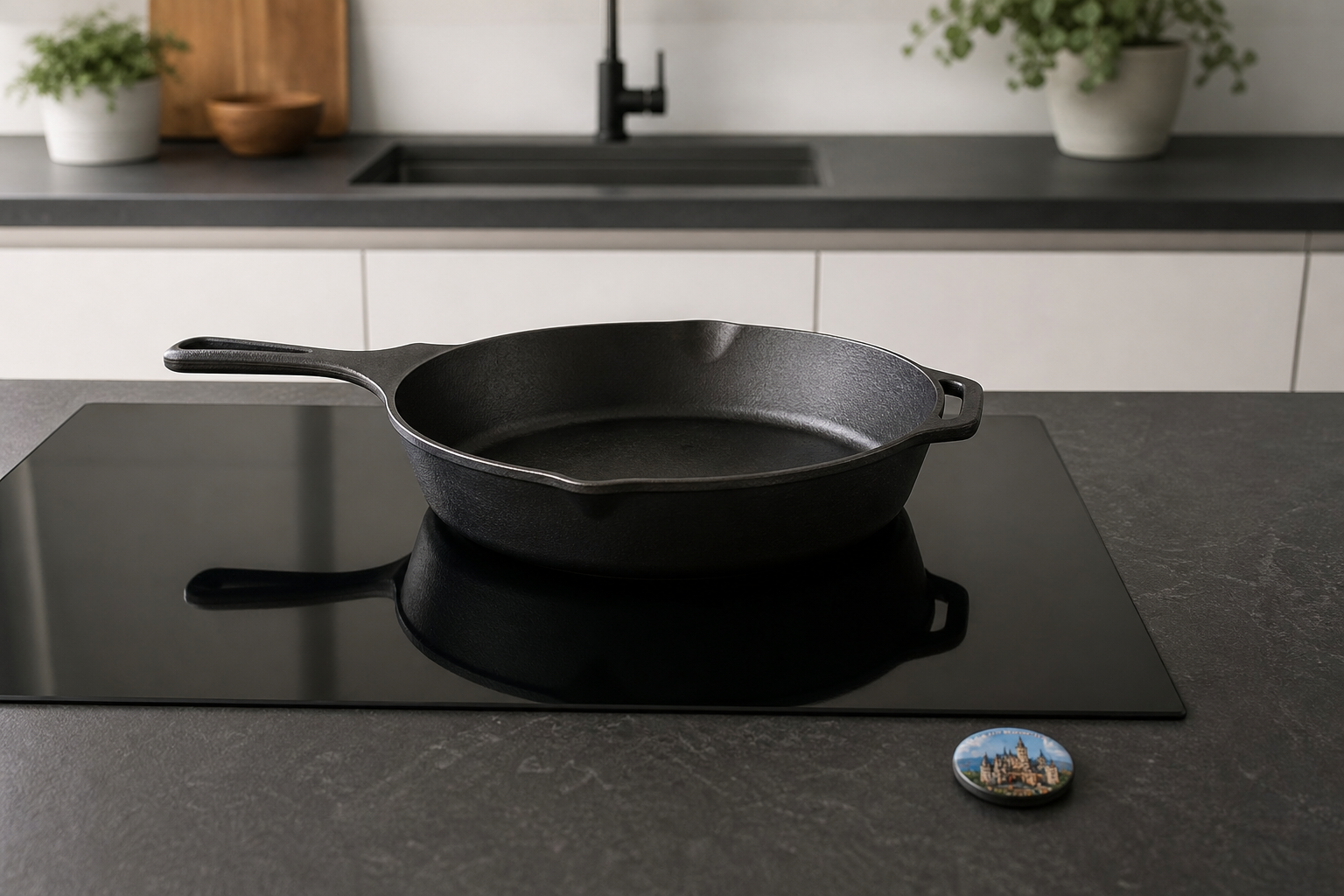
Induction needs a magnetic base, and some cooktops also struggle with pans that are too small for the zone. A fridge magnet should cling firmly to the underside; if it falls off, that pan is unlikely to work. If it sticks, center the pan on the zone and try again.
Check the pan’s magnetic base
An induction burner needs enough magnetic material in a pan’s base to detect it. Aluminum, copper, and glass pans usually need a bonded magnetic layer to work, and not all stainless steel pans have one. A pan may look suitable but still trigger a no-pan warning or cause the burner to switch off after a short wait.
Try a fridge magnet
With the pan cool and off the cooktop, hold an ordinary fridge magnet against its flat underside, not its sidewall. Try the center and a few spots toward the edge. A firm grip is a good sign; a magnet that slips off or barely clings suggests the base may not work on induction. A magnetic sidewall does not make up for a nonmagnetic base.
The magnet test is a useful screen, not a guarantee. A small magnetic insert or thin layer may still be insufficient for the burner to register the pan. Before changing settings, center a pan that has worked on the same burner before. If that pan heats normally, the original pan’s base is the likely cause. If neither pan is detected, the problem may lie elsewhere, such as pan placement or the cooktop.

Check the base size and position
A magnet sticking to the underside is a good sign, but it does not tell the whole story. Some pans have a narrow magnetic insert inside a much wider bottom. The cooktop senses that insert, not the pan’s rim, so a large-looking skillet may still be too small for the zone.
- Check the minimum pan size in the cooktop manual. Measure the flat, magnetic area underneath the pan, not the width across its top. If that area is too small, try a smaller zone or a pan with a wider magnetic base.
- Center the pan over the zone marking before starting the heat. Even a suitable base may go undetected if too much of it sits outside the sensing area.
- Check that the pan sits level. A bowed or warped base can make positioning less reliable. Wipe away stuck-on food and dry both the pan bottom and the glass before trying again.
If another pan works promptly on the same zone, the first pan’s magnetic area, shape, or fit is the more likely problem.
Compare pans on the same zone
A pan that heats reliably elsewhere makes a useful comparison, but try it on the same zone that rejected the other pan. Test them separately, centered, at the same heat setting. If one heats and the other triggers a pan warning, the zone can detect cookware. The rejected pan is the more likely cause.
Similar-looking pans do not always have similar bases. Even two stainless-steel pans from one set may differ: one might have a broad magnetic steel layer, while the other has only a small magnetic insert. A magnet may stick to that insert, yet its diameter may be too narrow for the zone to recognize.
Compare the magnetic area underneath, not just the pans’ overall widths. A circular seam or change in finish may mark the edge of an induction-ready disc. If the rejected pan works on a smaller zone, its base size is a strong suspect. If neither pan heats on the original zone, the cooktop needs a closer look.
When the pan stops registering mid-cook
A gentle on-off rhythm at a low heat setting is often normal. Many induction cooktops deliver low power in pulses, so a simmer may pause and resume without any error. A flashing pan symbol or repeated loss of heat and detection is different: the zone may no longer be sensing the cookware reliably.
Watch what happens just before the symbol appears. If it follows a stir or a nudge of the handle, slide the pan back to the center of the zone. A pan with a warped or uneven base may rock as its contents bubble, changing how steadily it sits on the glass. Once cool, set it on a flat counter to check for rocking; a flatter pan is a useful comparison.
A base that only just meets the zone’s minimum size can also be unreliable, especially when the pan shifts slightly. Trying a wider, flat-bottomed magnetic pan on that same zone can help confirm the cause. Check the cooktop manual for the zone’s minimum pan size rather than judging by the pan’s rim.
If the cooktop displays an overheating warning, switch off the zone and let the appliance cool. Make sure its ventilation openings are unobstructed before trying again. Without that warning, focus first on the pan’s position, shape, and base size.
Pan detected, but nothing heats?
A pan can register on the display while the zone produces little or no heat. Before changing cookware again, check what the controls are set to do.
- Power level: Make sure the zone is set above zero. A very low setting may heat slowly enough to seem inactive at first.
- Pause or keep-warm mode: Pause stops cooking temporarily; keep-warm holds food at a gentle temperature rather than bringing cold food to a boil.
- Timer: If a cooking timer has expired, the zone may have switched off even though the cooktop display remains lit.
For a simple check, put some water in the pan and run the zone at a moderate power level for a few minutes. The water should begin to warm. This is easier to judge than waiting for a thick pan or a small amount of food to heat, and it avoids testing with an empty pan.
If the water stays cold despite an active power setting, try the same test with a known-working pan on that zone. If a fault code appears, look up the exact code in the cooktop’s manual. Codes vary by model, so guessing at their meaning can send the troubleshooting in the wrong direction.
Is it one zone or the whole cooktop?
-
Use a pan that has worked before
Choose a known-compatible pan and place it in the center of the zone that is not detecting cookware. This keeps an uncertain pan from confusing the test.
-
Try the same pan on another zone
If the second zone detects and heats it, the first zone may have a fault. If neither responds, check the controls and power before assuming both zones have failed.
-
Check the lock and power
Look for a control-lock symbol and follow the manual’s unlock instructions. If the display is dark, check that the wall switch is on and note whether the breaker has tripped. Do not keep resetting a tripping breaker.
-
Use only the manual’s reset procedure
If the controls have power but still do not respond, follow the reset instructions for that model, if provided. Test the same pan again afterward. Avoid improvised button combinations or removing any panels.
-
Stop if the fault returns
A zone that repeatedly rejects a known-working pan, or a cooktop that remains unresponsive, needs qualified assessment. Note any displayed fault code for the technician.
Stop using the cooktop if the glass is damaged, there is a burning smell, a breaker trips, or the fault keeps returning. Leave the appliance closed and arrange qualified service rather than trying to inspect its wiring or internal parts.
If cooking must continue in the meantime, compact countertop cooking alternatives may provide a temporary option.
- Magnet slips off A magnet that will not grip the base points to a cookware mismatch. Try a compatible pan.
- Pan goes undetected If the base is magnetic, check that it sits flat, covers enough of the zone, and is centered.
- Fault keeps returning If a known-working pan fails on one zone, or error codes keep returning, check the manual and arrange appliance service if needed.
How an induction stove detects a pan
An induction stove uses a coil under the glass to create a magnetic field. When a pan with a magnetic base sits on the zone, the field induces heat directly in the metal. If the base is not magnetic enough, too small or off-centre, the induction stove cannot complete that circuit, so it shows a no-pan warning or switches the zone off after a short time.
The quickest test is a fridge magnet. If it sticks firmly to the base, the pan should work on an induction stove. Cast iron, enamelled cast iron and most magnetic stainless steel pans work well, while aluminium, copper, glass and some stainless steel pans do not unless they have a magnetic plate in the base.
When to call for an induction stove repair
If several known-good pans fail on one zone while they work on others, or the induction stove shows error codes, trips the breaker or stops responding to the controls, the issue is likely electronic. Note the error code, check the manual and contact the manufacturer or a qualified appliance technician rather than opening the unit.
For more kitchen troubleshooting, read our guide to a gas stove clicking but not lighting and our checklist of kitchen appliances you need for a first home. Consumer Reports also explains how to tell if a pot or pan is induction-compatible.
For a final check, place a flat, adequately sized, known-compatible pan on one zone, then try it on another. If it works on both, the original pan is the likely problem. If it fails only on one, that zone needs closer attention. If neither zone detects it, consult the cooktop manual for any displayed code before seeking qualified help.





















1 response