

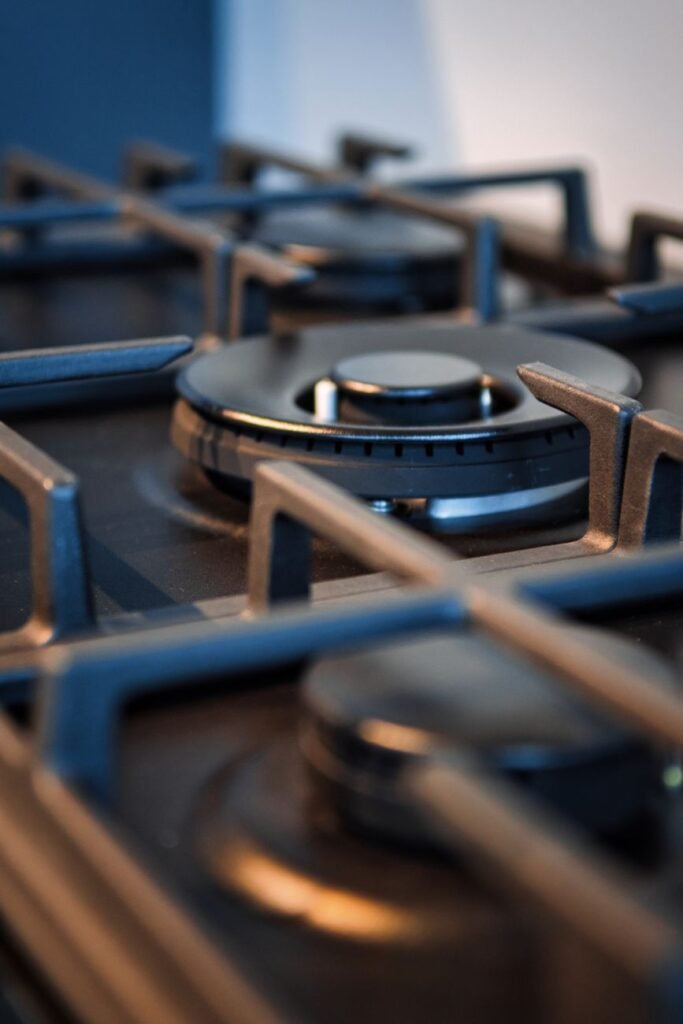


A gas stove that keeps clicking but will not light is one of the most common kitchen appliance problems, and it is often caused by something simple such as a misaligned burner cap or a damp igniter. This guide shows how to check a gas stove safely, step by step, and when to stop and call a professional.
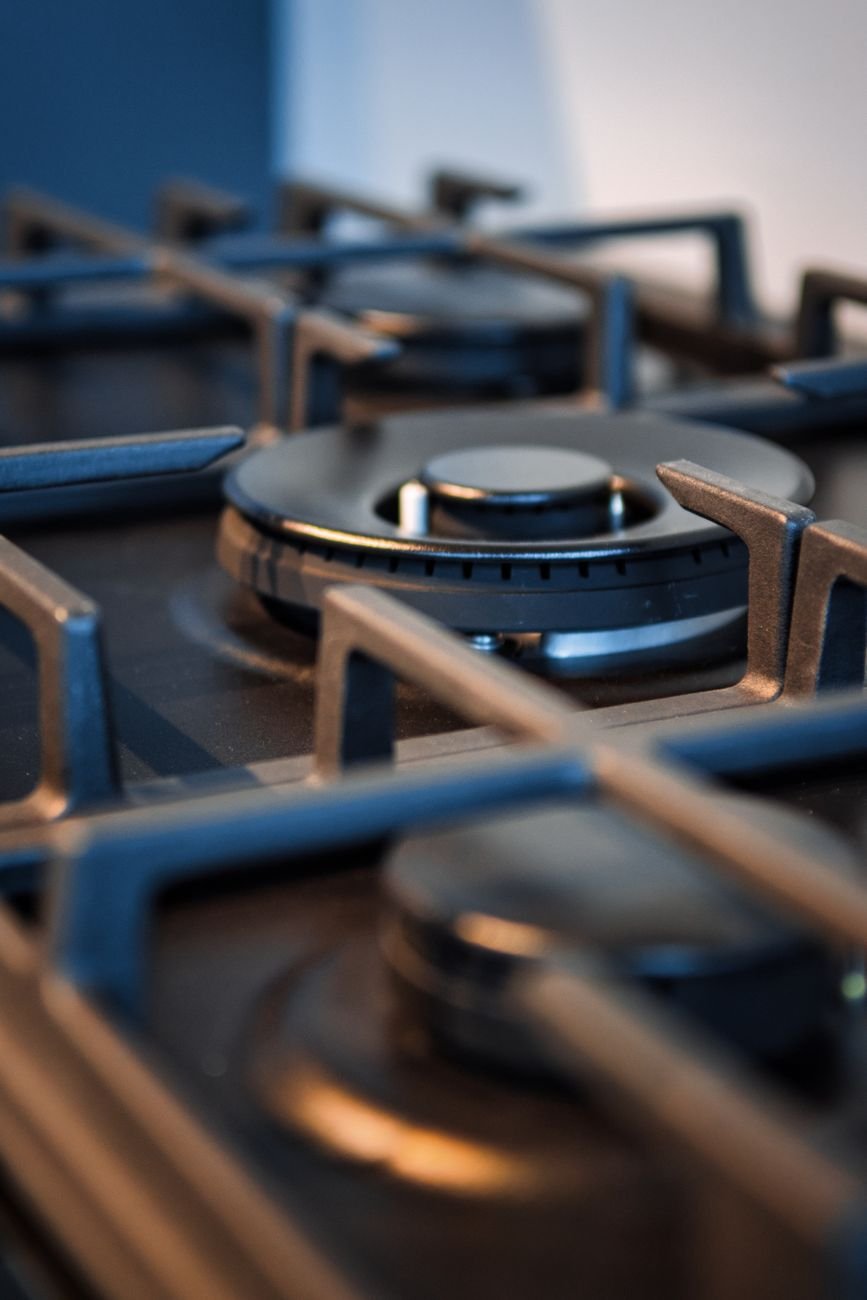
One more turn of the knob is rarely the best first move.
Dinner is ready to cook, but the burner keeps ticking and the flame never appears. Turn the knob to Off rather than letting gas flow while it clicks. If there is no smell of gas, leave the burner off and let it cool before checking for a misplaced burner cap, food debris, or moisture around the igniter. A recent spill can leave enough water behind to prevent a spark from catching.
Leave the building immediately. Do not try to light the burner, operate electrical switches, use a phone indoors, or stay to troubleshoot. Once outside, call the gas utility or emergency services. Do not go back in until they say it is safe.
If every burner clicks but none produces a flame, a shared supply issue is more likely than several blocked burners at once. If there is any smell of gas, stop immediately: leave the area and call the gas utility or emergency services from outside. Do not keep trying to light the stove.
With no gas odor, check the stove’s manual for its normal lighting sequence. Some models require the knob to be held in a particular position before gas flows. If the stove has a propane tank, a readily visible level gauge may also help explain why all the burners have stopped working. There is no need to handle a valve, hose, or fitting to make this check.
Think about other gas appliances in the home. If a gas water heater or furnace is already running normally, gas is reaching at least part of the home, though that does not rule out a stove-specific supply problem. If those appliances have also stopped, the issue may be farther upstream. Avoid starting appliances solely to test the supply.
When the supply is uncertain, leave the stove off and contact the gas utility, propane provider, landlord, or a qualified technician as appropriate. Repeated ignition attempts will not clear a supply problem and may allow unlit gas to accumulate.
When one burner sparks but will not light
-
Turn the knob off and let the burner cool
A visible spark means the igniter is doing something, but it does not guarantee that gas can reach the spark. Wait until the grate, cap, and burner are cool before handling any removable parts.
-
Check how the cap sits
Lift off the cap if the appliance manual allows it. Set it back in its proper position, with any locating tabs or notches aligned. A cap left slightly crooked after cleaning can keep the flame from catching.
-
Look for blocked openings
Check the small flame openings around the burner, especially those nearest the spark. If crumbs or dried food are visible, remove loose debris gently with a soft brush, following the manual. Do not enlarge openings or force anything through them.
-
Make sure removable parts are dry and seated
Moisture from a recent wipe-down can interfere with ignition. Let the cap and any removable burner head dry completely, then put them back as the manual shows. Leave the electrode in place rather than bending or scraping it.
-
Try the burner once, then stop if it still fails
Reassemble the burner before testing it. If it clicks without lighting, turn the knob off rather than repeatedly releasing gas. If a gas odor is present, leave the area and call for help from outside; otherwise, arrange service.
Check where the spark lands
A clicking sound does not guarantee that a spark is reaching the burner. During one brief, normal lighting attempt, look for a small blue-white spark jumping from the igniter tip toward the burner. Keep hands clear and turn the knob off promptly if the flame does not catch. If gas is smelled, stop checking and follow the gas-odor safety steps above.
If one burner clicks but shows no visible spark while the others light normally, the trouble may be with that burner’s igniter or its connection. A spark that jumps toward the wrong spot may also miss the gas. If the spark lands consistently and the burner still will not light, poor gas flow through the burner openings becomes more plausible, though the spark alone cannot confirm the cause.
Once everything is off and cool, wipe away grease or food near the igniter with a soft, dry cloth. A soft brush can clear loose debris from accessible flame openings; avoid poking a pin into them or removing stove panels. Let any cleaned parts dry fully, then make sure the cap sits level before a single short retry. If the spark remains absent, wanders, or works only sometimes after reassembly, leave the burner off and arrange professional repair.
After a spill or cleaning
A boil-over or a thorough wipe-down can leave water around the igniter, beneath the burner cap, or near the controls. That moisture may keep a burner from lighting or cause the stove to click repeatedly, sometimes even after the knob is turned off.
With the controls off and the cooktop cool, lift off only the burner parts meant to be removed. Blot any visible water, then leave the parts and exposed burner area to air-dry fully before putting everything back. The gap around an igniter can stay damp after the surface looks dry, so several hours or overnight may be needed. Avoid using a hair dryer or poking into the igniter to speed things up.
Skip repeated lighting attempts while the area is wet. Once dry, replace the cap so it sits flat and try the burner once. If clicking continues after everything has dried, especially with all knobs off, stop testing and arrange appliance service. If there is a smell of gas at any point, leave the area and call the gas provider from outside.
When the flame catches, then goes out
A burner that lights briefly and then goes out is behaving differently from one that only clicks. Turn the knob off and let the burner cool before checking it. Repeatedly turning the gas back on is not a useful way to diagnose a flame that will not stay lit.
Lift the grate and check that the burner cap sits flat in its proper position. A tilted cap can leave the flame uneven or keep it from reaching the area needed to stay lit. Look for food blocking the small flame openings, and clear only accessible debris with a soft, dry brush. Replace the cap before trying the burner once more.
On stoves with a flame-sensing safety device, a flame that dies when the knob is released may mean the device is not detecting it. The stove’s manual can confirm whether the knob must be held briefly after ignition. If the flame still goes out, or burns weakly or irregularly, switch the burner off and arrange professional service. Avoid further lighting attempts, especially if the flame seems to spread unevenly around the burner.
When clicking continues with the knob off
Clicking after the knob is turned off is different from a burner that will not light. If there is no gas smell, check that every burner knob is fully in the off position. A knob left slightly turned can keep the ignition system active.
Moisture from a spill or cleaning may also reach the switches behind the knobs. If the controls are damp, leave the stove unused and allow them to air-dry. There is no need to pull off a control panel to investigate.
If clicking continues and it is safe to reach the plug or dedicated breaker, disconnect power to the stove. Do not move the stove or reach behind it just to find a plug. Arrange service if clicking persists after the controls have dried or returns when power is restored. Electrical switches and wiring are not a homeowner repair.
If gas is smelled, leave immediately. Do not touch knobs, plugs, breakers, or other switches. Call the gas utility or emergency services from outside.
Gas stove safety before you troubleshoot
Safety comes first with any gas stove. If you smell gas, do not light anything or operate switches; leave the home and call your gas supplier or emergency services from outside. Make sure every knob is off before you start, let the burners cool fully, and avoid repeated lighting attempts, which can let unburned gas build up.
Most gas stove ignition problems come from moisture or food in the burner head, caps that are not seated flat, or a cracked or dirty igniter. Remove the grate and cap, wipe away spills, use a soft brush or toothpick to clear the burner ports, and let everything dry completely before refitting the cap so it sits level.
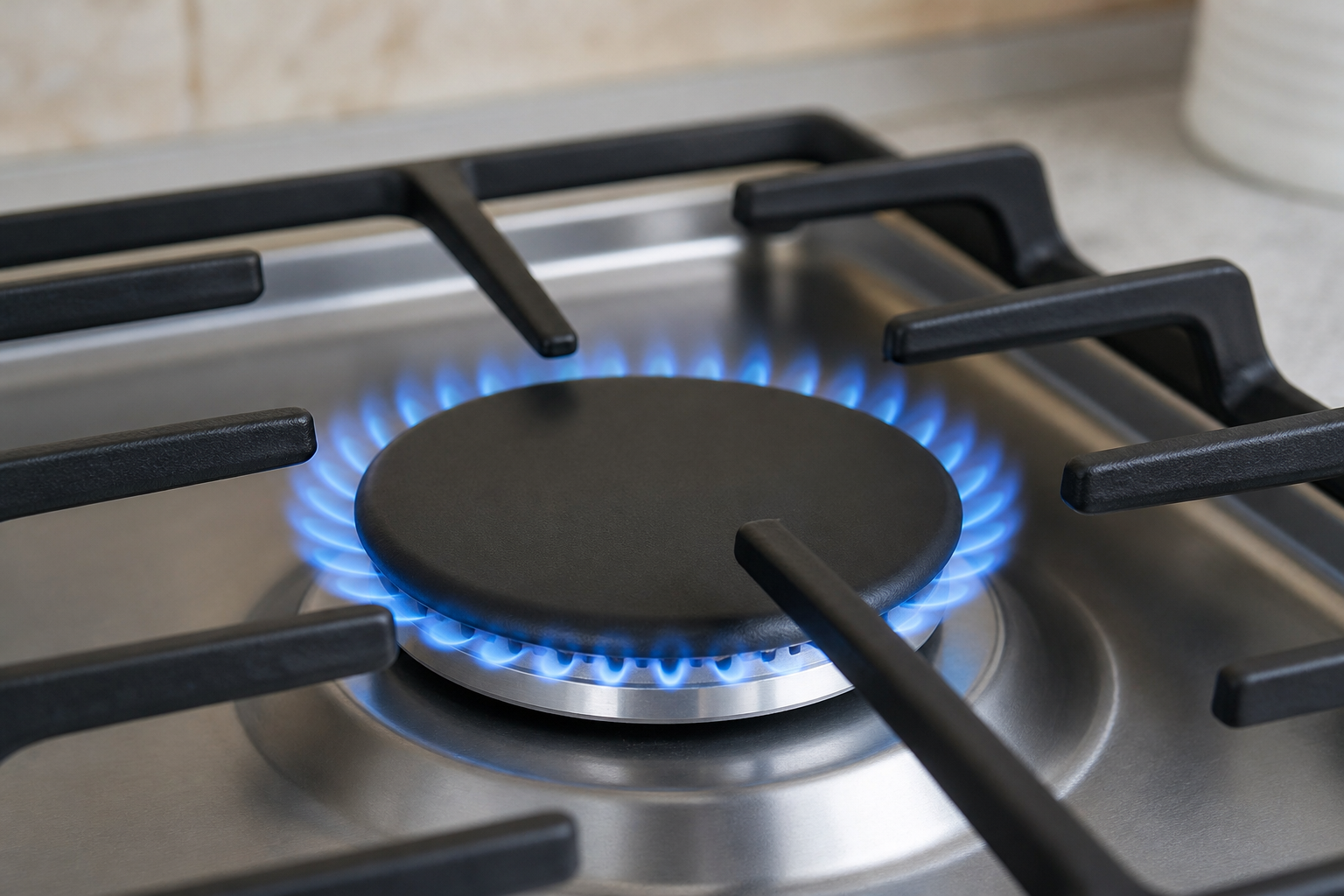
When to call a gas stove technician
Call a qualified technician if a gas stove keeps clicking with the knobs off, if the flame is yellow, sooty or lifting off the burner, or if burners still will not light after cleaning and drying. Fit a carbon monoxide alarm near the kitchen and sleeping areas, since any fuel-burning appliance can produce carbon monoxide if it is not working correctly.
For other kitchen fixes, see our guides to an induction stove not detecting a pan and a fridge not cooling while the freezer works. The CPSC's carbon monoxide information centre explains warning signs and alarm placement.
A safe stopping point
A gas smell changes the plan: everyone should leave immediately and call the gas utility or emergency services from outside. Do not try another ignition or operate electrical switches.
Without a gas smell, a cool burner that is switched off can be checked for an accessible, misaligned cap, debris, or moisture. If it still will not light after those checks, leave it off. Repeated failure, uncertainty about the gas supply, or clicking that continues with the knob off calls for qualified help rather than more attempts. Until the fault is resolved, use another countertop cooking option instead of the unreliable burner.
















1 response