
The best cat litter boxes for UK homes
Eight litter trays on Amazon UK, from an £8 low-entry tray to an app-controlled self-cleaning box.
We compared sizes, entry heights, odour control, cleaning effort and current Amazon UK prices so you can pick a tray your cat will actually use.
- Our 8 picks and who each one suits
- Comparison table
- Hooded, open, top-entry or automatic?
- Placement, cleaning and FAQs
Cat litter boxes are one of the cheapest things you will buy for your cat, yet the wrong one can lead to litter all over the floor, lingering smells or, worst of all, a cat that refuses to use it. The good news is that you do not need to spend much. Some of the best trays on Amazon UK cost less than £25, and the extra money only really buys convenience if you step up to a self-cleaning model.
We have picked eight cat litter boxes that cover every common need: a hooded tray with odour control, a large deep-sided open tray, a top-entry box for diggers and homes with dogs, two automatic self-cleaning boxes, a stainless steel tray, a budget low-entry tray for kittens and older cats, and a space-saving corner design. Prices were checked in late November 2026 and change often, so check the live price on each card before you buy. Below the picks you will also find a comparison table, a detailed buying guide and practical tips on placement, cleaning and solving common toilet problems.
Cat litter boxes at a glance
- Best overall The Savic Nestor hooded box adds a swing door, carbon filter holder and fold-open front for about £25.
- Best open tray The CAT CENTRE Big Open tray has 23cm deep sides and a detachable rim for under £16.
- Best self-cleaning The PETKIT Pura Max 2 tracks each cat by weight and seals waste away, but it costs around £380.
- Size matters Aim for a tray around one and a half times your cat’s length, nose to base of tail.
- One per cat, plus one Multi-cat homes need more trays than cats, in separate spots around the house.
Prices were checked on Amazon UK in late November 2026 and may have changed since.
Our top cat litter box picks


How we chose these cat litter boxes
We started with the most popular and best-reviewed cat litter boxes on Amazon UK and compared the listed specifications: tray size, side height, entry height, lid design, odour features and how easy each one is to empty and wash. We then weighed those details against owner feedback and current prices, and picked the box that does each job best rather than listing eight similar trays.
Above all, we looked at things from the cat’s point of view. A tray that is too small, too high to step into or too enclosed for a nervous cat will not get used, however clever it looks. That is why our list includes open, hooded and top-entry designs, because no single style suits every cat.
01
Covered · swing door · carbon filter holder
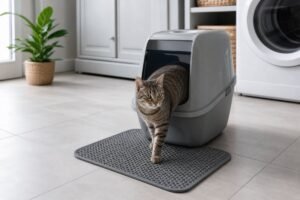
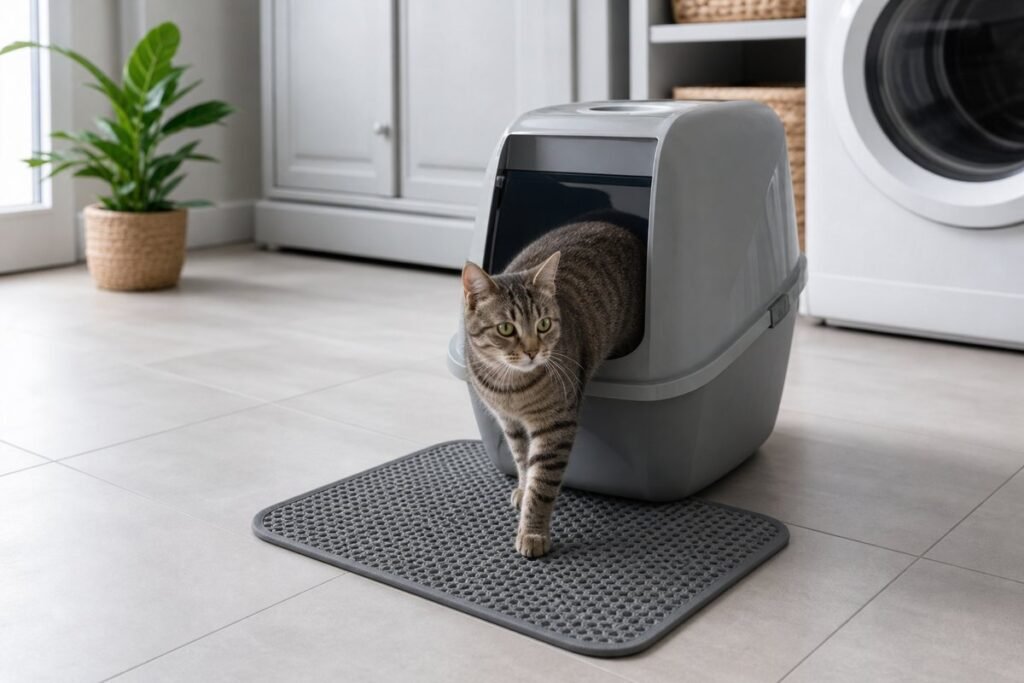
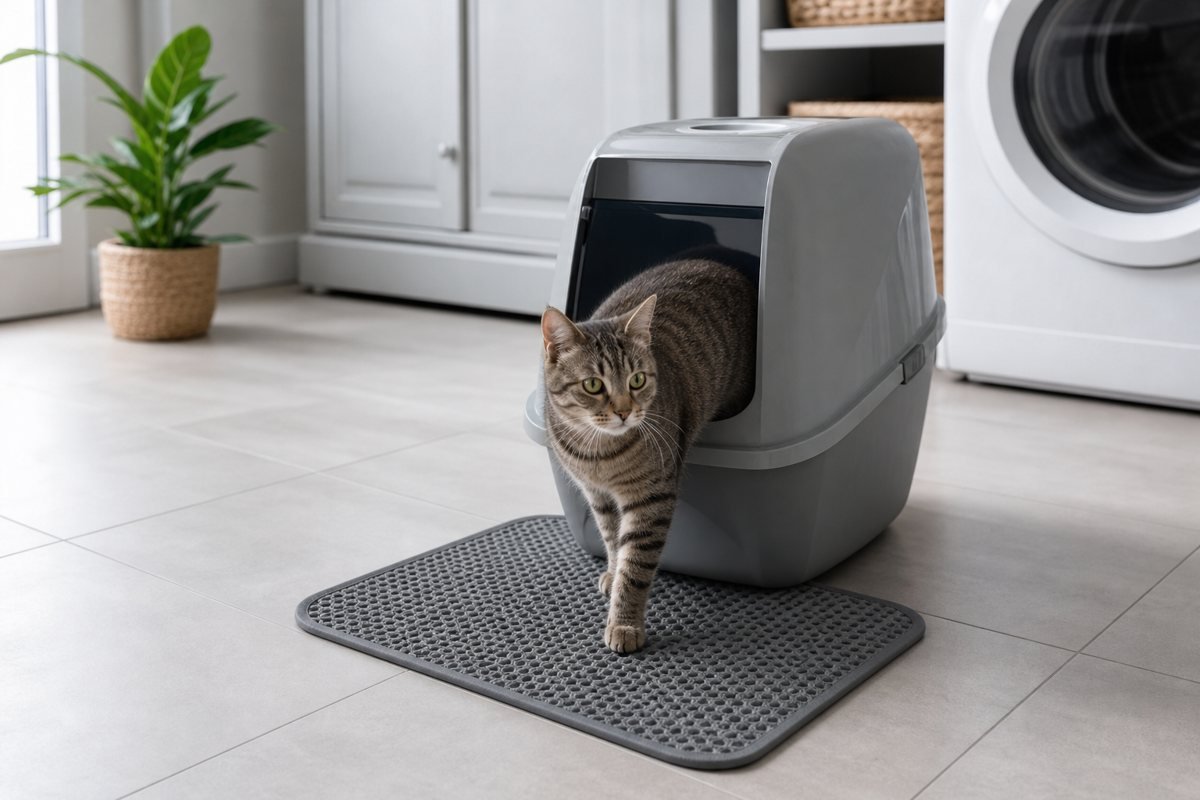
The Nestor is the hooded tray we would recommend to most owners. A see-through swing door gives your cat privacy, a holder takes Savic’s replaceable carbon filter to absorb smells, and a raised back wall contains spraying and scatter. Best of all, the front folds fully open so you can scoop without lifting the hood off.
- Front folds open for easy scooping
- Carbon filter holder for odour control
- High back contains spray and scatter
- Made in Belgium by Savic
- Suits kittens and small to medium cats; big cats need the Jumbo
- Carbon filter sold separately
The Nestor tops our list of cat litter boxes because it balances privacy, odour control and easy cleaning at a low price. If your cat is large, choose the Nestor Jumbo version instead, as the standard model is aimed at small to medium cats.
Extra deep · detachable rim
Lots of cats prefer an open tray, and this one fixes the usual problems with them. Its 23cm sides and clip-on rim stop litter being kicked out and urine escaping from cats that pee high, while a lowered entry step keeps it easy to get into. The rounded corners make it quick to wash, and it costs well under £20.
- Deep sides contain litter and urine
- Detachable rim for easy cleaning
- Lowered entry step
- Excellent value
- No odour control
- Takes up more floor space than a hooded box
Open cat litter boxes are often the safest choice for a new cat, because they let your cat see all around while they go. This one also suits multi-cat homes, where an open tray gives a nervous cat an easy escape route.
Top entry · perforated lid · dog resistant
Top-entry boxes are the cleanest option for messy diggers. Your cat hops in through the lid, so litter, urine and spray stay inside, and the perforated top knocks loose litter from their paws on the way out. It also keeps curious dogs out of the tray. The lid hooks onto the side when you clean, and handles make emptying easy.
- Minimal litter scatter and tracking
- Keeps dogs out of the tray
- Lid hooks on the side for cleaning
- Built-in scoop hook
- Not suitable for kittens, seniors or cats with arthritis
- Some cats need time to learn it
Introduce a top-entry tray gradually. Leaving the lid off for the first few days, then adding it once your cat is happy with the tray, usually works well.
App control · sealed waste bin · 11 sensors
If daily scooping is the job you hate most, the Pura Max 2 takes it away. It sifts and stores waste in a fully sealed bin with an odour eliminator, identifies each cat by weight and logs their visits in the PETKIT app. Eleven safety sensors stop the cleaning cycle as soon as a cat comes close. It is expensive, but it is the most complete automatic box here.
- Fully sealed waste bin for odour control
- Recognises each cat by weight
- App logs visits and habits
- 11 safety sensors
- Very expensive
- Needs clumping litter and power
- Some cats are put off by the motor
Automatic cat litter boxes are not for every cat. Introduce the box with the automatic cleaning switched off at first, and keep the old tray nearby until your cat is confident with it.

90L drum · app control · safety sensors
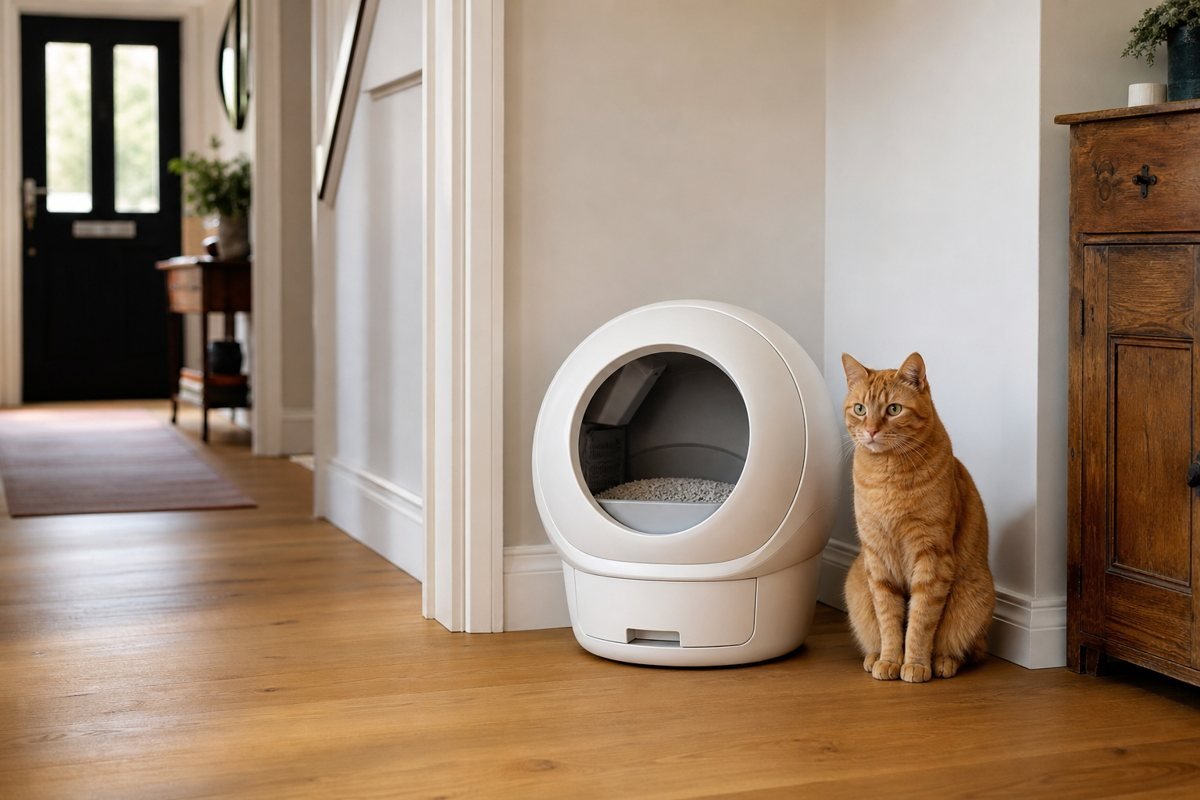
Devoko’s automatic tray costs less than half the price of the PETKIT and has a roomy 90-litre drum, so bigger cats can turn and dig. It cleans after each visit, pauses if a cat comes near, and can be controlled from an app. Odour-reducing features help, although the finish and app are less polished than premium rivals.
- Much cheaper than premium automatic boxes
- Large 90L drum suits bigger cats
- Pauses if a cat approaches
- App control
- Tall at 58.5cm, so needs headroom
- Less proven than PETKIT
This is the one to choose if you like the idea of self-cleaning cat litter boxes but do not want to spend close to £400 to find out whether your cat will accept one.

Non-stick steel · sifting grate
Plastic trays get scratched over time, and those grooves trap smells. This stainless steel tray avoids the problem: the non-porous surface does not absorb odours, waste is less likely to stick, and it wipes clean quickly. A 36-litre capacity, high sides, an angled scatter rim and a sifting grate at the entrance help keep floors tidy too.
- Steel will not absorb odours or scratch easily
- Large 36L capacity
- Scatter shield and sifting grate
- Easy to deep clean
- Open top offers no privacy
- Less known brand
Stainless steel cat litter boxes cost a little more than basic plastic trays, but they should last for years without the scratches that make plastic smell over time.
Low entry · lightweight
The Iriz is proof that cat litter trays do not need to be fancy. Its low 11.5cm sides make it easy for kittens, senior cats and cats with stiff joints to step in and out, and the smooth plastic rinses clean in seconds. At around £8 it is also a sensible second or third tray for multi-cat homes.
- Very low price
- Low entry for kittens and seniors
- Lightweight and easy to wash
- Good spare tray
- Low sides mean more scatter
- No odour control
It is one of the cheapest cat litter boxes worth buying. Pair it with a litter mat to catch the extra scatter that comes with low sides.

Triangular corner design · fold-open front
Small flats and bathrooms rarely have a spare stretch of wall, so the Nestor Corner uses a triangular shape to tuck neatly into a corner. Like the standard Nestor, its front folds open wide for easy cleaning, and the hood gives cats a private spot while keeping the tray out of sight.
- Triangular shape fits corners
- Front opens wide for cleaning
- Hood hides waste from view
- Frees up floor space
- Smaller usable area than a rectangle of similar length
- No filter holder
Measure your corner before ordering, and make sure there is enough room in front of the opening for your cat to get in and turn around comfortably.
Cat litter boxes compared
Best overall Savic Nestor | Open tray CAT CENTRE Open | Top entry Savic Hop In | Self-cleaning PETKIT Pura Max 2 | Value auto Devoko 90L | Stainless Stainless steel | Budget Savic Iriz | Small spaces Nestor Corner | |
|---|---|---|---|---|---|---|---|---|
|
|
|
|
|
|
|
|
| |
| Price | – | – | – | – | – | – | – | – |
| Type | Hooded | Open | Top entry | Automatic | Automatic | Open | Open | Hooded corner |
| Size | 56 x 39cm | 56 x 39cm | 58.5 x 39cm | 63.5 x 54cm | 55 x 50cm | 58 x 38cm | 50 x 36.5cm | 58 x 46cm |
| Odour control | 2 | 1 | 2 | 3 | 2 | 2 | 1 | 1 |
| Low entry | No | Yes | No | No | No | No | Yes | No |
| Self-cleaning | No | No | No | Yes | Yes | No | No | No |
| Scatter control | 3 | 2 | 3 | 3 | 2 | 2 | 1 | 2 |
| View deal | View deal | View deal | View deal | View deal | View deal | View deal | View deal |
Cat litter box buying guide
Cats are fussy about their toilets, and the best cat litter boxes are the ones that suit your cat’s size, age and habits. These are the things that make the biggest difference.
Size: bigger is usually better
A tray should be big enough for your cat to step in, turn around and dig without touching the sides. A useful rule of thumb is a tray about one and a half times your cat’s body length, from nose to the base of the tail. Many cat litter boxes sold as standard are too small for adult cats, so if in doubt, size up.
Open or hooded?
Hooded cat litter boxes hide waste, reduce scatter and can hold a carbon filter, so they are popular with owners. Cats are not always as keen. Battersea notes that many cats like to be able to see all around them while toileting, and that some feel vulnerable in an enclosed tray with only one way out. If your cat is nervous, or you have several cats, start with an open tray. If you choose a hood, take the door flap off for the first few weeks.
Top-entry trays
Top-entry cat litter boxes are excellent at keeping litter where it belongs, and they stop dogs raiding the tray. The catch is that your cat has to jump up and climb down into the box, which rules them out for kittens, elderly cats and any cat with stiff joints.
Entry height for kittens and senior cats
Check the height of the entrance as well as the sides. Kittens and older cats need a low lip they can step over easily. Arthritis is common in older cats, and a high-sided tray can be enough to put them off using it.
Self-cleaning cat litter boxes
Automatic cat litter boxes rake or rotate the litter after each visit and seal waste in a drawer, so you only need to empty a bin every few days. They are brilliant for busy owners, but they are expensive, need clumping litter and a power socket, and Battersea warns that motor noise and vibration can put some cats off. Introduce one slowly and keep a normal tray available while your cat gets used to it.
Material and cleaning
Most cat litter boxes are plastic. That is fine, but plastic scratches over time and those scratches can hold smells, so plan to replace a plastic tray every year or so. Stainless steel trays cost more upfront but do not scratch or absorb odours. Whatever you choose, look for rounded corners, a removable rim or fold-open front, and handles that make emptying easier.
Litter box or litter tray?
In the UK, “litter tray” and “litter box” mean the same thing, and you will see both on Amazon listings. Generally, “tray” is used for simple open designs, while “box” tends to describe hooded, top-entry and automatic models. When you search, try both terms, because the same product is often listed under either name. Measure your space and your cat before you browse, too, because product photos make it hard to judge size, and many cat litter boxes look far bigger online than they are in real life. Checking the listed length, width and entry height against your own measurements takes a minute and saves a return.
Odour control
Covered trays with carbon filters, sealed waste bins on automatic boxes and non-porous materials all help with smells. Nothing replaces regular cleaning, though: scooping at least once a day and doing a full litter change regularly make more difference than any tray feature.
Best cat litter boxes for small spaces
In a flat, a bathroom or a utility room, footprint matters most. Corner designs such as the Savic Nestor Corner use space that would otherwise be wasted, while hooded trays hide the contents and help keep litter off a small floor area. If space is very tight, a compact open tray in a quiet corner with a litter mat in front is often the most practical answer. Avoid tall automatic boxes if you plan to tuck the tray under a worktop or shelf.
Best cat litter boxes for multiple cats
Multi-cat homes need more than one tray. Cats Protection’s general rule is one tray per cat plus one extra, so two cats should have three trays. Spread them around the house rather than lining them up in one room, because a cat that feels blocked from the tray by another cat may start toileting elsewhere. Open cat litter boxes are often better in multi-cat homes, since they make it harder for one cat to corner another inside a hood. An automatic box can help with the cleaning load, but it should be one of several trays rather than the only option.
Best cat litter boxes for kittens and older cats
Kittens need a small, low-sided tray they can climb into easily, with a shallow layer of litter. As they grow, move up to a full-size tray. At the other end of life, older cats often develop stiff joints, so a low-entry tray such as the Savic Iriz, or a large open tray with a lowered step, is kinder than a hooded or top-entry design. Place the tray on the same floor where your older cat spends most of their time, so they do not have to tackle stairs.
Which litter should you use?
Many cats prefer a fine, soft, sand-like litter, and clumping litters make it easy to remove waste promptly. Wood pellet and paper litters are lighter and often low-dust, but some cats dislike the feel. Whatever you choose, change type gradually by mixing the new litter in with the old over a week or two. Check what litter your tray needs, too: most automatic cat litter boxes only work with clumping litter.
Signs your cat does not like its litter box
Cats rarely hide their opinions about a tray. Watch for a cat that perches on the edge rather than stepping right in, dashes out without burying, scratches the floor or walls outside the tray instead of the litter, or starts toileting just next to the box. Any of these suggests the tray is too small, too enclosed, too dirty, in the wrong spot or filled with a litter your cat dislikes.
A sudden change in toilet habits can also have a medical cause. Straining, going very often, crying in the tray or blood in the urine all need a prompt trip to the vet, so rule out health problems before blaming the tray. Once your vet has given the all-clear, try changing one thing at a time, such as the size, the lid or the position, so you can tell what made the difference.
Common litter box problems and how to fix them
Litter all over the floor. Choose cat litter boxes with high sides, a rim or a top entry, and put a textured litter mat at the exit to catch litter from paws. A slightly lower litter depth can also reduce how much gets kicked out.
Strong smells. Scoop every day, wash the tray regularly and replace scratched plastic trays. A carbon filter in a hooded box or a stainless steel tray helps, but strong scented products can put cats off, so keep fragrance to a minimum.
Urine leaking over the edge. Some cats stand up or back into the side of the tray. A deep-sided open tray, a high-backed hooded box or a top-entry design will contain it far better than a shallow tray.
Cat going just outside the tray. This often means the tray is too small or not clean enough. Try a bigger tray, scoop more often and make sure nothing near the tray is frightening your cat.
Litter box accessories worth buying
A few inexpensive extras make cat litter boxes much easier to live with:
- Litter mat. A ridged or honeycomb mat in front of the tray traps litter before it spreads around the house.
- Sturdy scoop. A metal or thick plastic scoop with the right slot size for your litter makes daily cleaning quicker.
- Carbon filters. Replaceable filters for hooded trays help absorb odours between cleans.
- Waste bin or disposal system. A lidded bin near the tray saves trips outside with every scoop.
- Tray liners. Liners can speed up full litter changes, though some cats catch their claws in them, so try one before buying in bulk.
What to look for in a cat litter box
Your cat needs room to turn and dig.
Kittens and seniors need easy access.
Match the design to your cat’s personality.
Deep sides and rims keep floors clean.
Easier cleaning means a cleaner tray.
Helps, but is no substitute for scooping.
Where to put cat litter boxes
Where you put a tray matters as much as which tray you buy. The RSPCA advises a quiet area of the house where your cat will not be disturbed. Keep cat litter boxes away from food and water bowls, noisy washing machines and busy doorways, and make sure there is always a clear way in and out. If you have more than one floor, put a tray on each.
Once your cat is using a tray happily, try not to move it. If you have to, move it a short distance at a time, or put a new tray in the new spot before taking the old one away. For more advice, Battersea’s guide to cat litter trays covers placement, numbers and tray types in more detail.
If you are planning a new home or reorganising rooms, think about a permanent litter spot early on. Our guide to furnishing a home from scratch is a useful starting point, and our picks of space-saving buys for a new flat suit small homes where every corner counts.
How to clean cat litter boxes
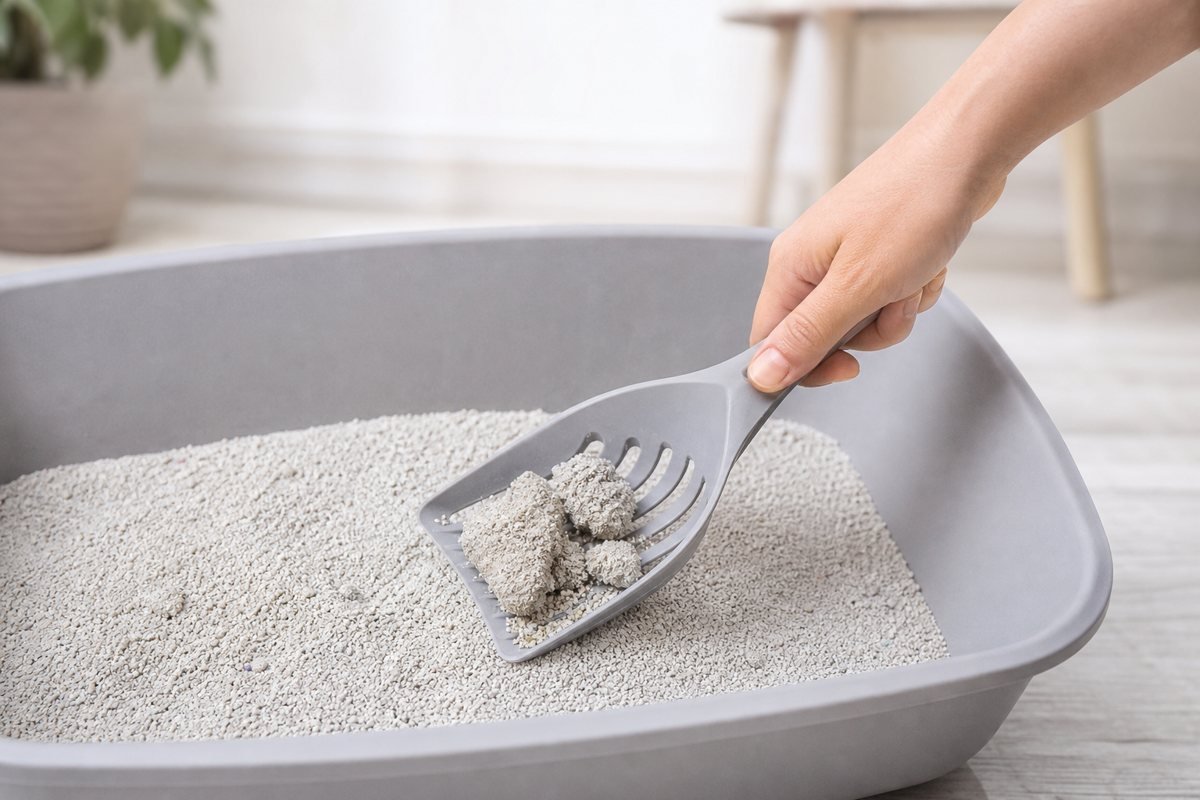
Scoop out clumps and solid waste at least once a day, and top up the litter to keep a depth of around 5cm. Every week or two, empty the tray completely, wash it with hot water and a mild, unscented detergent, dry it, and refill with fresh litter. Avoid strong disinfectants, bleach and products containing phenols, which can be harmful to cats, and skip heavily scented cleaners that may put your cat off the tray. Wash hands after cleaning, and if you are pregnant, ask someone else to clean the tray or wear gloves.
How much should you spend?
You can buy good cat litter boxes at almost every price:
- Under £15: simple open trays such as the Savic Iriz. Great for kittens, seniors and extra trays.
- £15 to £40: deep open trays, hooded boxes with filters, top-entry designs and stainless steel trays. Most cats and owners are best served here.
- £150 to £200: entry-level self-cleaning boxes such as the Devoko, for owners who want to try automatic cleaning.
- £350 and up: premium automatic cat litter boxes such as the PETKIT Pura Max 2, with sealed bins, app tracking and multi-cat recognition.
Are expensive cat litter boxes worth it?
For most cats, no. A well-sized, well-placed tray costing £15 to £30 will keep your cat happy and your home clean, as long as you scoop daily. Premium self-cleaning cat litter boxes are worth it if you are out for long hours, have several cats or simply hate scooping, and the health tracking on models like the PETKIT is a genuine bonus. Just remember that some cats never accept an automatic box, so buy from a retailer with a good returns policy.
If you are unsure where to start, the Savic Nestor is our pick for most homes, the CAT CENTRE Big Open tray is the best choice for cats that prefer an open tray, and the Savic Iriz is a cheap, cat-friendly spare. Watch how your cat uses the new tray in the first week, and adjust the position, litter depth or lid until they are comfortable.
Cat litter box FAQs
How many litter boxes do I need?
A common guideline is one litter box per cat, plus one extra. For two cats that means three trays, placed in different areas of the home.
Do cats prefer covered or open litter boxes?
It varies. Many cats prefer open trays because they can see around them, while others like the privacy of a hood. If you are unsure, offer both and see which your cat uses.
How often should I clean a cat litter box?
Scoop waste at least once a day and do a full litter change and wash every one to two weeks, or more often with multiple cats.
How big should a cat litter box be?
Aim for about one and a half times your cat’s length from nose to the base of the tail. For most adult cats, that means a tray around 50-60cm long.
Are self-cleaning litter boxes safe for cats?
Good models have sensors that pause cleaning when a cat approaches. Some cats dislike the noise, so introduce the box gradually and keep a normal tray available.
How often should I replace a plastic litter tray?
Plastic trays scratch over time and can hold odours, so many owners replace them about once a year. Stainless steel trays last much longer.
Our verdict
- Best overall: Savic Nestor
- Best open tray: CAT CENTRE Big Open
- Best top-entry: Savic Hop In
- Best self-cleaning: PETKIT Pura Max 2
- Best budget: Savic Iriz
The Savic Nestor is the best cat litter box for most homes, combining privacy, odour control and easy cleaning for about £25. Choose the CAT CENTRE Big Open tray for cats that prefer an open toilet, the Savic Hop In for messy diggers and homes with dogs, and the PETKIT Pura Max 2 if you want to stop scooping altogether.
- Measure your cat and the space for the tray
- Check the live Amazon price on your chosen box
- Add a litter mat and a good scoop