


Dinner in half the time, without the stovetop nerves
An electric pressure cooker turns tough cuts, dried beans and weeknight soups into quick, hands-off meals. For a beginner, the best one is not the model with the most buttons, but the one that is easy to seal, easy to vent and hard to get wrong.
We compared six popular electric pressure cookers, from the classic Instant Pot Duo and its newer Rio sibling to Ninja’s HyperHeat and a budget COSORI. We looked at what first-time owners care about most: clear controls, safe and simple steam release, a pot that resists scorching, and a size that suits your household. We also cover the complaints that come up again and again in owner reviews and independent tests, such as slow build-up to pressure, the dreaded burn notice and sealing rings that hold on to smells.
- Our quick picks at a glance
- Side-by-side comparison of all six models
- Mini reviews with pros and cons
- Beginner mistakes to avoid
- What to look for before you buy
- Answers to common questions
An electric pressure cooker is one of the most useful appliances a new cook can buy. It turns tough cuts of meat tender, cooks dried beans without soaking and makes rice, soups and stews almost hands-off. We compared the best electric pressure cookers for beginners on ease of use, safety features, capacity and value, so you can pick the right model for your kitchen.
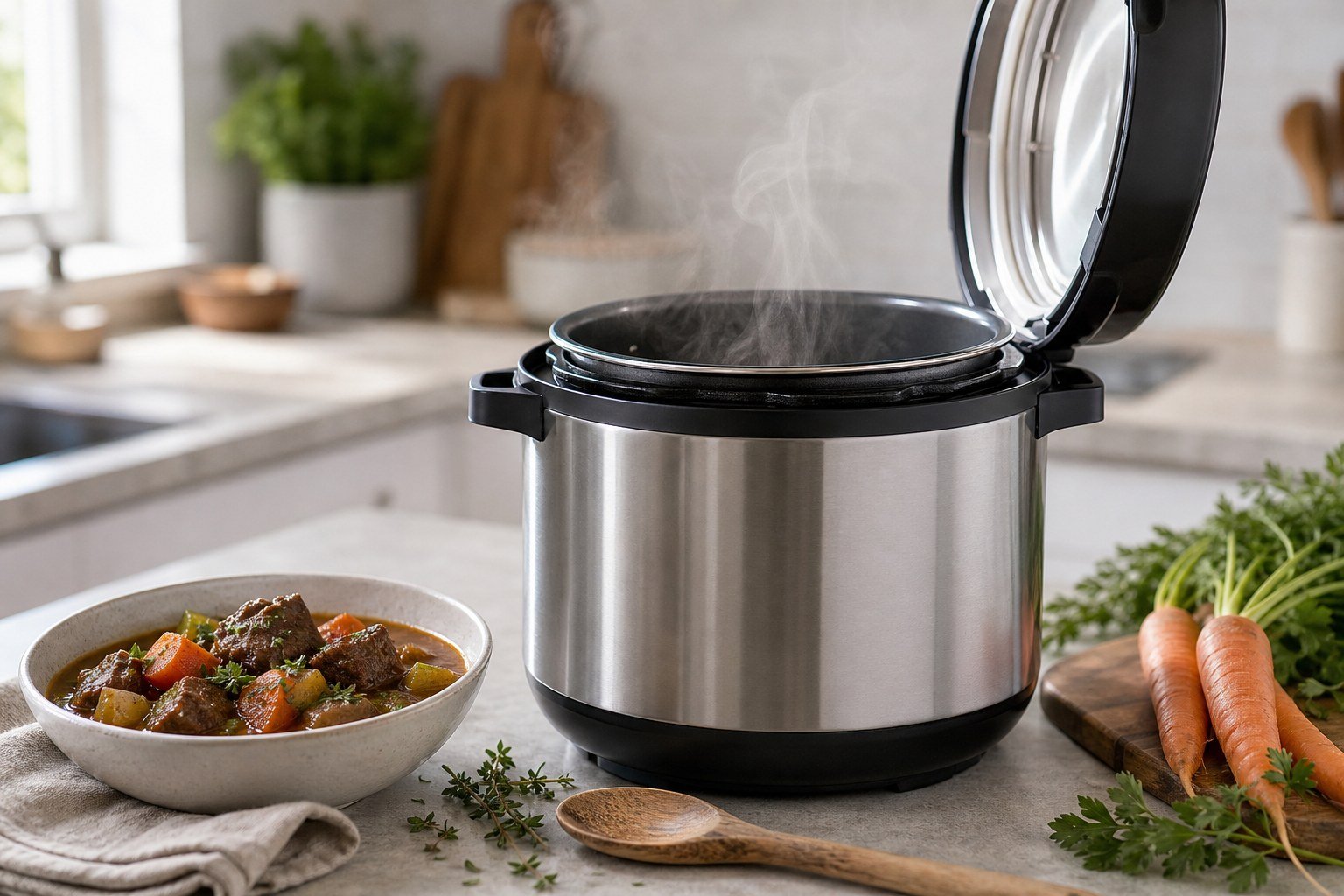
The short version
- A 6-quart model is the right size for most beginners and most households of two to four people.
- Pressure cooking times don’t include the time to build pressure, so a “5-minute” recipe often takes 20 minutes or more from start to finish.
- A switch or button for steam release keeps your hand away from the hot vent, which makes beginners far more confident.
- Never fill past two-thirds, or halfway for beans, rice and other foods that foam or expand.
- The Instant Pot Duo remains the easiest place to start, thanks to huge recipe support and simple one-touch programs.


All 6 electric pressure cookers compared
| Capacity | Functions | Inner pot | Controls and venting | Best for | ||
|---|---|---|---|---|---|---|

Instant Pot Duo 6 Qt 7-in-1 Best overall for beginners | 6 qt | 7-in-1, 13 programs | Stainless steel | Buttons, manual steam handle | First-time owners | BUY NOW |
Instant Pot Rio 6 Qt 7-in-1 Best modern controls | 6 qt | 7-in-1, 13 programs | Stainless steel | Touch panel, Easy-Release switch | Beginners who like a modern panel | BUY NOW |
Instant Pot Pro 8 Qt 10-in-1 Best for families | 8 qt | 10-in-1, 28 programs | Stainless steel with handles | Dial and LCD, release switch | Families and batch cooks | BUY NOW |

Ninja HyperHeat PC201 Best for searing and serving | 6.5 qt | 9-in-1 incl. sous vide | Removable serving pot, PFAS-free | Digital panel, auto pressure build | Searing and one-pot serving | BUY NOW |

Instant Pot Duo Mini 3 Qt Best for one or two people | 3 qt | 7-in-1, 11 programs | Stainless steel | Buttons, manual steam handle | Singles, couples, sides | BUY NOW |

COSORI 6 Qt 9-in-1 Best budget pick | 6 qt | 9-in-1 incl. sous vide | Ceramic-coated nonstick | Digital panel, Seal/Vent button | Tight budgets | BUY NOW |
The 6 best electric pressure cookers for beginners, reviewed
Pressure cooker prices move around a lot, and Instant Pot models in particular go on sale often, so check the live price on each card before you buy. Each review covers who the model suits and the compromises owners mention most often.
The cooker most recipes are written for
The Duo is still the easiest electric pressure cooker for a beginner to live with. It combines seven appliances, including pressure cooker, slow cooker, rice cooker, steamer, sauté pan, yogurt maker and warmer, and 13 one-touch Smart Programs take most of the guesswork out of soups, beans, rice and poultry. It offers both high and low pressure, which helps with delicate foods like fish and eggs, and the uncoated stainless steel pot is dishwasher safe and won’t wear like a nonstick coating. The biggest advantage for a newcomer is support: because the Duo has been so popular for so long, a huge share of online recipes and cooking-time charts are written for it. The downsides are a dated, busy button panel and a steam-release handle you turn by hand, which can feel intimidating at first. Like every cooker here, it also takes 10 to 20 minutes to reach pressure before the countdown starts.
- Huge recipe and community support
- 13 simple one-touch programs
- High and low pressure settings
- Durable stainless steel pot
- Dated, busy control panel
- Manual steam-release handle
- No handles on the inner pot
- Sealing ring can hold food smells
The Duo, updated with cleaner controls and safer venting
The Rio is Instant Brands’ modern take on the Duo, with the same seven core functions and 13 Smart Programs in a sleeker black body. The headline change for beginners is the Easy-Release steam switch, which vents pressure at the press of a switch instead of a handle near the steam, plus a larger display and a touch panel. Tom’s Guide called it a “training-wheels appliance” for new cooks and praised how easy it is to clean. There are trade-offs, though: the panel uses icons rather than written labels, so you’ll want the manual at first, there’s no low-pressure setting, the inner pot has no handles, and the steam release is loud. It also usually costs a little more than the Duo.
- Easy-Release steam switch
- Clean touch panel and larger display
- Same reliable 13 programs as the Duo
- Easy to clean
- Icons with no text labels
- No low-pressure setting
- No handles on the inner pot
- Loud steam release
A bigger, smarter cooker you won’t outgrow
The Pro is the step up for beginners who cook for a family or know they’ll batch cook. Its 8-quart pot handles whole chickens, big batches of chili and stock, and 10 functions add sous vide, bake and sterilize to the Duo’s list. A dial and LCD make the 28 one-touch programs easier to navigate than rows of buttons, and favourite buttons save your go-to settings. Two details matter a lot to new owners: the stainless inner pot has handles, so lifting out hot food is far easier, and a steam-release switch keeps your hand clear of the vent. Instant says it preheats about 20% faster than its earlier models. The catches are price, size and weight. An 8-quart cooker takes up real counter space, and its larger pot needs more liquid to come to pressure, which can be overkill for small meals.
- Generous 8-quart capacity
- Inner pot with handles
- Dial and LCD are easy to navigate
- Steam-release switch
- Highest price here
- Large and heavy on the counter
- Needs more liquid for small meals
- More programs than a beginner needs
A fast-heating cooker with a pot that doubles as a serving dish
Ninja’s HyperHeat is a newer 6.5-quart cooker that targets one of the most common beginner frustrations: waiting for pressure to build. Ninja says its HyperHeat technology builds pressure quickly and cooks up to twice as fast, and the 9-in-1 menu covers pressure cooking, slow cooking, rice, steaming, sear/sauté, sous vide and yogurt. The PFAS-free SimpliServe pot is designed to lift out and go straight to the table, which saves washing a serving dish. Reviewers report good results with braises and curries and say it’s easy to clean, and owners note the sealing ring doesn’t hold smells the way some do. Results are more mixed for rice, with some owners reporting scorching on the bottom and repeated prompts to add water, and some say it still takes around 20 minutes to reach pressure in practice.
- Designed for fast heat-up
- Strong searing and sautéing
- Removable pot doubles as a serving dish
- Easy to clean
- Rice results can be inconsistent
- Real-world heat-up time varies
- Fewer recipes written for it than Instant Pot
- Rack not included on some versions
The Duo’s simplicity in a size made for small households
The Duo Mini gives you everything that makes the Duo beginner-friendly in a 3-quart pot that suits one or two people, side dishes and small kitchens. It has the same seven functions and 11 Smart Programs, and it’s light enough to store in a cupboard between uses. A smaller pot also needs less liquid to reach pressure, which helps for small portions of rice, oats or eggs. The compromise is capacity: you can’t fit a whole chicken or a big batch of soup, and recipes written for a 6-quart pot often need scaling down. Like the full-size Duo, it uses a manual steam-release handle and a busy button panel.
- Compact and easy to store
- Same simple Duo programs
- Needs less liquid for small meals
- Affordable entry point
- 3 quarts is too small for families
- Many recipes need scaling down
- Manual steam-release handle
- No handles on the inner pot
A budget 9-in-1 with beginner-minded safety touches
The COSORI is the best way to try pressure cooking for less. It covers pressure cooking, rice, steaming, slow cooking, sauté, sous vide, fermenting and more, with 1100 watts of power and 12 listed safety features. Two design choices suit nervous beginners: the Seal/Vent button sits away from the steam valve, and the steam release angles backwards, away from you. The ceramic-coated pot is nonstick, which makes cleanup easy and helps reduce stuck-on food. The trade-off is durability, as nonstick coatings can wear with metal utensils and heavy scrubbing in a way stainless steel won’t, and there’s far less recipe support than for Instant Pot models, so you may have to adapt timings.
- Low price for a 9-in-1
- Vent button set away from the steam
- Nonstick ceramic pot is easy to clean
- Includes sous vide
- Coating can wear over time
- Less recipe support than Instant Pot
- Lower wattage than some rivals
- Basic display
Beginner mistakes to avoid with an electric pressure cooker
Most early disappointments come from a few predictable mistakes. The most common is too little liquid: a pressure cooker needs thin liquid, usually at least a cup in a 6-quart pot, to make steam, and thick sauces such as tomato sauce on the bottom are the main cause of the burn or overheat warning. Deglaze the pot after sautéing by scraping up any stuck bits, and layer thick sauces on top rather than stirring them in.
The second surprise is timing. The cook time on the display only starts once the cooker reaches pressure, and natural pressure release afterwards can add another 10 to 20 minutes, so plan for the whole cycle. Finally, check that the sealing ring is seated properly and the valve is set to seal before you start. If the ring starts to smell, many owners keep a second ring for sweet dishes and yogurt and a separate one for savory cooking.
How does an electric pressure cooker work?
An electric pressure cooker seals food and liquid inside a locked pot. As the liquid heats, steam builds pressure, which raises the boiling point of water well above its normal level. That higher temperature is what cooks food so much faster than a saucepan. When the timer ends, you either let the pressure drop naturally or release it quickly through the steam valve, then open the lid once the float valve has dropped.
Modern models are built with several safety layers, including a lid that will not open while the pot is pressurised, lid sensors and overheat protection. That makes modern models far less intimidating than the old stovetop pans many people remember.
What size electric pressure cooker should a beginner buy?
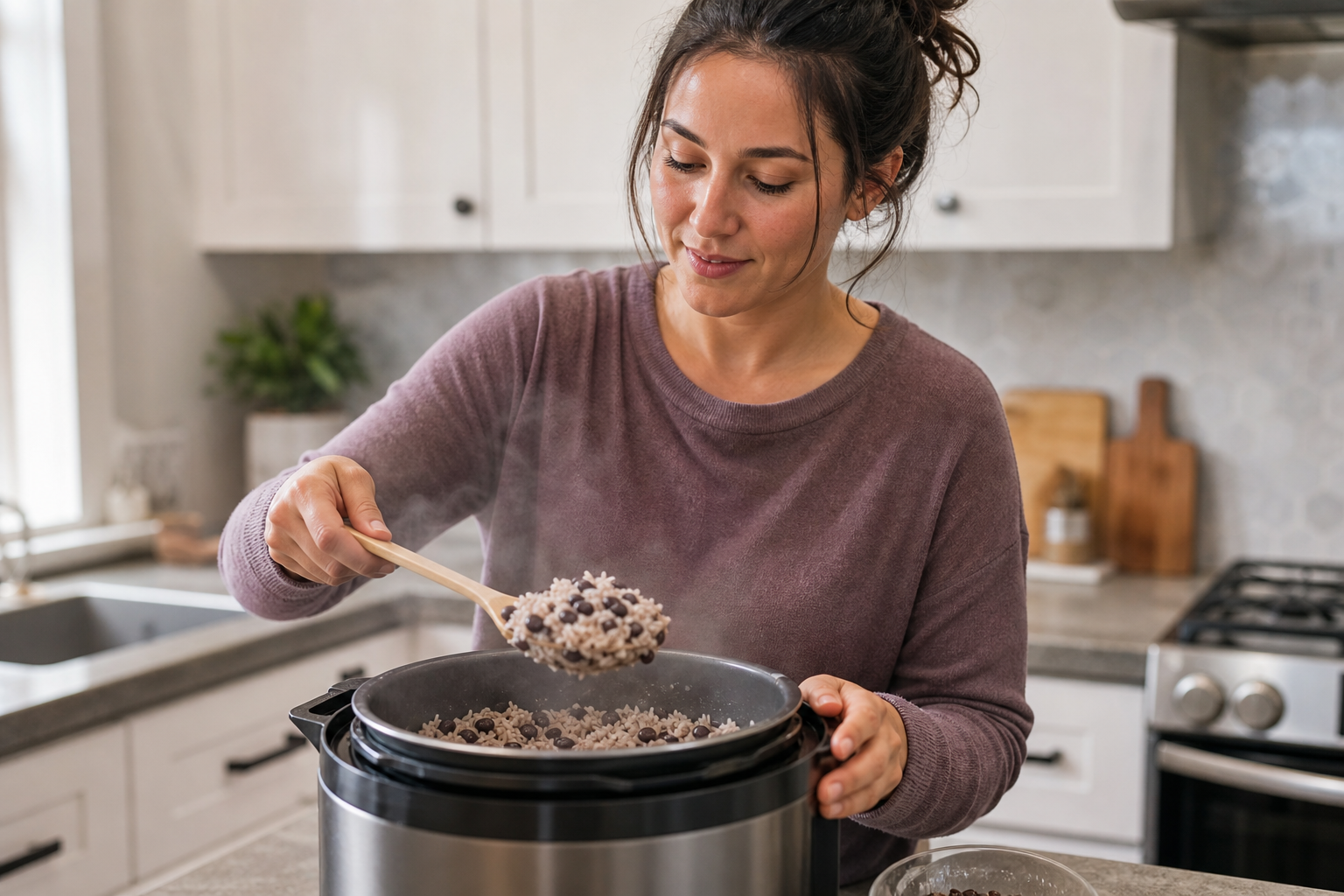
Capacity is the first decision. A 3-quart model suits one or two people and side dishes, a 6-quart model is the best all-round size for families of up to four and for batch cooking, and an 8-quart pot is worth it for large families or anyone who cooks big joints and stocks. Remember that you can only fill the pot about two-thirds full, or half full for beans and grains.
Easy first recipes for your electric pressure cooker
Start with forgiving dishes: plain rice, hard-boiled eggs, chicken thighs, chili and a simple beef stew. These build confidence and show you how long your electric pressure cooker takes to reach pressure. Once you are comfortable, try dried beans, risotto, whole chicken and homemade stock. Follow tested recipes written for electric models, because stovetop timings often differ.
How we chose the best electric pressure cooker for beginners
We focused on models with clear controls, reliable sealing and good safety features, then weighed capacity, presets, ease of cleaning and value. Brand support counted too: a popular model has plenty of tested recipes online and easy-to-find spare sealing rings, which matters a lot when you are just starting out.
Caring for your electric pressure cooker
Wash the inner pot, lid and sealing ring after each use, and check that the steam valve and float valve move freely. Store the lid upside down on the pot so the ring can air out, and replace the ring every year or two, or sooner if it cracks or stops sealing. A little care keeps your electric pressure cooker safe and reliable for years.
How to choose an electric pressure cooker as a beginner
Most cookers come in 3, 6 and 8 quarts. You can only fill a pressure cooker two-thirds full, or half full for beans and grains, so usable space is smaller than the label suggests.
Releasing pressure is the step beginners worry about most. A switch or button that’s set away from the vent is easier and feels safer than a handle you turn by hand.
One-touch programs for rice, beans, soup and meat help you get good results while you learn manual times. Written labels or a dial are easier to learn than icon-only panels.
Uncoated stainless steel lasts for years and is dishwasher safe, but food can stick if you don’t deglaze. Nonstick or ceramic pots release food easily but can wear. Handles on the pot make lifting hot food much easier.
Beginners learn fastest by following tested recipes. Instant Pot models have the largest library of recipes and cooking charts online, which makes them easier to start with.
If you're building up your kitchen, our guide to the best air fryers under $100 for everyday cooking pairs well with a pressure cooker for quick weeknight meals, and our roundup of the best dual basket air fryers for families helps if you regularly cook for a crowd. For independent advice on capacity, lids and safety, see the Consumer Reports multi-cooker buying guide.
Never force the lid open while there’s pressure inside: wait for the float valve to drop. Keep the steam valve pointed away from cabinets, and keep your hands and face clear when venting. Check that the sealing ring and valve are clean before each use, and don’t use an electric pressure cooker for canning, as tested USDA guidance doesn’t cover it.
Are electric pressure cookers safe for beginners?
Yes. Modern electric models have several safety features, including lids that lock while under pressure and automatic pressure control. Follow the manual, keep the valve and sealing ring clean, and never force the lid open.
What size electric pressure cooker should a beginner buy?
A 6-quart model suits most households of two to four people and matches most recipes. Choose 3 quarts for one or two people, or 8 quarts if you cook for a family or batch cook.
Why does my pressure cooker say burn?
The burn or overheat warning usually means there isn’t enough thin liquid, or food is stuck to the bottom. Deglaze after sautéing, add enough liquid, and layer thick sauces on top instead of stirring them in.
Why does it take so long to start cooking?
The countdown only begins once the pot reaches pressure, which typically takes 10 to 20 minutes depending on how full it is and how cold the food is. Natural release afterwards adds more time.
Is the Instant Pot Rio better than the Duo?
The Rio has a more modern touch panel and an Easy-Release steam switch, which many beginners prefer. The Duo is usually a little cheaper, keeps a low-pressure setting and has written labels, so both are good first cookers.
Our verdict
- Best overall for beginners: Instant Pot Duo 6 Qt 7-in-1
- Best modern controls: Instant Pot Rio 6 Qt 7-in-1
- Best for families: Instant Pot Pro 8 Qt 10-in-1
- Best for searing and serving: Ninja HyperHeat PC201
- Best for one or two people: Instant Pot Duo Mini 3 Qt
- Best budget pick: COSORI 6 Qt 9-in-1
The Instant Pot Duo 6 Qt is the best electric pressure cooker for most beginners, with simple one-touch programs, a durable stainless pot and more recipe support than any rival. If venting steam makes you nervous, the Instant Pot Rio’s Easy-Release switch is worth the small premium. Families should look at the 8-quart Instant Pot Pro, while the Duo Mini suits one or two people. The Ninja HyperHeat is a strong pick for searing and serving from the pot, and the COSORI is the best way to start on a budget.





















1 response