

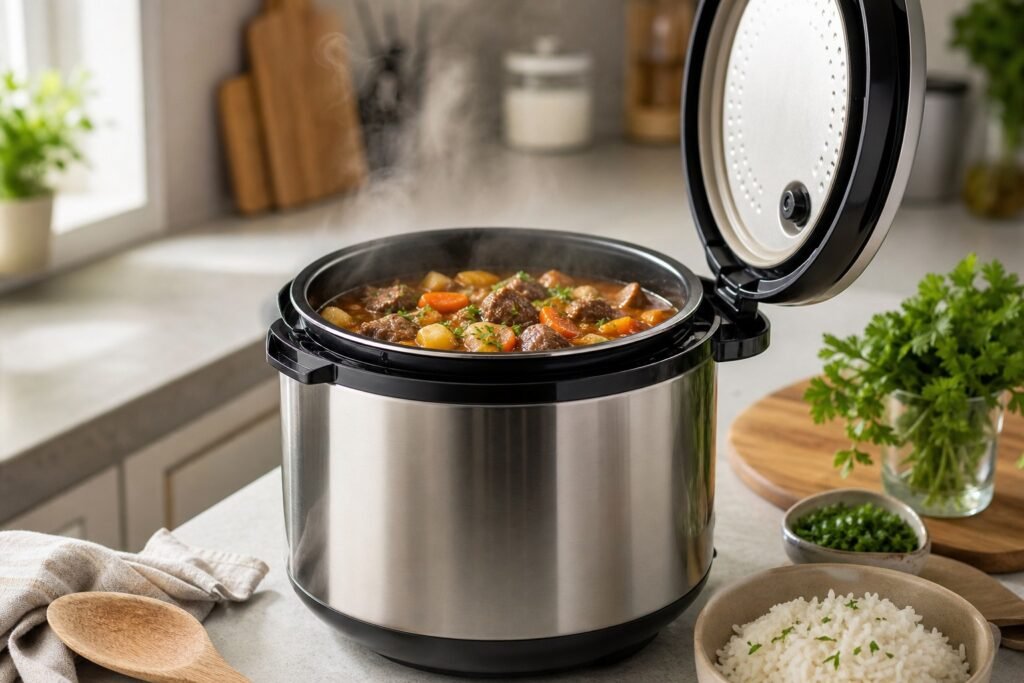
Instant Pot Duo 7-in-1: Our Take
The Instant Pot Duo 7-in-1 is the multicooker that made electric pressure cooking mainstream. Newer models like the Rio and Duo Plus now sit beside it, so is the original 6-quart Duo still the smart buy, or has it been overtaken?
We pulled together hands-on reviews from major publications, the specs, troubleshooting guides and owner feedback to work out what the Duo still does well, where it shows its age and who it suits best today.
- What the Duo 7-in-1 does and who it is for
- Key specs and sizes
- Real-world performance and common complaints
- How it compares with the Rio and Duo Plus
- Our verdict
The Instant Pot Duo is the multicooker that made electric pressure cooking mainstream, and it is still one of the most popular models you can buy. In this Instant Pot Duo review we look at how well it cooks today, what owners complain about, and whether the Instant Pot Duo still makes sense next to newer models like the Rio.
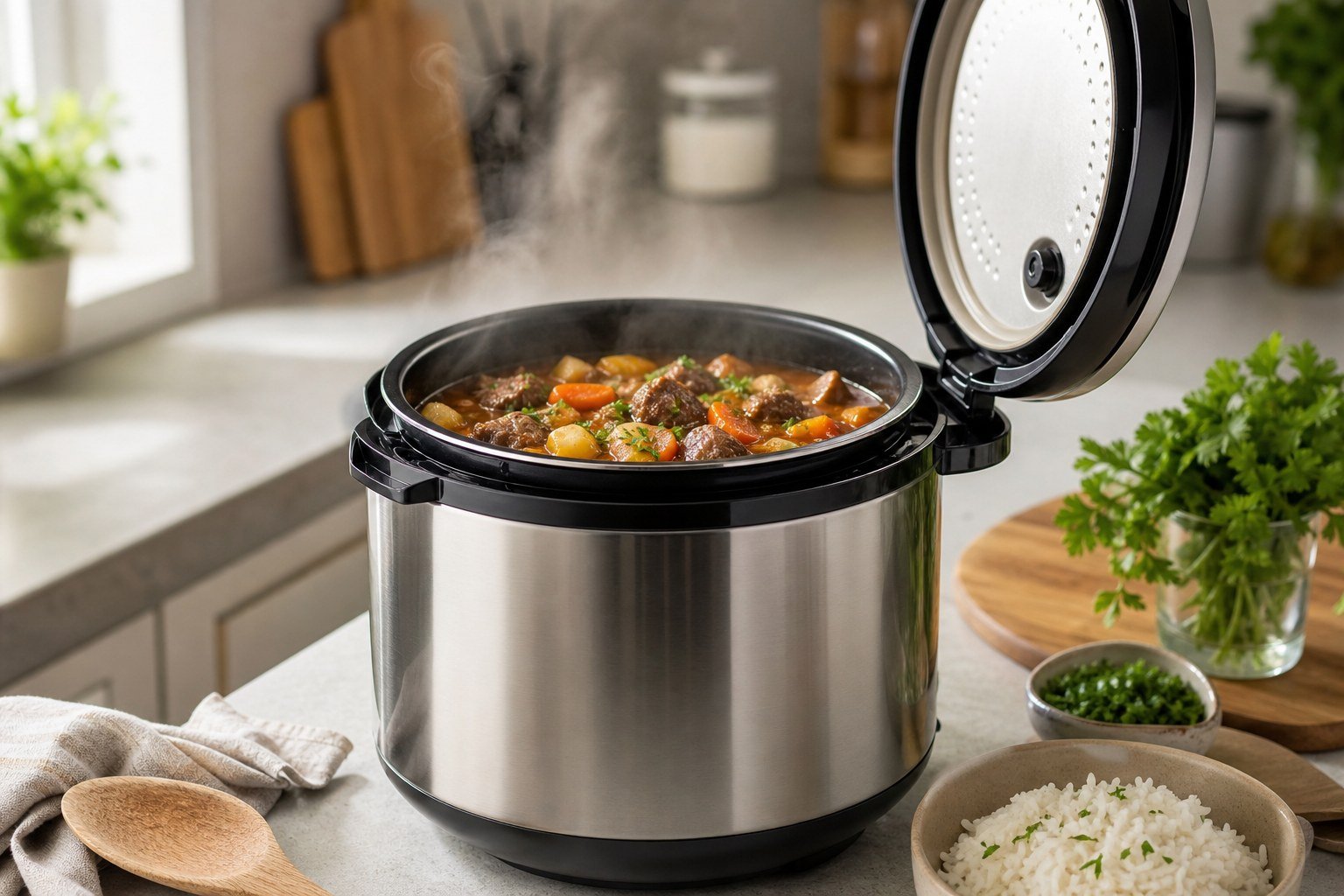

The proven, no-frills electric pressure cooker that still covers almost every weeknight job.
The Duo combines pressure cooking, slow cooking, rice, yogurt, steaming, sautéing and keep-warm in one countertop unit. Its stainless steel inner pot is PFOA/PTFE-free, and one-touch smart programs cover soups, beans, rice, poultry, ribs and desserts.
Instant Pot Duo 7-in-1 Key Specifications
Performance: How Well Does It Cook?
The Duo’s core strength is still pressure cooking. Tough cuts like brisket or pulled pork, dried beans that would normally need soaking, stocks and stews all come out tender in a fraction of the stovetop time, which is why reviewers at TechRadar described it as making batch cooking a breeze. Rice and steel-cut oats are reliable on their presets, and the yogurt function is a genuine bonus if you make it regularly.
What surprises first-time owners is that the timer does not start immediately. The pot needs roughly 5 to 20 minutes to come up to pressure depending on how full it is, and a natural release can add another 10 to 20 minutes. A 10-minute recipe can easily take 35 minutes end to end, so the Duo saves most time on dishes that would otherwise take hours, not on quick weeknight pasta.
The sauté function is useful for softening onions and browning mince before you seal the lid, but it does not get hot enough for a deep sear on a steak. Slow cooking works, though many owners find it runs cooler than a dedicated slow cooker, so recipes may need extra time.
Design and Ease of Use
The Duo uses a simple button panel with a basic display and a manual steam release valve on the lid. It is easy to learn once you have done a few cooks, though the controls feel dated next to the Rio’s larger display and Easy-Release switch. Releasing steam by hand means keeping fingers clear of the jet; a wooden spoon to nudge the valve is a common owner trick.
At 6 quarts it is large enough for a family of four and for batch cooking, but it is a bulky appliance that takes up real counter or cupboard space. You also cannot check seasoning or add ingredients once the lid is sealed, so some recipes need you to depressurize, open and re-seal.
- Covers seven appliances in one pot
- Pressure cooks tough cuts, beans and stocks in a fraction of the time
- Keeps a low-pressure setting the Rio lacks
- Stainless steel inner pot is durable and dishwasher-safe
- Usually cheaper than newer Instant Pot models, with easy-to-find spare parts
- Heat-up and release time add 15 to 40 minutes to most recipes
- Sealing ring absorbs food odours
- Manual steam valve is less convenient than the Rio’s release switch
- Sauté is too weak for a proper sear
- Bulky for small kitchens
Common Complaints From Owners
The most frequent complaint is the ‘Burn’ notice, which usually means there is not enough thin liquid in the pot or that thick sauces and starches are sitting on the base. Adding at least a cup of water or stock, scraping up any browned bits after sautéing and layering tomato-based sauces on top rather than stirring them in solves most cases.
Odour from the silicone sealing ring is the other big gripe. The ring absorbs smells from curries and chilli, so many owners keep a second ring just for yogurt and desserts, and soak rings in warm water with baking soda. Steam leaking from the sides usually points to a ring that has slipped out of place or stretched, while a pressure cooker that never seals has often simply been left with the valve on ‘Venting’. Rings are cheap and replaceable, and with basic care the Duo typically lasts for years.
Getting started with the Instant Pot Duo
The first cook is where most new owners feel unsure, so it pays to start with a water test. Add a cup or two of water to the inner pot, lock the lid, set the valve to sealing and run a short pressure cook. It shows you how long the Instant Pot Duo takes to build pressure, what the float valve looks like when it pops up and how a quick release behaves, all without risking dinner.
After that, simple recipes build confidence quickly. Rice, hard-boiled eggs, chicken thighs and a basic beef stew are forgiving and show off what the Instant Pot Duo does best. Keep the manual handy for the minimum liquid line and the maximum fill level, which is lower for foods that foam, such as beans and grains.
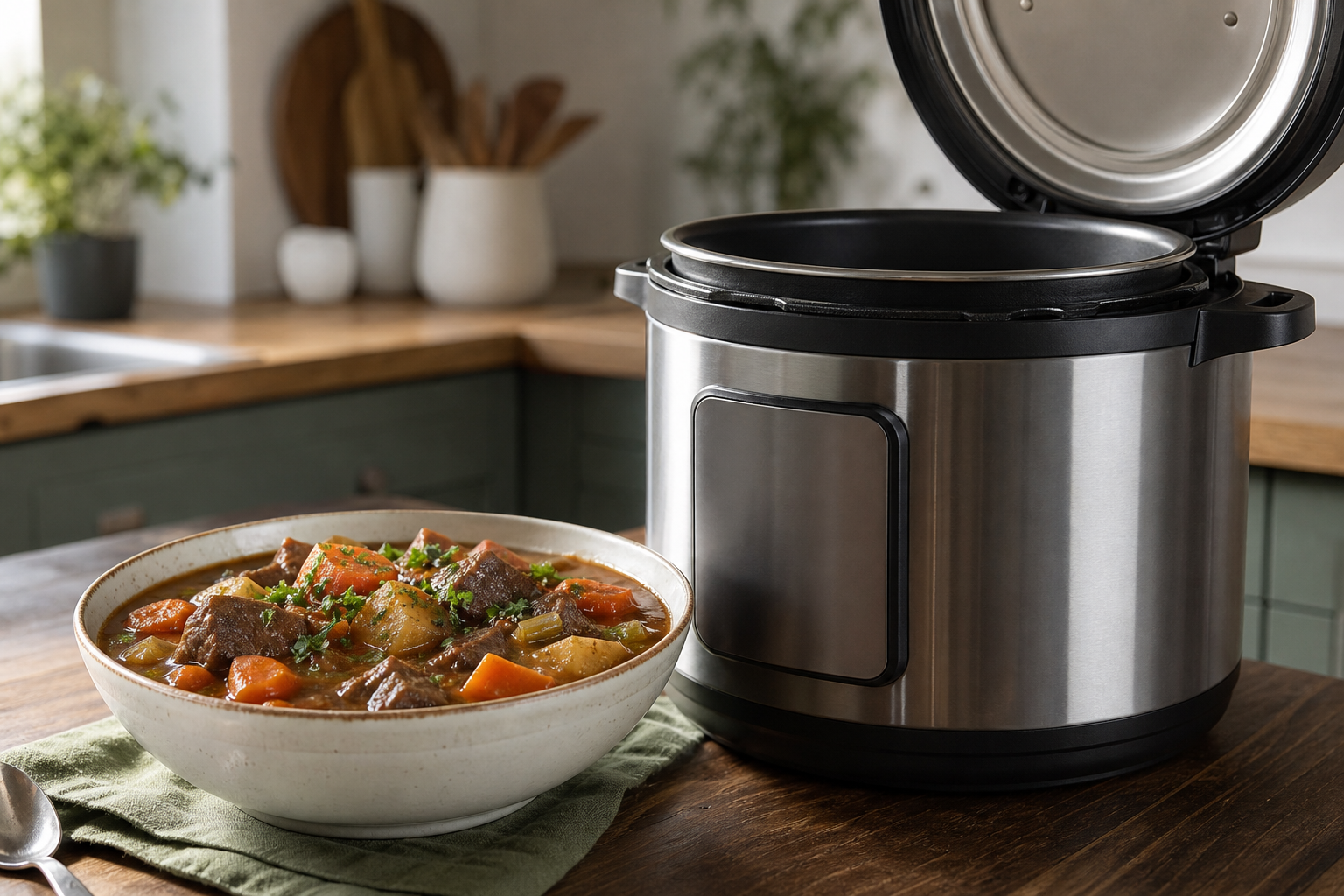
Instant Pot Duo vs newer Instant Pot models
The main reason to pick a newer model over the Instant Pot Duo is convenience rather than cooking quality. The Rio adds a clearer display and an easier steam release switch, and the Pro models add extra presets and a larger capacity option. The core pressure cooking performance, though, is very similar across the range, so the Instant Pot Duo remains a sensible buy if you want proven results for less money.
Accessories are another quiet advantage. Because the Instant Pot Duo has been around for so long, spare sealing rings, steamer baskets, glass lids and silicone moulds are easy to find, which keeps it useful for years.
Is the Instant Pot Duo right for you?
Buy the Instant Pot Duo if you batch cook, love soups and stews, cook dried beans or want one appliance that can replace a rice cooker and slow cooker. Skip it if you mainly want crispy food, as it cannot air fry, or if you only cook small portions and would be better served by the 3-quart Mini. For most households that want a reliable, well-supported pressure cooker, the Instant Pot Duo still earns its place on the counter.
Is the Instant Pot Duo Right for You? What to Consider
Capacity matters more than features. The 6 qt Duo suits most families; the 3 qt Mini is better for one or two people.
Pressure cookers shine on long-cooking foods such as beans, stews, stocks and tough cuts.
The Duo uses a manual valve; the Rio and Duo Plus models have easier, more hands-off release.
Multicookers are tall and bulky. Check cupboard height or counter space, including clearance for steam under wall cabinets.
Sealing rings wear and absorb odours, so easy access to replacements matters.
If you are still comparing options, our guide to the best electric pressure cookers for beginners looks at the Duo alongside other easy-to-learn models, and if you mostly cook low and slow for a smaller household, see our pick of the best slow cookers for two people. For fixes to the burn notice, sealing problems and other common issues, Digital Trends has a useful guide to common Instant Pot problems and how to fix them.
Instant Pot Duo vs. the Alternatives
The Instant Pot Rio is the Duo’s modern replacement. It adds a larger display, an Easy-Release switch instead of the manual valve and an anti-spin inner pot, but it drops the low-pressure setting and usually costs a little more. The Duo Plus adds extra programs such as sous vide and sterilize for a higher price. If you want the easiest, most hands-off experience, the Rio is worth the small premium; if you want the best value and the low-pressure option, the original Duo still makes sense.
Is the Instant Pot Duo still worth buying?
Yes, if you want a reliable pressure cooker at a good price. It lacks some convenience features of newer models, but it cooks just as well and often costs less.
What size Instant Pot Duo should I buy?
The 6 qt suits most households of up to four people. Choose the 3 qt Mini for one or two people or the 8 qt for large families and batch cooking.
Why does my Instant Pot show a Burn message?
Usually there is not enough thin liquid, or food is stuck to the base. Add liquid, scrape the pot after sautéing and layer thick sauces on top.
How do I stop the sealing ring smelling?
Wash it after each use, soak it in warm water with baking soda, and consider keeping a separate ring for sweet dishes and yogurt.
Can the Instant Pot Duo replace a slow cooker?
It has a slow cook function that works well for most recipes, though it can run cooler than a dedicated slow cooker, so allow extra time.
The Instant Pot Duo 7-in-1 is still worth buying if you want a dependable pressure cooker without paying for the latest extras. Heat-up time, a smelly sealing ring and a dated manual valve are the trade-offs, but for stews, beans, stocks and rice it remains one of the best-value multicookers available.
Final Thoughts
- Excellent pressure cooking for long-cook dishes
- Seven functions in one pot
- Allow extra time for heat-up and release
- Best value in the Instant Pot range
The Instant Pot Duo is no longer the newest model, but it is still a capable, affordable all-rounder. Choose it for value and low-pressure cooking; step up to the Rio if you want easier steam release and a more modern display.