
One flash is enough reason to stop the cycle.
A sharp pop behind the dinner plate can be startling, especially when there is no fork or foil in sight. Press Stop immediately. If there is smoke or flame, keep the door closed so the fire is not fed with more air. Unplug the microwave when it is safe to reach the plug; if flames persist or spread, leave the area and call emergency services.
Once the cavity has cooled and any smoke has cleared, it can be checked for burned-on food, a scorched cardboard-like waveguide cover, or chipped coating that exposes metal. These can cause arcing even when the dish contains no metal. Do not run another cycle to see whether the flash returns. A damaged cover or cavity needs attention before the microwave is used again.
Microwave sparking with no metal inside is unsettling, but it usually has a simple cause such as burnt-on food, a damaged waveguide cover or chipped interior paint. This guide explains what to check first, which fixes are safe to do yourself, and when microwave sparking means the appliance should be retired.
Check the dark spot before cleaning
A brown or black mark on the wall or ceiling may be burned-on food or grease, even when no metal was inside. That residue can char and spark. A dark mark alone, though, does not show whether the surface underneath is damaged.
Once the microwave has cooled, unplug it and wipe the spot with a soft cloth dampened with warm water and a little dish soap. Let stubborn residue soften under the damp cloth for a few minutes rather than scraping it. Keep water out of vents and seams, and avoid steel wool, scouring pads, or sharp tools that could damage the coating. Dry the area with a clean cloth.
Look at the surface after the residue comes off. If it is smooth and the coating is intact, the mark may have been cleanable buildup. Staining that remains is less concerning than a change in the surface itself.
Do not use the microwave if the coating is chipped or flaking, a spot looks burned through, or bare metal is visible. Cleaning cannot restore that protective surface. Arrange a qualified repair assessment or replace the appliance; if the surface looks intact but the cause of the sparking remains unclear, get it checked before using it again.
Inspect the waveguide cover
The waveguide cover is usually a small, flat panel on an inside wall or the ceiling of the microwave. It may look like cardboard or thin plastic, but it shields an opening that directs microwave energy into the cavity. Food splatter on the cover can carbonize and cause sparks, even when there is no metal in the oven.
Once the microwave is unplugged and cool, look at the panel without removing it. Surface buildup often looks like a raised brown or black spot. A soft, damp cloth may lift it, revealing a flat, intact surface underneath. Avoid scraping, soaking, or pulling at the cover; these can damage it.
A cover that is warped, cracked, blistered, charred through, or loose is different from one that is merely dirty. Stop using the microwave and check the model’s instructions for a manufacturer-approved replacement, or arrange qualified service. If the opening or cavity behind the cover appears scorched, leave the cover in place for a technician to inspect. Never run the microwave with the cover missing, even briefly to see whether the sparking has stopped.
Check beneath the turntable
If a flash or crackle seemed to come from beneath the glass plate, the source may be hidden by the turntable rather than visible on the cavity walls. Unplug the microwave and let it cool before lifting out the plate and roller ring. Check the underside of the plate, the rollers, the floor, and the area around the central drive fitting.
A crumb, greasy spill, or small piece of food packaging can get trapped under the ring and scorch. If the parts are intact, wash the plate and ring, wipe the floor with a damp cloth, and dry everything thoroughly. Set the ring back in its track and make sure the plate sits level on the drive fitting; a ring left askew can scrape or catch.
Stop using the microwave if a roller is melted, the drive fitting or surrounding floor is charred or damaged, or any metal is exposed. Do not pry up the drive fitting or open the appliance casing to investigate. Those problems need professional assessment rather than another test cycle.
What causes microwave sparking with no metal inside?
The most common cause of microwave sparking is food or grease baked onto the interior walls or the waveguide cover, the small panel usually on the right-hand wall. Carbonised splatter conducts energy and can arc, leaving a dark or burnt spot. Chipped or peeling enamel paint can expose bare metal, which sparks in the same way. Less often, microwave sparking comes from a worn turntable roller ring, the drive coupler underneath it, or a fault inside the appliance itself.
Clean the interior with a damp cloth and mild detergent once the microwave is unplugged and cool, then check the waveguide cover for burn marks or holes. A damaged cover can often be replaced cheaply with the exact part for your model. If the cavity paint is damaged, stop using it until it has been repaired properly.
When microwave sparking means stop for good
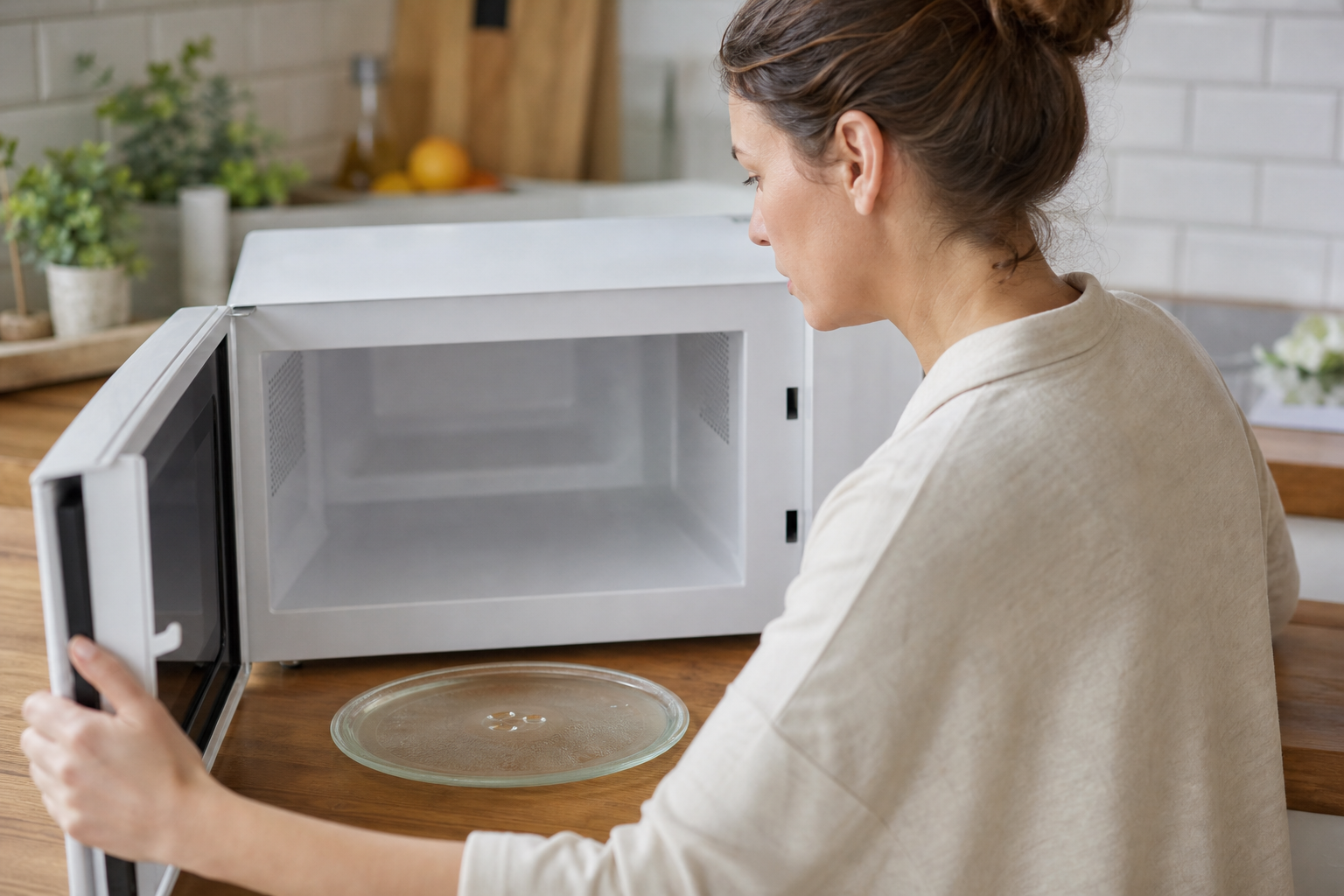
If microwave sparking continues after cleaning and replacing the cover, if you see sparks with an empty cavity, smell burning plastic, or notice a damaged door, seal or hinge, unplug the microwave and stop using it. Internal parts can hold a dangerous charge even when unplugged, so repairs beyond the cover belong to a qualified technician or a replacement.
For more appliance troubleshooting, see our guides to a gas stove clicking but not lighting and an induction stove not detecting a pan. The FDA also explains how microwave ovens are regulated and when damage is a concern in its microwave oven safety guidance.
What if only one item sparks?
Can packaging cause sparks after visible foil is removed?
Yes. Check for foil-backed labels, metallic printing, staples, and small pieces of a torn wrapper. Remove suspect packaging rather than trying to trim around the metal.
Could the dish be the problem?
A gold rim, metallic decoration, or an unfamiliar glaze can spark even when the dish otherwise looks ordinary. Set that dish aside and use one clearly marked microwave-safe instead.
Can food spark on its own?
It can. Mineral-rich foods such as carrots or spinach sometimes produce small flashes; a hidden foil fragment or metal pick is another possibility. Check the food carefully once it has cooled, and avoid microwaving it again if it repeatedly sparks.
Does a single sparking item mean the oven is safe?
Not necessarily. One suspect item may explain the incident, but sparks with different dishes or foods point back to the oven. Stop using it if arcing returns or the cavity shows damage.
When to stop using the microwave
A flash near the door edge is different from a spark on a dirty plate. Stop using the microwave if light or sparks appear around the door, or if the door is bent, the seal is damaged, or the latch no longer closes normally. These are not cleaning problems, and the door should not be pushed or adjusted to make it fit.
Persistent arcing also calls for a stop, especially after food residue has been removed and different microwave-safe dishes have been tried. A burning smell, smoke, or fresh scorch marks are further reasons to leave the appliance off. Repeatedly starting it to pinpoint the fault can make damage worse.
If there is flame or smoke inside, stop the cycle and keep the door closed. Unplug the microwave only if it is safe to reach the plug. If the fire does not quickly subside, leave the area and follow local emergency guidance. Afterward, smoke alarm placement around the home is worth checking, but it does not make a damaged microwave safe to use.
For door damage, recurring sparks, or signs of burning, arrange professional service or replace the microwave. Leave it unplugged until that decision is made.
Never bypass a door interlock or remove the outer cabinet to investigate a fault. Internal components can retain a dangerous electrical charge even after the microwave is unplugged. Those repairs belong with a qualified professional.
Only test again if the cause is gone
-
Check that a simple cause was removed
A retest is reasonable only if the likely culprit was food, packaging, a dish, or loose debris, and it has been removed. If the cause remains unclear, leave the microwave off.
-
Wait until the cavity is fully dry
After cleaning, let every surface dry, including the area beneath the turntable. Do not run the oven to dry it out.
-
Look once more for damage
Do not test if the waveguide cover, interior coating, door, seals, or any other part looks burned, chipped, warped, or loose.
-
Heat a cup of water briefly
Place a microwave-safe cup of water inside and run a short cycle, about 15 to 30 seconds. Never run the microwave empty.
-
Stop at the first warning sign
Any flash, crackle, smoke, or burning smell ends the test. Stop the cycle, unplug the microwave if safe, and do not use it again until it has been checked by a qualified repairer.
Clean it, repair it, or stop using it?
An intact cavity with food residue or grease can be cleaned, dried, and checked as described above. A scorched, cracked, or missing waveguide cover is different: the microwave should stay off until the correct replacement is fitted according to the manual.
A damaged door or latch, chipped coating that exposes metal, smoke, or sparks that return after cleaning are reasons to stop using the oven. Unexplained arcing is not something to cook through or investigate with repeated test cycles. The manual can help identify the right part and any manufacturer guidance, but door faults and internal electrical repairs belong with a qualified technician. If an assessment costs nearly as much as a replacement microwave, replacing it may be the more sensible choice.